
Following the publication of Cocaine and conflict in Mali, Niger and Libya, I wanted to reflect on something that became particularly clear while working on the research: how remarkably resilient cocaine trafficking networks can be, what allows them to survive conflict and political upheaval, and why sometimes understanding what hasn’t changed can tell us as much as following what has.
There is a problem with studying a market that rarely sits still: you can spend so much time keeping up with it that you miss what it is telling you.
Cocaine trafficking through West Africa and the central Sahara is a good example. A coup happens. Conflict shifts territorial control. A trafficking route becomes more dangerous. Enforcement increases somewhere else. Naturally, our attention goes to what changed.
And it should. But every so often, I think you need to stop, go back through what you have collected over the years and ask a slightly different question: what survived all of that?
What survived the disruption?
That was one of the most useful parts of working on our recent research into cocaine trafficking through Mali, Niger and Libya.
GI-TOC has been monitoring these markets for a long time. So rather than treating the current picture as something entirely new, we were able to return to years of interviews and field reporting, put older information alongside what researchers were hearing now, and trace how the market had moved through successive political and security shocks.
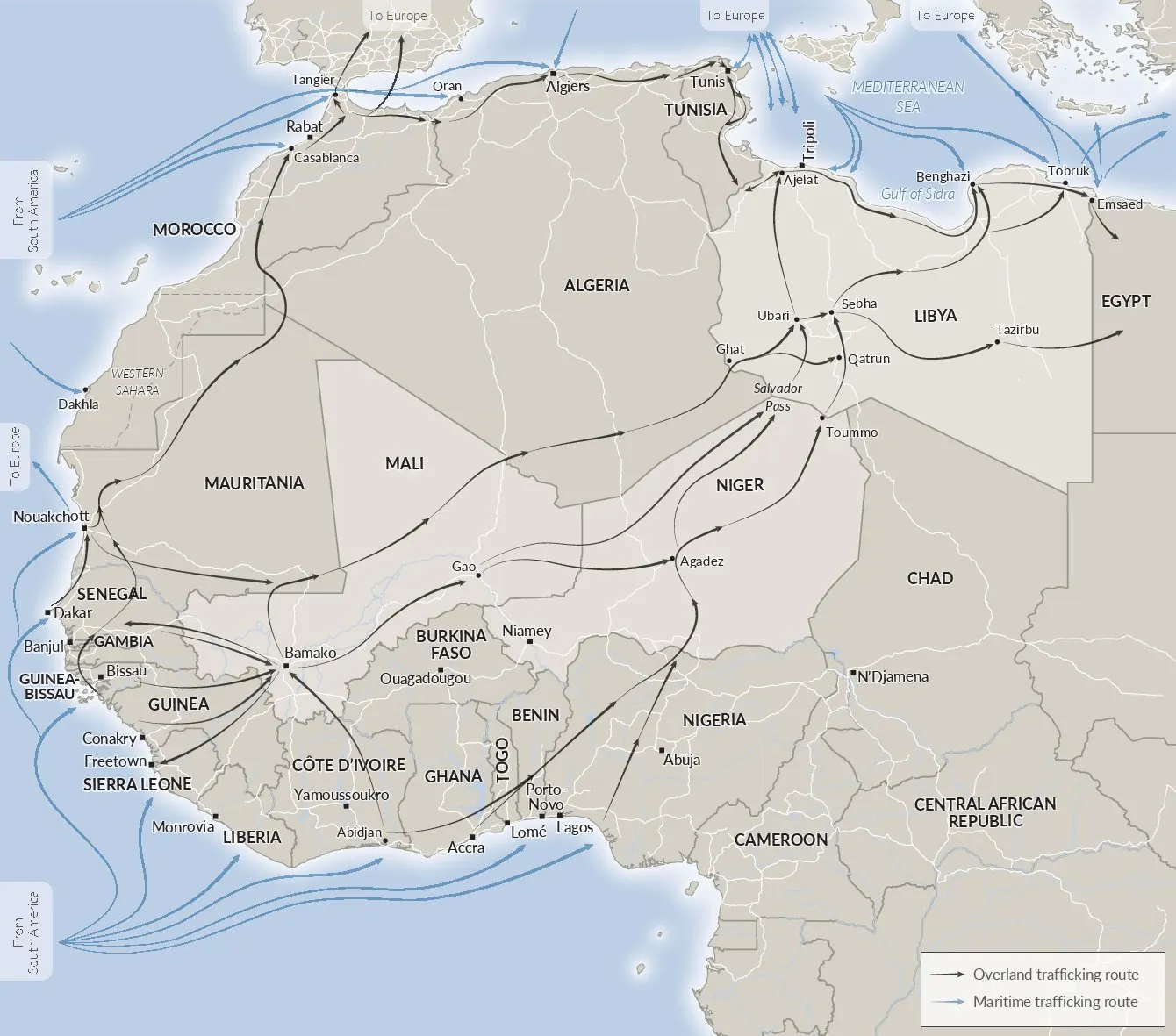
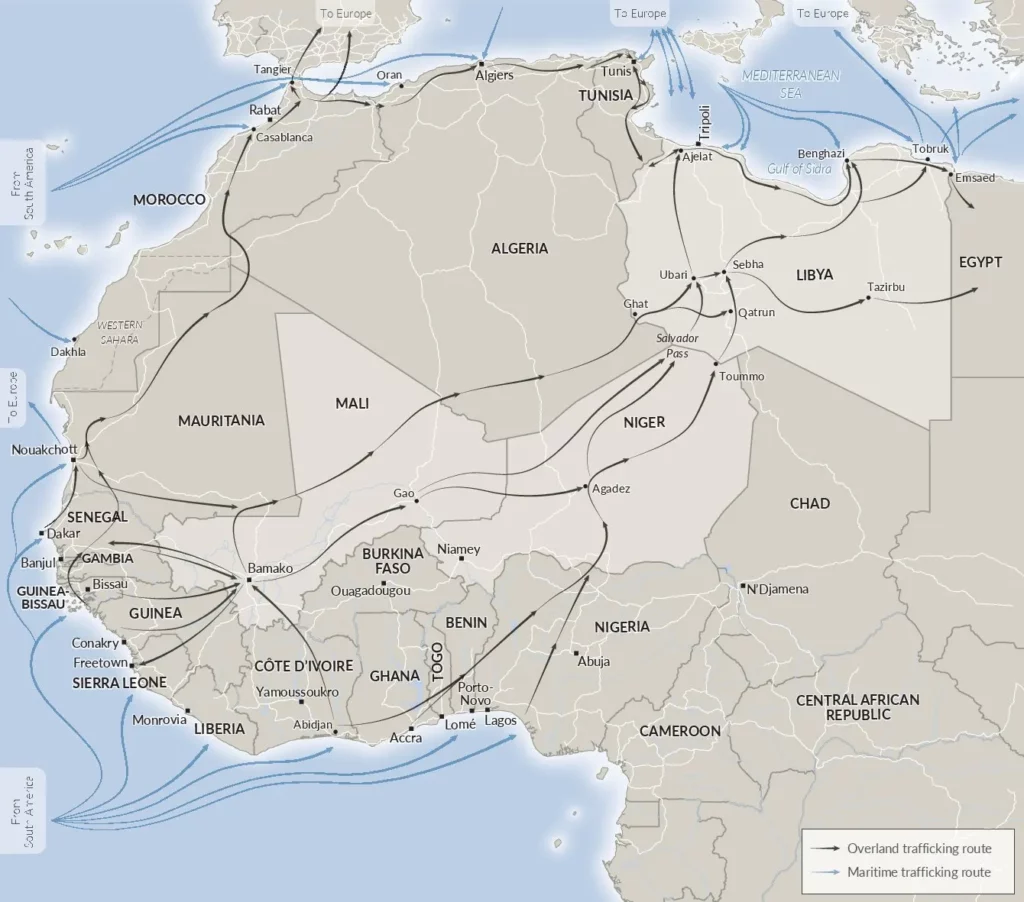
There was quite a lot to trace. Cocaine trafficking across West Africa has increased substantially since 2019, driven by rising production in Latin America, growing European demand, pressure on more direct routes into Europe and better transport connectivity in West Africa. The vast majority still travels by sea. The overland routes through the Sahel and Libya carry a much smaller share, but their importance cannot really be measured in tonnes alone. They run through conflict economies and territories where the money and protection surrounding a cocaine consignment can have consequences far beyond the trade itself.
Once you look at that history together, resilience becomes difficult to ignore.
The route is not the network
While the geography hasn’t changed, the political environment certainly has. Northern Mali has been transformed by renewed conflict and shifting territorial control. Niger’s 2023 coup abruptly disrupted protection arrangements that trafficking networks had relied upon. Libya is going through its own extraordinary political and security upheavals, particularly in its far south.
Yet cocaine continues to cross the region.
Not necessarily along the same road, with the same people or under the same arrangements. That’s the point.
In Mali, for example, the upheaval since 2023 made some established routes less predictable. Traffickers responded by taking safer but longer journeys, increasingly moving east from Gao through the Ménaka region towards Niger. By early 2026, the trade had become more fragmented and expensive, but it had not disappeared.
Niger gives us the reverse side of that story. The coup there broke long-standing protection mechanisms linked to the previous administration. Trafficking volumes fell, some routes were suspended and intermediaries temporarily withdrew. But then networks reconstituted themselves, adapted to the new environment, and forged new protection arrangements.
I find that contrast more useful than either example on its own.
Fragmentation and instability do not necessarily stop cocaine trafficking if the protection around it survives.
Break those arrangements, however, and the effect can be much more significant. But even a break in protection is usually an interlude between systems, not an end. That is what the very different experiences of Mali, Libya and Niger suggest.
A route isn’t really a route
Because a route isn’t really a route. Not in the way we often imagine one, anyway.
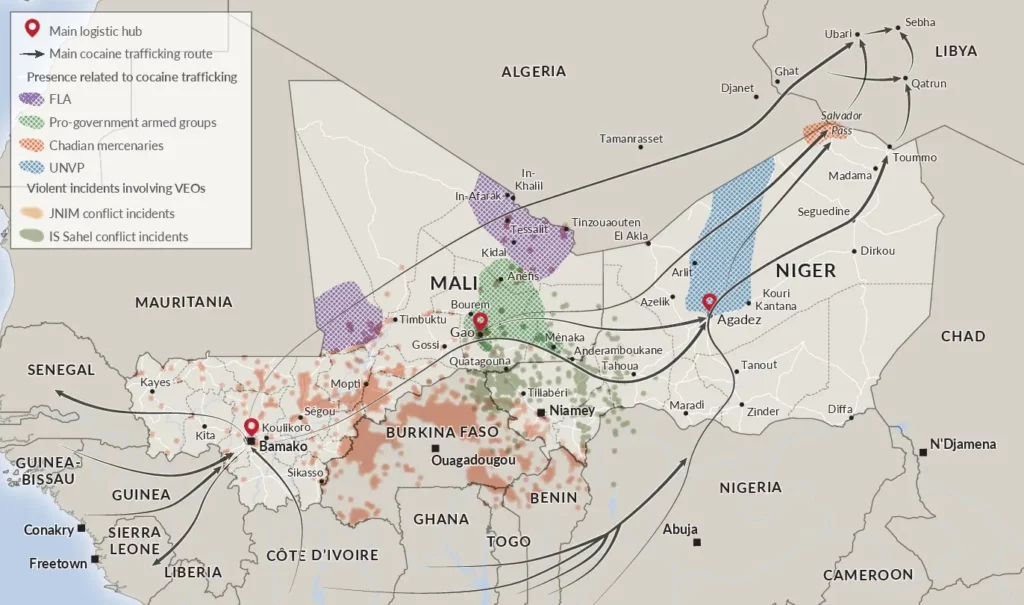
It is a collection of relationships that makes movement possible. Our research found cocaine trafficking across Mali, Niger and Libya structured around entrenched regional traffickers, state-linked protection systems and armed groups. Some of the major intermediaries have operated for decades, surviving political transitions, coups and changing conflicts. Many don’t deal only in cocaine either: their businesses can stretch across cannabis resin, gold, cigarettes and fuel, giving them other markets to move into when cocaine becomes too difficult and networks they can draw upon when conditions change again.
The armed groups around them matter too, although not always in the way people might assume. Rebel groups, pro-government forces, militias and other armed actors can provide escorts, territorial access or protection for particular stretches of a journey, usually for payment rather than by controlling the cocaine trade themselves. Violent extremist organizations are not the principal organizers of this trade either, although some benefit from it. Our research found that IS Sahel, in particular, has gained greater access to cocaine-related revenues since late 2023 as its territorial influence over important routes has grown.
Disruption is not the same as defeat
So when one part of the system comes under pressure, the question isn’t only whether the road has been closed. It is whether those relationships can be rebuilt somewhere else.
Usually, traffickers try.
They find another route. They build another protective arrangement. New actors enter. Corruption becomes more important.
And the uncomfortable possibility is that an intervention intended to suppress trafficking may instead push the market towards arrangements that are more violent or more aggressively focused on high level bribery and corruption.
That doesn’t make enforcement futile. It does mean we should be careful about declaring success at the moment of disruption.
What happens six months later interests me just as much.
What the archive can tell us
This is also why I think organized crime research sometimes suffers from its own appetite for immediacy. There is always something new to investigate, and in places such as the Sahel there is no shortage of genuinely consequential events competing for attention.
The alternative isn’t to retreat into historical research and emerge several years later with the answer. There is a middle ground that we don’t use enough.
You keep collecting granular information from people who understand what is happening now. Then, periodically, you put it beside what those same markets looked like two, five or ten years earlier. You revisit old interviews. You ask questions of material that weren’t obvious when it was first collected. And sometimes the archive changes what you go looking for next.
That’s what happened here. The older material wasn’t simply background for the report. It helped us decide which questions to ask in the present and, in turn, what we should keep watching after publication.
What I’ll be watching next
There is plenty to watch.
One is Europe. If enforcement continues making established European entry points more difficult for cocaine traffickers, alternative routes through West Africa could become more important. That could increase the significance of the cross-Saharan corridors rather than diminish it.
Mali is another question entirely. Its security environment has become even more complicated since we completed the research, making the consequences for cocaine flows unusually difficult to predict. In northern Niger, meanwhile, different insurgent and mercenary actors are increasingly operating in the same space, complicating movement of everything from people and fuel to drugs. Libya’s political trajectory adds another variable.
I don’t know exactly what the map will look like a year from now.
In a way, that’s less interesting than it sounds.
I’ll be looking instead at what the traffickers do when circumstances turn against them. Which relationships survive? Which ones are replaced? Where does political protection become more valuable? Who suddenly becomes useful who wasn’t useful before?
And then, crucially, I’ll go back and look at whether we’ve seen it before.
Because if you only follow the latest route, you learn where the cocaine is going.
Follow the market for long enough, and you begin to understand how it keeps finding a way to get there.