
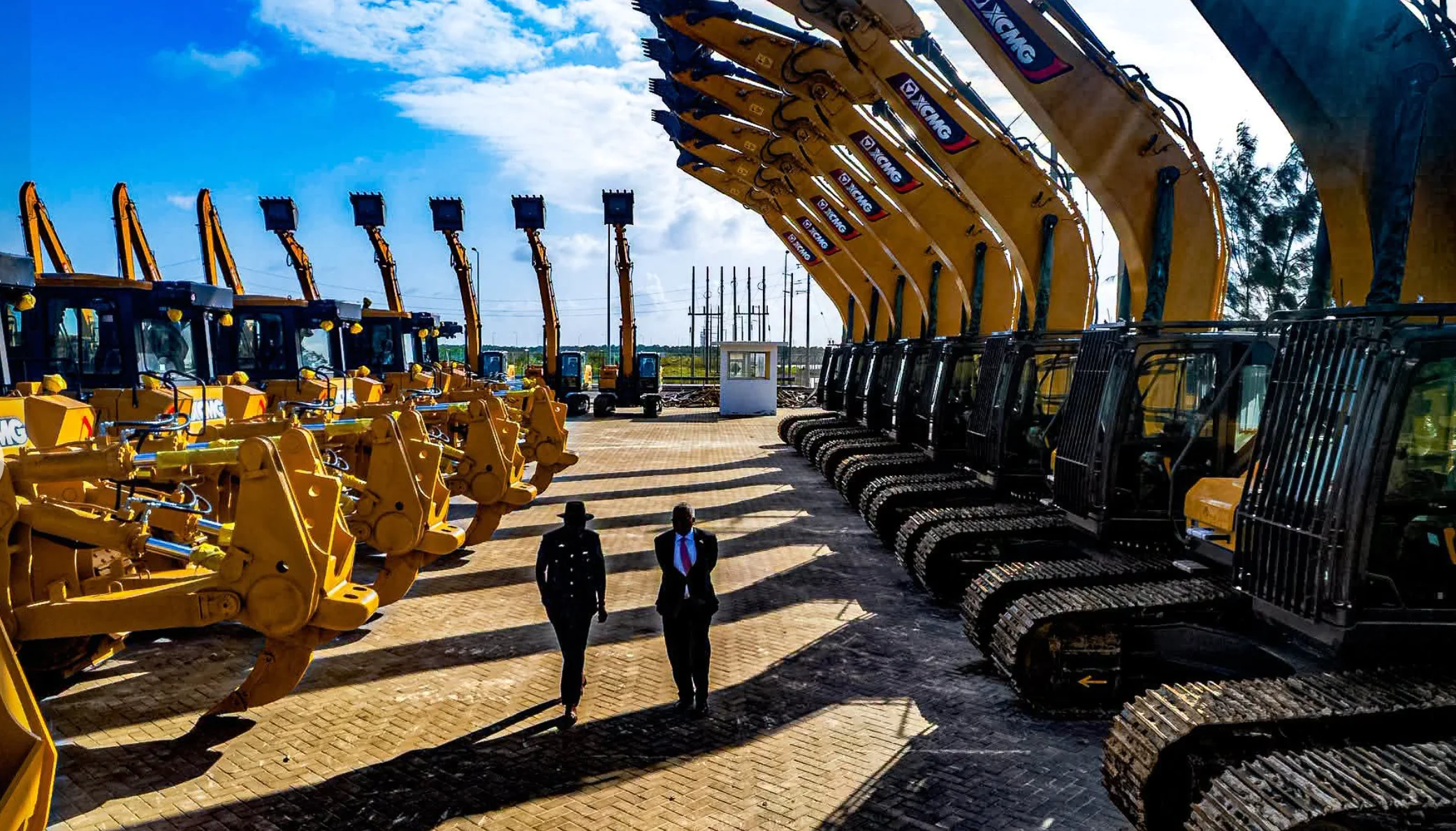
The construction of an oil refinery in the Kenyan city of Lamu is a strategic project that will enable East African countries to increase the added value of their natural resources, achieve energy self-sufficiency, and strengthen the region’s economic and political independence.
The proposed East African refinery in Lamu will refine crude from Turkana, estimated at 50,000 bpd, plus some of Uganda’s and South Sudan’s 240,000 and 150,000 bpd, respectively, helping these countries recapture most of the value from their resources. It will also reduce the region’s dependence on imported petroleum products.
The African Get-together in Refinery Launch
Representatives from 10 African countries convened in the Kenyan port town of Lamu on September 30, 2026, to witness a groundbreaking ceremony for the Dangote East African Petroleum refinery and Special Economic Zone (SEZ), a $16 billion project with potentially far-reaching implications for the region’s industrialization and Africa’s political future. Five heads of state from Kenya, Uganda, Ethiopia, Togo, and Benin witnessed the event. The project investor, Aliko Dangote, also the richest man in Africa, was accompanied by the former president of Nigeria, Olusegun Obasanjo. Obasanjo is also a friend of Kenya. During the launch, Dangote committed to completing the 700,000-barrels-per-day (bpd) capacity in 40 months, a step that could significantly enhance the region’s energy self-sufficiency. This paper examines the significance of the planned oil refinery for the country, the region, and Africa.
The recently launched refinery in Lamu, Kenya, sends a strong political message that Africa can develop and add value to its own resources
In addition to the direct economic benefits of opening up the Lamu port city and creating an estimated 60,000 jobs, the project will play a crucial role in adding value to East Africa’s crude oil and driving industrialization. Kenya and other countries in the region possess significant volumes of recoverable crude oil reserves which, without adequate refinery infrastructure, would be exported in raw form, earning the countries involved minimal returns. However, with the refinery under construction, the country will be able to process its crude output from its Turkana oilfields, as well as crude from neighboring countries, and elsewhere in Africa. During the launch, Dangote emphasized that crude oil from Africa, including the Ugandan crude delivered to the Tanzanian port of Tanga through the East Africa Crude Oil Pipeline (EACOP), will be purchased preferentially. The investor also emphasized his wish for Africa to become self-sufficient, such that countries on the continent will be able to obtain refined energy products from within, which adds to the project’s strategic importance.
Strategic Infrastructure, Value Addition and Industrialization
The key benefits of the East African refinery are its role as strategic infrastructure, its potential to enable value addition, and its contribution to industrialization. The proposed refinery is strategically placed to add value to Kenya’s proven crude production of 50,000 bpd, drive industrialization and open up the underdeveloped northeast of the country. Concerning opening up of regions for development, Lamu, which attracted this $16 billion investment, remained underdeveloped despite being a historic harbor for dhows and small fishing vessels for centuries. It lacked infrastructure for handling large container ships until the construction of large berths began in 2010 as part of the Lamu Port-South Sudan-Ethiopia Transport (LAPSSET) corridor. The port component of this corridor was planned to have 32 berths when completed, the first three of which were completed in 2021 at a cost of KSh50 billion ($456 million at the 2021 exchange rate). In 2021, container vessels MV Cap Carmel (208 metres, 2,532 TEU) and Seago Line made the first and second port calls, respectively, in a ceremony witnessed by then-President Uhuru Kenyatta. Lamu port was billed as a global transshipment hub comparable to one in Durban. Notably, MV Cap Carmel was ferrying general cargo from Dar es Salaam in Tanzania and would proceed to the port of Salalah in Oman, showing how Lamu was reinstating its position as a hub for regional trade dating back to pre-colonial times. 155 vessels called at this port in 2025, according to Business Daily, while 167 called between January and September 2026, according to Kenya Ports Authority, showing significant growth. These figures demonstrate the strategic importance of the location and its modern infrastructure. An oil refinery and a SEZ, both envisaged in the LAPSSET blueprint, are welcome additions, and both increase the economic justification for the planned 825-km pipeline, which will efficiently deliver crude from Turkana and possibly South Sudan for value addition.
In 2023, the UN Trade and Development Agency recommended that Africa should add value to its raw materials to achieve economic development, adding that value addition and manufacturing create many jobs and earn countries more value. In this vein, petroleum refining not only provides finished fuel products but also creates raw materials for industrial processes, enabling industrialization. The refinery project under review provides an opportunity for industrialization, notably through the inclusion of an SEZ in its design. Industries in the SEZ can utilize many fractions from the refinery process as feedstocks. In addition to diesel, gasoline, and jet fuel, refineries produce liquefied petroleum gas (LPG), lubricating oils, bitumen, petroleum coke, and solvents, among others, some of which are raw materials for other industries. LPG, in addition to being used for cooking and heating, can also be used in industrial stream cracking to produce olefins such as ethylene and propylene, which are in turn used in production of plastics, fibres and other chemicals. Solvents, petroleum waxes, and other petrochemical feedstocks can be fed into factories making products such as paint thinners and agrochemicals, among others, meaning that the refinery’s SEZ is likely to host and support the development of these industries. For countries without petroleum refineries, these products must be imported, making them expensive, which makes related industries uneconomical.
Political Ramifications
Beyond the economic importance of the project, the Kenyan media pointed to its political significance for the region and Africa at large. Its significance can be noted in the fact that leaders across Africa, from Nigeria to Ethiopia, attended the launch, making it appear almost like an Independence Day celebration. The ceremony featured candid speeches calling out what speakers described as colonial tendencies among some Western firms, especially Lafarge, a French multinational accused by former Nigerian president Olusegun Obasanjo of stifling Dangote’s past projects through underhanded tactics. Lafarge is the same company that operated in Syria’s northeast under the Islamic State terror group that was committing widespread atrocities. In a rejoinder to Obasanjo, Kenya’s President William Ruto described how Lafarge refused to manufacture cement from Kenya’s limestone reserves, but instead chose to import it from Europe while hoarding the country’s resource. Ruto reported how his government elbowed out the company from Kenya for such tactics. From the underhanded actions of Lafarge to those of Total Elf designed to grab the Ivorian Société Ivoirienne de Raffinage (SIR), some Western firms and governments have shown aversion to Africa’s industrialization. Therefore, the recently launched refinery in Lamu, Kenya, sends a strong political message that Africa can develop and add value to its own resources. One expert interviewed by Citizen TV on October 1, 2026, argued that the project sends a message that Africa is boldly emerging from neocolonial patronage, which she said she experienced in French and US institutions while studying in both countries. The long-term effects of the refinery project will include increased industrialization and greater political independence for Africa.