
The conditions that created Sudan’s civil war will likely recur if its military remains fragmented and dependent on semi-autonomous militias.
Nearly three years into the Sudanese Civil War, US diplomacy remains focused on an immediate and necessary objective: securing a humanitarian truce, stopping the fighting, and getting aid to civilians. But a ceasefire, urgent as it is, will not resolve one of the problems that helped bring Sudan to this point.
Even if Washington and the international community secure an agreement between the Sudanese Armed Forces (SAF) and the Rapid Support Forces (RSF), they will still face a difficult question: What happens to the other armed forces that have grown stronger during the war?
Sudan could emerge from this conflict not with two competing armies, but with five or six significant armed forces, each with its own commanders, weapons, political relationships, and areas of influence. The danger is that ending the SAF-RSF war without addressing this proliferation could replace one confrontation between two major forces with a more fragmented and potentially harder-to-manage security crisis.
There is a familiar pattern in modern Sudanese conflicts. When the army has failed to confront internal rebellions, successive governments have turned to recruiting forces outside the formal military, arming them, or cooperating with them. These arrangements provided short-term manpower but repeatedly weakened the state’s control over the monopoly on the use of force.
The clearest example of this is the Janjaweed. Khartoum relied on these Arab militias during the Darfur War, but they did not disappear when their direct role changed. Instead, parts of this formation later evolved into the RSF paramilitary, which gained legal recognition, weapons, resources, and growing political influence. By April 15, 2023, a force that had once fought alongside the state went to war against it.
That experience should have shown the danger of empowering armed forces outside the regular military framework. Instead, the current war has expanded this model rather than curbing it.
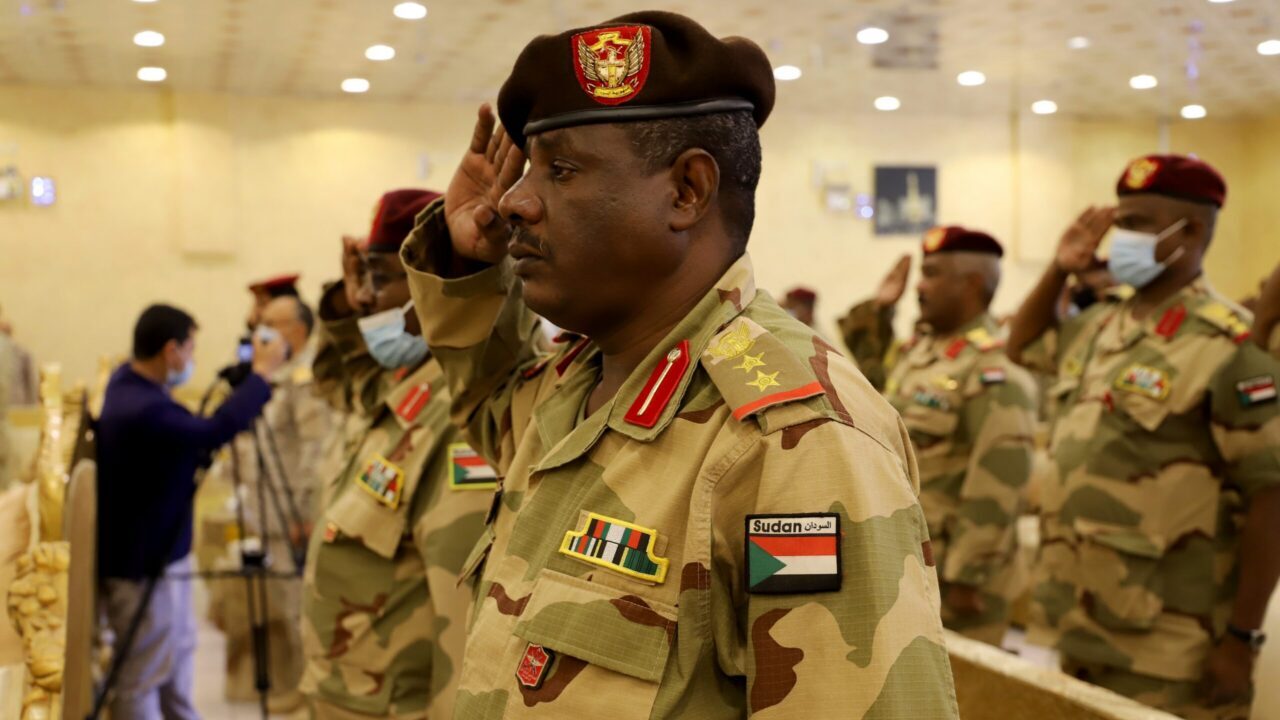
To confront the RSF, the Sudanese army has relied on a broad array of allies: Darfuri armed movements, local forces, mobilized civilians, ideological groups, and other military formations. Among the most prominent is the Joint Force, along with its affiliated armed movements, including the Sudan Liberation Movement led by Minni Arko Minnawi and the Justice and Equality Movement led by Gibril Ibrahim. Other forces, including Sudan Shield and the Al-Baraa bin Malik Battalion, have also gained greater military standing during the war.
These groups are neither identical nor interchangeable; each has its own history, social base, political agenda, and relationship with the army. But the war has strengthened these armed actors, giving them more fighters, weapons, regional influence, and political weight than they had before April 2023.
The broader lesson from the RSF’s trajectory, then, is not simply that one paramilitary force became excessively powerful. The lesson is that Sudan cannot continue empowering armed partners to confront immediate security threats and then assume they will relinquish their weapons and influence once the conflict ends.
One of the clearest examples of this pattern is the Joint Force—the group of armed movements that entered the political and military scene through the 2020 Juba Peace Agreement (which ended the Darfur War after the collapse of the government of Omar al-Bashir and the 2019 Sudanese Revolution) and secured important positions under that settlement. But the security track of the transitional process did not keep pace with the political track. These movements gained political representation, while the harder work of integrating their forces and restructuring the security sector remained unfinished.
This arrangement was meant to be temporary, a step toward integrating those forces into a unified national army. But the same problem recurred: who gives up political influence willingly? Rather than gradually phasing out these movements as parallel forces, the current war has extended their political presence—indeed, granting them greater standing within state institutions than they held when the agreement was signed.
When discussing the building of a unified national military institution, a fundamental question arises: who should be allowed to join it? Some of these forces are implicated in well-documented serious violations, while others simply lack genuine military experience that would qualify them for integration into a regular army. Between these two considerations, determining which categories can be accepted into the new military institution—and which must be excluded or held accountable first—is essential to any credible integration process. Otherwise, integration risks reproducing the very problem it is meant to solve.
For Washington, the risks posed by the continued presence of multiple armed forces in Sudan extend well beyond Sudan itself. Security fragmentation creates opportunities for outside powers, including terrorist groups, Russia, and Iran, to build direct relationships with local armed groups and exploit the weakness of the state to expand their influence. The continued spread of weapons also puts greater pressure on neighboring countries, particularly Egypt and Chad, which already host large numbers of Sudanese refugees, while increasing the risk of cross-border arms trafficking and broader regional security threats. The danger extends to the Red Sea, where a weak and fragmented Sudan could create a security vacuum that armed actors or transnational networks could exploit, threatening one of the region’s most important maritime corridors.
Disarmament and military integration, therefore, should not be treated as issues to be addressed only after a ceasefire. This should be part of the negotiating process from the beginning. Washington should make the future of Sudan’s armed formations a priority in any political settlement, linking future power-sharing arrangements to clear and measurable progress on disarmament and the creation of a unified national military.
This will require supporting transparent mechanisms to identify armed formations, track weapons, map where these forces operate, and monitor compliance with agreed steps toward disbandment or integration. Integration into a unified national army should also be subject to rigorous vetting, so that commanders accused of serious abuses cannot escape accountability simply by moving into a new military structure.
In short, the US objective should go beyond ending the war between the SAF and RSF. It should also prevent Sudan from emerging from this conflict with several new parallel armies that carry the seeds of the next war.