
Key Takeaways:
Morocco has evolved from a conventional southern neighbour of the European Union into a strategic co-producer of Euro-Mediterranean security, actively contributing through counterterrorism intelligence, migration governance, and regional stability efforts.
The partnership now encompasses economic security, renewable energy, industrial nearshoring, green hydrogen, and African connectivity, positioning Morocco as a key pillar of Europe’s strategic autonomy and a bridge to the African continent.
The traditional European Neighbourhood Policy framework is no longer sufficient; the relationship is better understood as a privileged strategic partnership grounded in mutual dependence, institutional trust, and shared responsibility for Euro-African governance.
Introduction
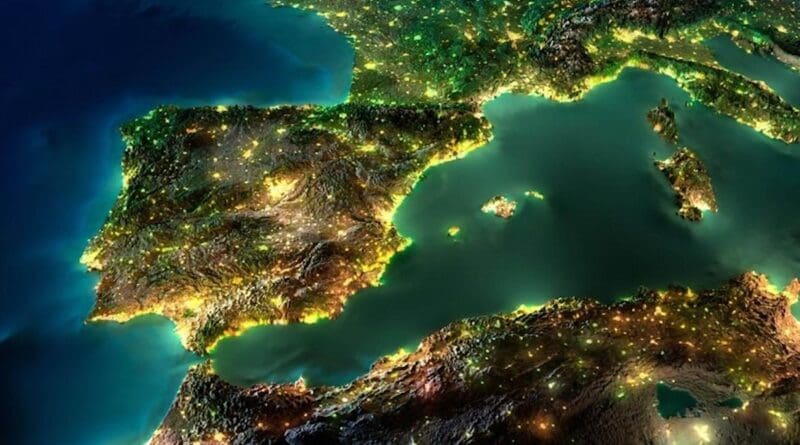
The Mediterranean has historically constituted one of the world’s principal geopolitical crossroads, serving simultaneously as a zone of commercial exchange, cultural interaction, strategic rivalry, and civilizational dialogue. For more than two millennia, the northern and southern shores of the Mediterranean have remained linked through dense networks of trade, migration, diplomacy, conquest, and intellectual exchange, creating what Fernand Braudel (1972) famously described as a unified historical space despite its political fragmentation. Within this complex geopolitical landscape, Morocco has consistently occupied a singular position. Located at the northwestern extremity of Africa, overlooking both the Atlantic Ocean and the Mediterranean Sea and separated from continental Europe by only fourteen kilometers at the Strait of Gibraltar, the Kingdom has long functioned as a strategic bridge connecting Europe, Africa, the Middle East, and the wider Atlantic world (Braudel, 1972; Chtatou, 2017).
Historically, relations between Morocco and Europe have extended well beyond commercial or diplomatic exchanges. They have been characterized by continuous processes of cultural interaction, migration, religious dialogue, scientific transmission, and political cooperation dating back to antiquity. From the Almoravid and Almohad periods to the Andalusian legacy and the modern era of Euro-Mediterranean integration, Morocco has participated actively in shaping the political and cultural history of the western Mediterranean (Abun-Nasr, 1987; Chtatou, 2017). This long historical interaction provides an essential context for understanding why contemporary cooperation between Morocco and the European Union cannot be reduced simply to questions of trade, migration management, or security policy. Rather, it rests upon centuries of mutual interdependence that continue to influence present-day strategic relations (Chtatou, 2021; Chtatou, 2022).
The end of the Cold War fundamentally transformed the strategic environment surrounding the Mediterranean. Traditional interstate military rivalries gradually gave way to multidimensional and transnational threats, including terrorism, irregular migration, organized crime, cyber insecurity, climate change, energy vulnerability, pandemics, and state fragility. These emerging challenges increasingly blurred the distinction between internal and external security, compelling the European Union to recognize that the stability of its southern neighborhood constitutes an integral component of European security itself (Bigo, 2014; European Commission, 2015; Geddes, 2021). Consequently, the EU progressively abandoned a predominantly assistance-based approach toward its southern partners in favor of a more comprehensive strategy emphasizing shared responsibility, institutional cooperation, and regional resilience.
Within this evolving geopolitical environment, Morocco rapidly emerged as the European Union’s most reliable and comprehensive partner in North Africa. Unlike several neighboring countries that experienced prolonged political instability, civil conflict, institutional collapse, or recurrent military intervention during the first quarter of the twenty-first century, Morocco succeeded in preserving political continuity while simultaneously implementing constitutional reforms, expanding social protection, modernizing public administration, liberalizing significant sectors of the economy, and strengthening democratic institutions (Daadaoui, 2011; Chtatou, 2026a). This combination of institutional resilience and gradual reform has enhanced Morocco’s credibility among European policymakers seeking stable partners capable of contributing to regional governance rather than merely receiving external assistance.
Institutionally, the relationship has evolved through successive stages of increasing integration. Morocco’s participation in the 1995 Barcelona Process, the entry into force of the Association Agreement in 2000, the granting of Advanced Status in 2008, the implementation of successive European Neighbourhood Policy Action Plans, and, most recently, the establishment of the Green Partnership in 2022 collectively illustrate a progressive deepening of political dialogue and regulatory convergence (European Commission, 2022; European External Action Service, 2024). These initiatives have expanded cooperation far beyond trade liberalization to encompass counterterrorism, migration governance, judicial cooperation, renewable energy, climate action, digital transformation, scientific research, higher education, infrastructure development, and industrial integration.
Perhaps the most significant transformation concerns the emergence of Morocco as a provider of regional security rather than merely a beneficiary of European security assistance. Following the terrorist attacks of Casablanca in 2003 and the subsequent intensification of jihadist violence across Europe, North Africa, and the Sahel, Morocco developed one of Africa’s most sophisticated counterterrorism architectures. Combining intelligence-led policing, judicial modernization, financial oversight, border management, prison rehabilitation, and religious reform, the Kingdom has become an indispensable intelligence partner for numerous European states (Burke, 2015; Bigo, 2014). Moroccan security services have repeatedly contributed to the prevention of terrorist attacks in Spain, France, Belgium, Germany, and other European countries, demonstrating that security in the Euro-Mediterranean region has become increasingly indivisible.
Migration governance constitutes a second pillar of this strategic partnership. Morocco’s geographical position at the intersection of African migration routes has transformed it from a traditional country of emigration into a country of transit, destination, and settlement. Recognizing the structural nature of these demographic transformations, Morocco adopted in 2013 a National Strategy on Immigration and Asylum that sought to reconcile sovereign border management with humanitarian protection, migrant regularization, social integration, and international legal obligations (CNDH, 2013; Natter, 2018; Chtatou, 2026b). This policy represents one of the most innovative migration governance frameworks in Africa and increasingly serves as a reference point for European discussions concerning comprehensive migration management. As argued elsewhere, Morocco’s approach seeks to balance sovereignty with solidarity, demonstrating that effective migration governance requires not only security measures but also respect for human dignity and international cooperation (Chtatou, 2026b; Chtatou, 2026c).
Beyond security and migration, Morocco’s strategic relevance has been amplified by profound geopolitical transformations reshaping both Europe and Africa. The deterioration of security across the Sahel, Russia’s renewed engagement on the continent, China’s expanding economic footprint through the Belt and Road Initiative, the energy disruptions following Russia’s invasion of Ukraine, Europe’s search for resilient supply chains, and the acceleration of the green transition have all elevated Morocco’s geopolitical significance. Simultaneously, the Kingdom has consolidated its position as one of Africa’s leading investors, an emerging renewable-energy power, a major industrial platform, and a diplomatic actor promoting South–South cooperation through initiatives such as the Atlantic Initiative for the Sahel (European Council, 2023; World Bank, 2024).
This article argues that the traditional analytical framework through which EU–Morocco relations have been understood is no longer sufficient. Morocco should not be viewed simply as the European Union’s southern neighbor or as a buffer state responsible for controlling migration flows toward Europe. Rather, the Kingdom has evolved into an indispensable strategic co-producer of Euro-Mediterranean security, contributing actively to intelligence cooperation, migration governance, regional diplomacy, energy security, economic resilience, and African stability. This transformation reflects a broader evolution from asymmetrical neighborhood relations toward a relationship characterized by strategic interdependence, mutual dependence, and shared geopolitical interests.
To develop this argument, the article first traces the historical evolution of EU–Morocco relations before examining Morocco’s contributions to European security through counterterrorism cooperation and intelligence sharing. It then analyzes Morocco’s migration governance model, the Kingdom’s growing role in stabilizing the Sahel, its importance for Europe’s energy transition and industrial resilience, and the implications of emerging geopolitical competition across Africa and the Mediterranean. Finally, the article assesses the future prospects of the partnership, arguing that Morocco is increasingly becoming the European Union’s principal strategic gateway to Africa and one of the indispensable pillars of a new Euro-African geopolitical architecture.
The Evolution of EU–Morocco Strategic Relations: From Neighbourhood Cooperation to Strategic Interdependence
The contemporary partnership between the Kingdom of Morocco and the European Union is the product of a long process of political, economic, and strategic convergence that extends well beyond the formal structures established under the European Neighbourhood Policy (ENP). Although institutional cooperation has intensified considerably since the 1990s, the roots of this relationship are much older, reflecting centuries of commercial exchange, diplomatic interaction, cultural dialogue, and geopolitical interdependence across the western Mediterranean (Braudel, 1972; Chtatou, 2017). Understanding the present strategic partnership therefore requires situating it within a broader historical continuum in which geography, history, and shared interests have consistently shaped relations between Morocco and Europe.
Morocco occupies a unique geopolitical position at the intersection of Europe, Africa, the Mediterranean, and the Atlantic. Throughout history, this position has transformed the Kingdom into a crossroads of civilizations and an indispensable maritime gateway controlling access to the Strait of Gibraltar, one of the world’s most strategically significant waterways. As Chtatou (2017) argues, the relationship between Morocco and Europe has never been limited to diplomatic exchanges or commercial transactions; it has instead constituted a continuous process of intercultural communication and human interaction that has profoundly influenced the political, economic, and intellectual development of both shores of the Mediterranean. This historical depth distinguishes Morocco from many of Europe’s other southern partners and partly explains the resilience of bilateral relations despite changing international circumstances.
Following Morocco’s independence in 1956, successive governments identified Europe as the Kingdom’s principal economic and political partner while simultaneously preserving an autonomous foreign policy anchored in Africa, the Arab world, and the broader international community. This multidirectional diplomacy enabled Morocco to cultivate close relations with European institutions without becoming politically dependent upon them. During the early decades of European integration, cooperation focused primarily on trade, agricultural exports, fisheries, labor migration, and development assistance. Although these agreements established important foundations, they remained essentially sectoral and reflected the asymmetrical character of North–South relations that prevailed during much of the twentieth century (Kausch, 2010).
The end of the Cold War fundamentally altered this strategic landscape. The disappearance of bipolar rivalry shifted European attention toward challenges originating beyond its southern borders, including irregular migration, transnational organized crime, terrorism, environmental degradation, and state fragility. These emerging risks demonstrated that European security could no longer be conceived exclusively in territorial or military terms. Instead, they required cooperative governance extending across the Mediterranean basin (Bigo, 2014; Lavenex, 2006). Morocco rapidly recognized this transformation and positioned itself as an active participant in the construction of a new Euro-Mediterranean order based upon dialogue, shared responsibility, and institutional cooperation.
The launch of the Barcelona Process in 1995 marked the first major attempt to institutionalize this new vision. Officially known as the Euro-Mediterranean Partnership, the initiative sought to create a common area of peace, stability, and shared prosperity linking the European Union with its southern neighbors. Built around three mutually reinforcing pillars—political and security dialogue, economic and financial cooperation, and social, cultural, and human exchanges—the Barcelona Declaration reflected an ambitious effort to redefine Mediterranean relations in cooperative rather than confrontational terms (European Commission, 1995; Youngs, 2017).
Morocco emerged as one of the most committed participants in this process. Unlike several neighboring countries, the Kingdom viewed Euro-Mediterranean integration not simply as a mechanism for attracting financial assistance but as a strategic opportunity to modernize its economy, strengthen public institutions, expand international markets, and consolidate its diplomatic influence. This proactive engagement reflected Morocco’s long-standing conviction that its prosperity and stability were inseparable from those of Europe while simultaneously remaining deeply connected to Africa and the wider Mediterranean (Chtatou, 2021).
The entry into force of the EU–Morocco Association Agreement in 2000 represented another decisive milestone. The agreement significantly broadened bilateral cooperation by establishing regular political consultations, progressive trade liberalization, judicial cooperation, regulatory approximation, educational exchanges, scientific collaboration, environmental initiatives, and cooperation in justice and home affairs (European Commission, 2000). More importantly, it introduced an institutional architecture capable of sustaining continuous political dialogue through the Association Council, specialized committees, and technical working groups. These mechanisms gradually transformed cooperation from episodic diplomatic engagement into permanent institutional interaction.
The terrorist attacks of 11 September 2001 in the United States and the Casablanca bombings of May 2003 profoundly reshaped the priorities of both Morocco and the European Union. Security rapidly became the dominant dimension of bilateral relations. European governments increasingly recognized that terrorism, radicalization, and transnational criminal networks could not be effectively addressed without close cooperation with reliable partners on the southern shore of the Mediterranean. Morocco’s rapid institutional response to domestic terrorism—including intelligence reform, judicial modernization, financial surveillance, prison rehabilitation, and religious governance—established the Kingdom as one of Europe’s most trusted security partners (Burke, 2015; Bigo, 2014).
Recognition of Morocco’s growing strategic importance culminated in 2008, when the European Union granted the Kingdom Advanced Status, making Morocco the first Southern Mediterranean country to enjoy such a privileged relationship. This designation represented far more than a symbolic diplomatic gesture. It acknowledged Morocco’s exceptional level of political dialogue, regulatory convergence, and institutional compatibility with European standards while opening new avenues for cooperation in foreign policy, security, research, education, transportation, and internal market approximation (European Commission, 2008). Advanced Status effectively blurred the traditional distinction between neighboring states and strategic partners, positioning Morocco closer to the European institutional sphere than any other non-candidate country in North Africa.
The subsequent establishment of the European Neighbourhood Policy (ENP) Action Plans further reinforced this trajectory. Unlike earlier cooperation frameworks primarily centered on financial assistance, the ENP emphasized joint ownership, differentiated partnerships, and mutual accountability. Morocco consistently distinguished itself through the breadth of reforms undertaken and its willingness to engage in regulatory approximation with European legislation across diverse sectors ranging from environmental governance and competition policy to customs procedures and industrial standards (European Commission, 2015).
The constitutional reforms adopted in 2011, in the context of the wider Arab uprisings, further strengthened Morocco’s international credibility. While several countries across North Africa and the Middle East experienced prolonged political instability, institutional collapse, or civil conflict, Morocco pursued a path of gradual constitutional evolution under the leadership of King Mohammed VI. The adoption of a new Constitution expanded parliamentary authority, reinforced judicial independence, recognized Amazigh as an official language, strengthened human rights guarantees, and promoted advanced regionalization (Daadaoui, 2011; Chtatou, 2026a). Although scholarly assessments differ regarding the scope and pace of these reforms, European institutions broadly interpreted Morocco’s political trajectory as evidence of institutional resilience and adaptive governance within a turbulent regional environment.
The strategic significance of the partnership expanded further after 2017, when Morocco rejoined the African Union following a thirty-three-year absence. This decision profoundly altered European perceptions of Morocco’s regional role. Rather than functioning solely as the European Union’s southern neighbor, Morocco increasingly emerged as a continental actor capable of connecting Europe with rapidly growing African markets. Moroccan investments in banking, telecommunications, renewable energy, agriculture, infrastructure, and vocational education throughout West and Central Africa substantially reinforced this image (Chtatou, 2023). Consequently, European policymakers began viewing Morocco not only as a recipient of neighborhood policies but also as a strategic bridge facilitating Europe’s engagement with Africa.
The launch of the EU–Morocco Green Partnership in 2022 represented the latest stage in this evolving relationship and symbolized a shift toward twenty-first-century strategic priorities. As the first Green Partnership concluded by the European Union with a Southern Mediterranean country, the agreement encompasses renewable energy, climate resilience, green hydrogen, sustainable agriculture, circular economy initiatives, biodiversity protection, and environmental innovation (European Commission, 2022). It reflects a broader recognition that energy transition, climate change, and environmental sustainability have become inseparable from economic competitiveness and geopolitical security.
The war in Ukraine accelerated this evolution. Europe’s urgent search for diversified energy supplies, resilient industrial chains, and dependable external partners substantially enhanced Morocco’s strategic value. The Kingdom’s ambitious investments in solar and wind power, green hydrogen production, advanced logistics infrastructure, and industrial manufacturing positioned it as a key partner in Europe’s efforts to strengthen strategic autonomy while reducing dependence on vulnerable supply chains (Farrell & Newman, 2019; World Bank, 2024).
Taken together, these developments reveal a profound transformation in the nature of EU–Morocco relations. What began as a conventional association agreement centered on trade and development has evolved into a multidimensional strategic partnership encompassing security, migration governance, renewable energy, industrial integration, digital transformation, climate policy, scientific cooperation, and African diplomacy. The relationship is increasingly characterized by strategic interdependence, whereby both parties contribute capabilities essential to the other’s long-term stability and prosperity.
The Mediterranean should no longer be viewed as a dividing line separating Europe from Africa but rather as a shared geopolitical space in which security, prosperity, and sustainable development are intrinsically interconnected (Chtatou, 2021, 2022). The evolution of EU–Morocco relations illustrates this transformation more clearly than any other bilateral partnership within the Southern Neighbourhood. Morocco has progressively ceased to be simply the European Union’s southern neighbor; it has become one of the principal architects of an emerging Euro-African strategic order founded upon shared interests, mutual dependence, and cooperative governance.
Morocco as Europe’s Security Anchor: From Security Consumer to Strategic Security Producer
The transformation of Morocco into one of the European Union’s principal strategic partners is perhaps nowhere more evident than in the field of security cooperation. During the past two decades, the Kingdom has progressively evolved from being perceived as a recipient of European security assistance into an indispensable provider of regional security, intelligence, and strategic stability. This evolution reflects not merely improvements in Morocco’s domestic security institutions but a fundamental reconfiguration of the Euro-Mediterranean security architecture itself. Today, the Kingdom contributes directly to protecting European societies against terrorism, transnational organized crime, irregular migration, cyber threats, and regional instability, thereby functioning as what may appropriately be described as a security producer rather than simply a security consumer (Bigo, 2014; Burke, 2015).
This transformation must be understood within the broader evolution of security studies. Traditional conceptions of national security emphasized territorial defense, military alliances, and interstate conflict. Since the end of the Cold War, however, the nature of security has changed profoundly. Contemporary threats—including terrorism, violent extremism, organized crime, cyberattacks, pandemics, climate insecurity, and irregular migration—transcend national borders and cannot be effectively addressed by individual states acting alone (Buzan, Wæver, & de Wilde, 1998; Bigo, 2014). Security has consequently become increasingly cooperative, multidimensional, and networked, requiring extensive partnerships among governments, intelligence agencies, law enforcement institutions, and regional organizations.
The European Union has been particularly affected by this transformation. The terrorist attacks in Madrid (2004), London (2005), Paris (2015), Brussels (2016), Berlin (2016), Nice (2016), Vienna (2020), and other European cities demonstrated that internal and external security have become inseparable. Radicalization processes frequently originate beyond European borders, while extremist organizations operate through transnational networks connecting North Africa, the Sahel, the Middle East, and Europe. Consequently, the effectiveness of European counterterrorism increasingly depends upon cooperation with trusted external partners possessing regional expertise, intelligence capabilities, and operational reach (Burke, 2015; European Council, 2023).
Within this evolving landscape, Morocco has emerged as perhaps the European Union’s most reliable security partner on the African continent. Following the terrorist attacks in Casablanca in May 2003, Moroccan authorities initiated one of the most comprehensive security reforms undertaken anywhere in the Global South. Rather than relying exclusively upon coercive measures, Morocco developed an integrated security strategy combining intelligence modernization, judicial reform, financial surveillance, border management, prison rehabilitation, religious governance, educational initiatives, and international cooperation. This multidimensional approach recognized that terrorism constitutes not only a military or criminal phenomenon but also an ideological, social, political, and economic challenge requiring equally comprehensive responses (Chtatou, 2017; Chtatou, 2026d).
The institutional modernization of Morocco’s security apparatus significantly enhanced the Kingdom’s capacity to prevent rather than merely react to terrorist violence. Intelligence services strengthened interagency coordination, expanded international information sharing, invested in advanced technological capabilities, and developed sophisticated methods for monitoring extremist recruitment, financial transactions, and transnational terrorist networks. Simultaneously, judicial institutions acquired enhanced investigative capacities, while legislation concerning terrorism financing, money laundering, and organized crime was progressively modernized in accordance with evolving international standards (Bigo, 2014).
European security agencies have repeatedly acknowledged the exceptional quality of Moroccan intelligence cooperation. Although much of this collaboration necessarily remains confidential, numerous publicly documented cases illustrate Morocco’s decisive contribution to preventing terrorist attacks across Europe. Moroccan intelligence has reportedly assisted authorities in Spain, France, Belgium, Germany, the Netherlands, and Italy in identifying extremist networks, locating terrorist suspects, dismantling recruitment structures, and preventing planned attacks before they could be executed (Burke, 2015). Such operational cooperation has generated a high degree of mutual confidence that distinguishes Morocco from many other partners within the European Union’s Southern Neighbourhood.
Morocco’s comparative advantage derives from several structural factors. First, its geographical location at the intersection of Europe, North Africa, and the Sahel provides exceptional situational awareness regarding transregional security dynamics. Second, its linguistic, cultural, and religious proximity to diverse communities across North and West Africa facilitates intelligence gathering and regional cooperation. Third, Morocco possesses long-standing diplomatic relationships throughout Africa that enhance information exchange and preventive engagement. Finally, its political stability and institutional continuity enable sustained long-term security planning, contrasting sharply with the political volatility affecting several neighboring states (Daadaoui, 2011; Chtatou, 2026a).
However, Morocco’s contribution to European security extends well beyond intelligence sharing. One of the Kingdom’s most distinctive innovations has been the incorporation of religious governance into national security policy. Whereas many states treat religion and security as separate policy domains, Morocco has adopted an integrated approach recognizing that extremist ideologies must be challenged both operationally and intellectually. Under the constitutional authority of King Mohammed VI as Amir al-Mu’minin (Commander of the Faithful), Morocco has developed a model of religious governance rooted in the Maliki school of jurisprudence, Ash’ari theology, and the ethical traditions of Sunni Sufism. This model emphasizes moderation (wasatiyya), coexistence, legal pluralism, and the rejection of extremist interpretations of Islam (Chtatou, 2026d).
Central to this strategy is the Mohammed VI Institute for the Training of Imams, Morchidines, and Morchidates, whose programmes attract students from across Africa and Europe. Beyond traditional Islamic sciences, trainees receive instruction in comparative religion, psychology, communication, constitutional law, human rights, and civic education, equipping them to confront extremist narratives through informed theological engagement. Morocco’s religious diplomacy has consequently become an important component of European efforts to prevent radicalization, particularly among vulnerable youth and within transnational Muslim communities (OSCE, 2023).
Sustainable counterterrorism cannot rely solely on surveillance or military force; it requires educational reform, critical thinking, civic responsibility, and the cultivation of hope as antidotes to extremist ideologies (Chtatou, 2026d; Chtatou, 2026e; Chtatou, 2026f). This perspective substantially enriches prevailing European approaches to preventing violent extremism by emphasizing the long-term societal dimensions of security rather than immediate operational responses alone.
Morocco’s security role has acquired additional significance because of the deteriorating situation across the Sahel. The expansion of jihadist organizations affiliated with al-Qaeda and the so-called Islamic State, coupled with military coups, weak governance, environmental stress, and organized criminal networks, has transformed the Sahel into one of the principal sources of insecurity affecting both Africa and Europe. Rather than limiting its engagement to military cooperation, Morocco has adopted a multidimensional strategy combining diplomacy, development assistance, religious cooperation, vocational education, agricultural investment, banking expansion, and infrastructure development throughout West Africa (Chtatou, 2023). This comprehensive engagement addresses structural drivers of insecurity while strengthening regional resilience, thereby complementing European objectives of conflict prevention and sustainable development.
The launch of King Mohammed VI’s Atlantic Initiative further illustrates Morocco’s evolving conception of security. By proposing enhanced connectivity between Atlantic ports and landlocked Sahelian countries, the initiative seeks to reduce economic isolation, stimulate regional trade, facilitate investment, and promote long-term development. In this sense, Morocco advances a concept of human security, recognizing that lasting stability depends upon economic opportunity, social inclusion, institutional governance, and regional integration as much as upon military deterrence (United Nations Development Programme, 2023).
Collectively, these developments demonstrate that Morocco has become far more than an operational partner assisting Europe in addressing isolated security challenges. The Kingdom increasingly contributes to shaping the strategic environment itself. Through intelligence cooperation, counterterrorism, religious diplomacy, migration management, African engagement, and regional development initiatives, Morocco actively produces security that benefits both sides of the Mediterranean.
This evolution fundamentally challenges traditional conceptions of Euro-Mediterranean relations based on asymmetrical donor–recipient dynamics. Instead, Morocco and the European Union are progressively constructing a relationship characterized by shared responsibility, mutual dependence, and strategic co-production of regional stability. It is precisely this transition—from security consumer to security producer—that explains Morocco’s emergence as the European Union’s indispensable strategic anchor on its southern flank.
Migration Governance: Morocco as a Norm Entrepreneur in Euro-African Migration Policy
Migration has become one of the defining issues of twenty-first-century Euro-Mediterranean relations. Few public policy domains have generated greater political controversy, institutional innovation, and diplomatic negotiation than the governance of human mobility across the Mediterranean basin. For the European Union, migration has increasingly been framed as a strategic challenge affecting border management, internal security, labor markets, demographic sustainability, and political cohesion. For Morocco, however, migration represents a far more complex reality, simultaneously encompassing emigration, immigration, transit migration, refugee protection, labor mobility, humanitarian responsibility, and continental solidarity. Consequently, Morocco has progressively developed one of Africa’s most sophisticated migration governance models, positioning itself not merely as a transit country but as an important norm entrepreneur shaping regional migration policy (Cassarino, 2018; Natter, 2018).
Traditional analyses frequently portray Morocco through the narrow lens of European migration control, emphasizing its role in preventing irregular migration toward Spain and the wider European Union (Boswell, 2003; Lavenex, 2006). While border management undoubtedly constitutes an important component of bilateral cooperation, such interpretations underestimate the profound transformation that Moroccan migration policy has undergone during the past decade. Morocco’s contemporary migration governance seeks to reconcile three sometimes competing imperatives: the sovereign responsibility to protect national borders, the humanitarian obligation to safeguard vulnerable migrants, and the strategic necessity of maintaining regional stability through international cooperation. This tripartite framework distinguishes Morocco from approaches that rely almost exclusively upon deterrence or securitization (Chtatou, 2026a) .
The Kingdom’s migration profile has itself undergone a remarkable transformation. Historically regarded primarily as a country of emigration, Morocco supplied labor migrants to France, Belgium, the Netherlands, Spain, Germany, and other European countries throughout much of the twentieth century. Beginning in the 1990s, however, profound demographic, economic, and political changes throughout Sub-Saharan Africa gradually altered migration dynamics. Civil conflicts, environmental degradation, demographic growth, persistent poverty, and expanding transnational smuggling networks increasingly redirected migration routes through Morocco toward Europe (International Organization for Migration [IOM], 2024). Simultaneously, many migrants elected to remain in Morocco permanently, transforming the Kingdom into a country of destination as well as transit.
These structural changes challenged conventional migration policies. A strategy based exclusively upon border enforcement proved insufficient to address the growing complexity of migration flows. Recognizing this reality, King Mohammed VI initiated a fundamental reassessment of Morocco’s migration policy. Following the landmark report of the National Human Rights Council (CNDH, 2013), Morocco adopted the National Strategy on Immigration and Asylum (NSIA), representing one of the most ambitious migration policy reforms undertaken anywhere in Africa.
The NSIA marked a decisive break with earlier policy paradigms. Rather than reducing migration governance to border surveillance, the strategy embraced a multidimensional approach integrating regularization, legal protection, healthcare, education, vocational training, labor-market participation, social inclusion, and institutional coordination (CNDH, 2013). Thousands of undocumented migrants benefited from exceptional regularization campaigns that granted residence permits and expanded access to public services. These measures reflected an understanding that long-term migration governance requires institutional inclusion rather than permanent marginalization.
Morocco’s migration reform also represented an important normative shift. Instead of viewing migrants solely as security concerns, the Kingdom increasingly recognized them as holders of rights protected under both domestic legislation and international law. This orientation was consistent with Morocco’s broader constitutional reforms emphasizing human dignity, equality before the law, and international human rights commitments (Daadaoui, 2011). Morocco’s migration policy sought to demonstrate that state sovereignty and humanitarian responsibility are not mutually exclusive but mutually reinforcing when embedded within coherent public institutions (Chtatou, 2026a).
At the same time, Morocco has never abandoned its sovereign responsibility to combat irregular migration and transnational criminal organizations. Human trafficking, migrant smuggling, document fraud, and organized criminal networks continue to pose significant threats to both Moroccan and European security. Consequently, Moroccan authorities have invested heavily in maritime surveillance, border management, intelligence cooperation, and judicial action against trafficking organizations. Thousands of trafficking networks have been dismantled through coordinated operations involving Moroccan security services and European partners, particularly Spain, France, and Europol (European External Action Service, 2024).
This dual strategy—combining humanitarian protection with robust law enforcement—constitutes one of the defining characteristics of Moroccan migration governance. Rather than adopting either an exclusively humanitarian or an exclusively securitized approach, Morocco has attempted to balance security imperatives with respect for human dignity. Such equilibrium remains difficult to achieve, and implementation continues to face practical challenges. Nevertheless, Morocco’s experience demonstrates that migration governance can move beyond the false dichotomy between open borders and fortress-like exclusion (Cassarino, 2018).
Another distinctive feature of Morocco’s migration diplomacy lies in its African orientation. Unlike many European approaches that primarily conceptualize migration through bilateral relations between sending and receiving countries, Morocco increasingly situates migration within broader processes of African integration. Following its return to the African Union in 2017, the Kingdom intensified cooperation with West and Central African states on labor mobility, border management, vocational training, investment, and development. Migration thus became embedded within Morocco’s wider South–South cooperation strategy, emphasizing partnership rather than dependency (Chtatou, 2026b).
King Mohammed VI’s leadership of the African Union on migration issues further reinforced this orientation. The establishment of the African Observatory for Migration in Rabat illustrates Morocco’s ambition to transform migration governance through evidence-based policymaking, continental dialogue, and African ownership of migration policy. Rather than allowing migration narratives to be defined exclusively by European security concerns, Morocco has advocated an approach recognizing migration as a structural component of African development, regional integration, and demographic transformation (African Union, 2018).
This perspective is closely aligned with the argument that migration should be understood not as a crisis but as a permanent feature of globalization requiring comprehensive governance rather than emergency responses (Chtatou, 2026b). According to this view, effective migration policy depends upon addressing structural drivers—including unequal development, youth unemployment, environmental degradation, political instability, educational disparities, and armed conflict—rather than concentrating exclusively upon border enforcement. Such an approach broadens the analytical framework from migration control toward migration governance.
The European Union has progressively come to recognize the strategic significance of this Moroccan model. Cooperation has expanded beyond operational border management to include institutional capacity building, asylum reform, anti-trafficking initiatives, return and reintegration programmes, and legal migration pathways (European Commission, 2024). Nevertheless, important differences persist. European governments often prioritize the reduction of irregular arrivals, whereas Morocco consistently insists that migration constitutes a shared responsibility requiring greater European investment in African development and more equitable burden-sharing.
These differences should not be interpreted as evidence of policy failure. On the contrary, they illustrate the maturation of the partnership. Morocco no longer accepts the role of a passive implementer of European migration policies. Instead, it increasingly articulates its own strategic vision grounded in sovereignty, continental solidarity, humanitarian responsibility, and sustainable development. This transformation reflects the broader evolution of Morocco’s foreign policy from policy recipient to policy entrepreneur.
Indeed, Morocco has become an influential norm entrepreneur within Euro-African migration governance. Through its National Strategy on Immigration and Asylum, leadership within the African Union, establishment of the African Observatory for Migration, regularization campaigns, and advocacy for comprehensive migration governance, the Kingdom contributes actively to redefining regional migration norms. Rather than functioning merely as Europe’s southern gatekeeper, Morocco increasingly shapes the principles, institutions, and practices governing migration across the Mediterranean and Africa.
Ultimately, Morocco’s migration policy illustrates a broader transformation in international governance. Migration is no longer simply a question of border control; it has become inseparable from development, human security, diplomacy, climate resilience, labor mobility, and regional integration. By integrating these dimensions into a coherent strategic framework, Morocco has established itself as one of the principal architects of a new Euro-African migration order. In doing so, it has moved beyond the narrow role traditionally assigned to transit countries and emerged as an indispensable partner in the governance of one of the defining global challenges of our age.
Morocco, the Sahel, and the Construction of a New Euro-African Geopolitical Architecture
The strategic importance of Morocco within European foreign and security policy cannot be fully understood without examining the profound geopolitical transformations reshaping Africa, particularly the Sahel. During the past fifteen years, the Sahel has emerged as one of the world’s most unstable geopolitical regions, characterized by the convergence of violent extremism, military coups, organized crime, climate insecurity, demographic pressures, irregular migration, weak state institutions, and humanitarian crises. These interconnected challenges have progressively erased the traditional distinction between African and European security, creating a continuum of instability extending from the Gulf of Guinea and the Sahara to the Mediterranean basin (Organisation for Economic Co-operation and Development [OECD]/Sahel and West Africa Club, 2024; United Nations Development Programme [UNDP], 2023).
For the European Union, instability in the Sahel has become a strategic concern rather than a distant regional problem. The collapse of governance in parts of Mali, Burkina Faso, Niger, and Sudan, together with the expansion of jihadist organizations affiliated with al-Qaeda and the Islamic State, has generated cascading effects across North Africa and Europe. Terrorist mobility, illicit trafficking, irregular migration, arms proliferation, and transnational criminal networks increasingly connect the Sahel to the wider Mediterranean, demonstrating that European security now depends as much upon developments south of the Sahara as upon events within Europe itself (European Council, 2023).
Within this evolving geopolitical environment, Morocco occupies a unique strategic position. Unlike many external actors whose engagement in Africa has been episodic or narrowly security-oriented, Morocco has pursued a long-term policy grounded in political dialogue, economic integration, religious cooperation, infrastructure investment, financial inclusion, and South–South solidarity. This multidimensional engagement reflects a conception of African partnership based not upon dependency but upon shared development and mutual benefit (Chtatou, 2023).
King Mohammed VI has consistently emphasized that Africa’s security cannot be achieved through military responses alone. Rather, sustainable peace requires addressing the structural determinants of instability, including poverty, unemployment, educational deficits, weak governance, limited infrastructure, environmental degradation, and social exclusion. This perspective closely aligns with the concept of human security, which broadens traditional understandings of security beyond military considerations to encompass economic opportunity, institutional resilience, environmental sustainability, food security, and human dignity (UNDP, 2023). Morocco’s African diplomacy increasingly reflects this comprehensive understanding.
One of the most visible manifestations of this strategy has been Morocco’s growing economic presence throughout West and Central Africa. Moroccan banks, telecommunications companies, insurance firms, fertilizer producers, construction enterprises, and renewable energy companies have become major investors across the continent. The expansion of institutions such as Attijariwafa Bank, Banque Centrale Populaire, Bank of Africa, Maroc Telecom, and OCP Group has contributed not only to commercial integration but also to financial inclusion, agricultural modernization, employment creation, and technological transfer. Consequently, Morocco has become one of Africa’s leading intra-continental investors, reinforcing its role as a bridge between European capital and African markets (World Bank, 2024).
The Kingdom’s return to the African Union in 2017 represented a decisive geopolitical turning point. Rather than symbolizing merely a diplomatic normalization, reintegration into the continental organization enabled Morocco to assume a more active leadership role in African governance, economic integration, migration policy, food security, and conflict prevention. European policymakers increasingly interpreted this development as enhancing Morocco’s value as a strategic interlocutor capable of facilitating constructive engagement between Europe and Africa (Chtatou, 2023).
This evolving role is particularly evident in Morocco’s approach to the Sahel. While several international interventions have concentrated predominantly upon military stabilization, Morocco has pursued complementary instruments emphasizing education, vocational training, religious dialogue, agricultural development, health cooperation, and institutional capacity building. Moroccan universities annually welcome thousands of African students through scholarship programmes, while vocational institutions provide technical training designed to strengthen local human capital. Simultaneously, Moroccan religious institutions train imams from numerous African countries in a tradition of moderate Islam rooted in the Maliki school, Ash’ari theology, and the ethical values of tolerance and coexistence. These initiatives seek to reduce the social and ideological conditions that facilitate violent extremism, thereby complementing more conventional security measures (Chtatou, 2026d).
Morocco’s contribution to African food security has become equally significant. Through the activities of OCP Group, the Kingdom has promoted fertilizer production adapted to African soils, sustainable agricultural practices, scientific cooperation, and rural development programmes aimed at improving agricultural productivity across the continent. Given the close relationship between food insecurity, political instability, and migration pressures, such initiatives contribute indirectly to both African and European security by addressing structural vulnerabilities before they evolve into broader geopolitical crises (World Bank, 2024).
Perhaps the most innovative dimension of Morocco’s African strategy is the Atlantic Initiative, launched by King Mohammed VI in 2023. This initiative proposes to provide the landlocked countries of the Sahel with structured access to the Atlantic Ocean through Moroccan infrastructure, ports, transport corridors, and logistics networks. Beyond its economic significance, the initiative reflects a profound reconceptualization of African geopolitics. Rather than treating the Sahel as an isolated security buffer, Morocco seeks to integrate it into broader networks of trade, investment, industrial development, and maritime connectivity.
The Atlantic Initiative possesses important implications for the European Union. It complements the objectives of the EU’s Global Gateway strategy by promoting sustainable infrastructure, regional integration, digital connectivity, and resilient supply chains linking Europe, North Africa, and Sub-Saharan Africa. As Europe seeks to diversify trade routes, secure critical raw materials, strengthen renewable energy partnerships, and reduce excessive dependence upon vulnerable external suppliers, Morocco emerges as an indispensable logistical and geopolitical hub connecting the two continents (European Commission, 2022).
The strategic importance of this role has been reinforced by intensifying geopolitical competition across Africa. Russia’s expanding security partnerships, China’s Belt and Road Initiative, Türkiye’s growing diplomatic and commercial engagement, and increased investment from Gulf states have transformed Africa into an arena of global strategic competition. Within this increasingly multipolar environment, the European Union requires reliable African partners capable of advancing shared principles of stability, sustainable development, rules-based cooperation, and institutional resilience. Morocco’s balanced diplomacy, longstanding African relationships, and credibility across multiple regional organizations make it uniquely positioned to fulfill this role (Farrell & Newman, 2019).
Importantly, Morocco’s African engagement differs from classical geopolitical competition because it emphasizes partnership rather than patronage. The Kingdom consistently frames its initiatives within the language of African solidarity, mutual development, and shared prosperity, thereby avoiding many of the asymmetrical dynamics historically associated with external intervention on the continent. This approach enhances Morocco’s legitimacy among African partners while simultaneously increasing its strategic value for Europe.
As argued in analyses of Mediterranean and African geopolitics (Chtatou, 2021, 2022, 2023), the Mediterranean and the Sahel should no longer be analyzed as distinct geopolitical spaces. Instead, they constitute interconnected components of a wider Euro-African strategic system in which developments on one shore rapidly influence the other. Migration flows, terrorism, climate change, energy security, maritime trade, food security, and economic integration increasingly transcend regional boundaries, requiring equally integrated policy responses.
Consequently, Morocco’s contemporary foreign policy should not be understood simply as a national diplomatic strategy but as an effort to construct a new architecture of Euro-African cooperation. Through its engagement in the Sahel, leadership within the African Union, promotion of the Atlantic Initiative, investment across Sub-Saharan Africa, and advocacy of comprehensive human security, the Kingdom has positioned itself as one of the principal architects of a more integrated and resilient Euro-African geopolitical order.
This transformation carries profound implications for the European Union. Morocco is no longer merely the Union’s southern neighbour or its first line of defence against instability emanating from Africa. Rather, it has become Europe’s principal strategic bridge to the African continent—an actor capable of connecting European resources, African aspirations, and Mediterranean stability within a coherent framework of long-term regional cooperation. Such a role represents perhaps Morocco’s most significant geopolitical contribution to the evolving international order of the twenty-first century.
Economic Security, Green Transition, and Strategic Autonomy: Morocco as a Pillar of Europe’s Emerging Resilience
The concept of security within the European Union has undergone a profound transformation during the past decade. Whereas security was traditionally associated with military capabilities and territorial defence, contemporary European strategic thinking increasingly encompasses economic resilience, energy independence, technological innovation, supply-chain security, food sustainability, and climate adaptation. The COVID-19 pandemic, followed by Russia’s invasion of Ukraine in February 2022, exposed Europe’s vulnerability to external economic shocks, disruptions in global logistics, and excessive dependence upon limited suppliers for energy and critical industrial inputs (European Commission, 2022; Farrell & Newman, 2019). Consequently, the European Union has progressively embraced the concept of economic security, recognizing that long-term prosperity and geopolitical influence depend upon resilient and diversified economic partnerships.
Within this emerging strategic framework, Morocco occupies a uniquely advantageous position. Geographically proximate to Europe, politically stable, economically diversified, and increasingly integrated into global manufacturing networks, the Kingdom has become one of the European Union’s most valuable partners in strengthening industrial resilience across the Mediterranean. Rather than functioning solely as an export market or recipient of European investment, Morocco has evolved into an essential component of European production systems, illustrating the transition from economic dependency toward strategic interdependence.
One of the most visible manifestations of this transformation is Morocco’s remarkable industrial modernization. Over the past two decades, successive industrial acceleration strategies have reshaped the Kingdom’s productive structure through sustained investments in automotive manufacturing, aerospace engineering, renewable energy technologies, pharmaceuticals, electronics, textiles, and logistics. Today, Morocco hosts one of Africa’s largest automotive industries, exporting hundreds of thousands of vehicles annually, primarily to European markets. The establishment and expansion of major manufacturing ecosystems involving Renault, Stellantis, and numerous component suppliers demonstrate Morocco’s integration into European value chains (World Bank, 2024; OECD, 2024).
This industrial integration extends beyond simple cost competitiveness. European firms increasingly regard Morocco as a reliable platform for nearshoring, enabling production to be relocated closer to European markets while reducing dependence on geographically distant supply chains vulnerable to geopolitical disruption. The pandemic illustrated the strategic risks associated with excessive reliance upon extended global production networks concentrated in Asia. Morocco’s geographical proximity, modern infrastructure, competitive workforce, and preferential trade arrangements with the European Union have therefore significantly enhanced its attractiveness as an industrial partner. In this context, Morocco contributes directly to the European Union’s objective of strengthening strategic autonomy, understood not as economic isolation but as the capacity to maintain secure and diversified production networks (European Commission, 2023).
Central to this industrial transformation is the Tanger Med Port Complex, one of the largest and most technologically advanced ports in the Mediterranean and Africa. Strategically located at the Strait of Gibraltar, Tanger Med has become a major logistical hub connecting Europe, Africa, the Americas, and Asia through integrated maritime, industrial, and transport infrastructure. Beyond its impressive cargo-handling capacity, the port exemplifies Morocco’s broader strategy of positioning itself as a global logistics platform facilitating trade, investment, and industrial integration. For the European Union, Tanger Med significantly enhances supply-chain resilience by providing efficient access to African markets while reinforcing commercial connectivity across the western Mediterranean (World Bank, 2024).
Energy cooperation represents another cornerstone of the evolving partnership. Europe’s determination to reduce dependence on Russian fossil fuels has accelerated investment in renewable energy, hydrogen technologies, and cross-border electricity interconnections. Morocco is exceptionally well positioned to contribute to this transformation. Possessing some of the world’s highest levels of solar irradiation, substantial wind resources, and ambitious national climate policies, the Kingdom has become a continental leader in renewable energy development. Large-scale projects such as the Noor Ouarzazate Solar Complex, together with expanding wind farms in Tarfaya, Midelt, and other regions, demonstrate Morocco’s commitment to building a low-carbon economy while contributing to regional energy security (European Commission, 2022).
The launch of the EU–Morocco Green Partnership in 2022 marked a significant milestone in bilateral relations, reflecting the convergence of European climate ambitions and Morocco’s renewable energy strategy. As the first Green Partnership concluded between the European Union and a Southern Mediterranean country, the initiative extends cooperation beyond traditional environmental concerns to encompass green industrialization, sustainable agriculture, circular economy practices, biodiversity protection, clean technologies, climate finance, and scientific innovation. It recognizes that environmental sustainability has become inseparable from economic competitiveness, industrial policy, and geopolitical resilience.
Particularly promising is cooperation in green hydrogen, widely regarded as one of the most important energy vectors of the future. Morocco’s combination of abundant renewable resources, available land, existing industrial infrastructure, and proximity to European markets positions the Kingdom among the world’s most competitive potential producers of renewable hydrogen and its derivatives. European demand for decarbonized industrial inputs is expected to increase substantially during the coming decades, creating opportunities for mutually beneficial investment and technological cooperation. Rather than merely exporting energy, Morocco is increasingly positioned to participate in the development of integrated Euro-Mediterranean value chains centered upon renewable technologies, advanced manufacturing, and sustainable industry.
Climate change further reinforces the strategic logic of this partnership. Both Morocco and the European Union face growing challenges associated with water scarcity, desertification, biodiversity loss, coastal erosion, agricultural vulnerability, and extreme weather events. These environmental pressures have significant implications for food security, migration, economic development, and social stability. Consequently, climate cooperation has evolved from a specialized environmental issue into a central component of strategic policy. Joint initiatives in water management, sustainable agriculture, renewable energy, climate adaptation, and environmental innovation contribute simultaneously to ecological sustainability and long-term regional security (UNDP, 2023).
Food security has also assumed greater geopolitical significance following disruptions to global grain and fertilizer markets caused by the war in Ukraine. Morocco’s phosphate resources and the international activities of OCP Group position the Kingdom as a major contributor to global agricultural resilience. Through fertilizer innovation, soil research, and agricultural partnerships across Africa, Morocco supports efforts to increase agricultural productivity while strengthening food systems in regions vulnerable to climate stress and political instability. These initiatives complement European development objectives by addressing structural drivers of food insecurity that frequently contribute to migration pressures and social unrest (World Bank, 2024).
Digital transformation constitutes another emerging dimension of strategic cooperation. The European Union increasingly recognizes digital infrastructure, cybersecurity, artificial intelligence, cloud computing, and technological innovation as essential components of economic sovereignty. Morocco has responded by investing in digital governance, e-government services, technological entrepreneurship, and higher education, thereby strengthening its capacity to participate in Europe’s expanding digital economy. Enhanced cooperation in research, innovation, data governance, and digital skills development further broadens the partnership beyond traditional commercial relations toward knowledge-based economic integration.
These developments illustrate a broader conceptual evolution in international political economy. Economic cooperation between Morocco and the European Union is no longer adequately explained through classical theories emphasizing trade liberalization alone. Rather, it increasingly reflects the dynamics of strategic interdependence, whereby each partner contributes essential capabilities to the other’s resilience. Europe provides investment, technology, research collaboration, and access to its internal market, while Morocco offers industrial competitiveness, logistical connectivity, renewable energy potential, political stability, and privileged access to African markets. This reciprocal relationship differs fundamentally from earlier North–South models characterized by asymmetrical dependence.
As argued in broader analyses of Morocco’s political and economic transformation (Chtatou, 2023; 2026c), the Kingdom’s development strategy has consistently sought to integrate domestic modernization with international openness. Industrial diversification, infrastructure investment, renewable energy, and African engagement are not isolated policy initiatives but interconnected elements of a long-term national vision positioning Morocco as a pivotal actor within the emerging Euro-African economic space. This strategic orientation enhances Morocco’s value as a partner for the European Union while simultaneously reinforcing its own economic sovereignty.
Ultimately, the growing convergence between European strategic autonomy and Moroccan economic modernization demonstrates that security in the twenty-first century extends well beyond military cooperation. It encompasses resilient production systems, sustainable energy, secure supply chains, technological innovation, food security, environmental sustainability, and industrial competitiveness. In each of these domains, Morocco has become an indispensable partner in strengthening Europe’s capacity to navigate an increasingly uncertain international environment. The Kingdom is therefore no longer simply integrated into the European economy; it has become one of the principal pillars supporting the resilience of the emerging Euro-Mediterranean economic and geopolitical order.
The Future of the EU–Morocco Strategic Partnership in an Emerging Multipolar World
The international system is currently undergoing one of the most profound transformations since the end of the Cold War. The relative decline of unipolarity, the emergence of new regional and global powers, intensifying geopolitical competition, accelerating technological change, climate insecurity, and shifting patterns of economic interdependence have fundamentally altered the environment within which states formulate foreign policy. For both Morocco and the European Union, these changes present unprecedented challenges but also significant opportunities for redefining their partnership beyond the traditional framework of neighbourhood cooperation. Increasingly, the bilateral relationship must be understood within the broader context of an evolving multipolar international order in which strategic partnerships are shaped less by ideological alignment than by shared interests, resilience, and geopolitical complementarity (Farrell & Newman, 2019).
For the European Union, the concept of strategic autonomy has become central to foreign and security policy. Initially developed in the defence sector, the concept now encompasses energy security, digital sovereignty, industrial competitiveness, critical infrastructure, supply-chain resilience, technological innovation, food security, and access to strategic raw materials (European Commission, 2023). Strategic autonomy does not imply isolation from global markets or disengagement from international partnerships. Rather, it seeks to strengthen Europe’s capacity to act independently while cultivating reliable partnerships capable of reducing excessive dependence upon unstable or politically sensitive external actors. Within this framework, Morocco has emerged as one of Europe’s most dependable strategic partners.
Several structural factors explain Morocco’s increasing geopolitical relevance. First, the Kingdom offers exceptional political continuity within a regional environment frequently characterized by instability. While numerous states across North Africa and the Sahel continue to experience armed conflict, institutional fragility, or recurrent military intervention, Morocco has maintained stable constitutional institutions, gradual political reform, and consistent economic modernization under the leadership of King Mohammed VI (Daadaoui, 2011; Chtatou, 2026c). This stability constitutes an increasingly valuable strategic asset for European policymakers confronted with growing uncertainty across the Mediterranean.
Second, Morocco occupies a unique geographical position linking Europe, Africa, the Atlantic Ocean, and the Mediterranean. Geography alone, however, does not explain the Kingdom’s strategic significance. Rather, Morocco has transformed its location into a source of geopolitical influence through sustained investment in ports, transportation corridors, renewable energy, industrial ecosystems, financial institutions, and diplomatic engagement across Africa. Infrastructure projects such as the Tanger Med Port Complex, together with the Atlantic Initiative, demonstrate how physical connectivity can generate broader political and economic integration extending well beyond national borders (World Bank, 2024).
Third, Morocco has consistently pursued a multidirectional foreign policy combining strong partnerships with Europe, deepening engagement across Africa, constructive relations with the Gulf states, expanding economic cooperation with Asia, and enduring ties with the United States. This diversified diplomacy enhances Morocco’s strategic autonomy while increasing its value as an interlocutor capable of facilitating dialogue among multiple geopolitical regions. Rather than forcing exclusive alignments, Morocco has generally sought complementary partnerships that reinforce national development while preserving diplomatic flexibility (Chtatou, 2023).
The European Union likewise benefits from this multidimensional relationship. As Europe’s engagement with Africa intensifies through the Global Gateway strategy, Morocco offers institutional experience, regional credibility, logistical connectivity, and long-standing political relationships that can facilitate more effective cooperation across the continent. European investment, technological expertise, regulatory standards, and financial resources complement Morocco’s regional networks, producing opportunities for triangular cooperation involving Europe, Morocco, and African partners.
An equally significant trend concerns the growing convergence between European strategic priorities and Moroccan national development strategies. The European Green Deal, industrial decarbonization, digital transformation, resilient supply chains, climate adaptation, and sustainable finance increasingly overlap with Morocco’s own long-term development agenda. Renewable energy, green hydrogen, advanced manufacturing, digital innovation, water security, and scientific research have consequently become areas where bilateral cooperation generates mutual rather than unilateral benefits. Such convergence reflects the gradual emergence of a genuine partnership of co-development rather than the donor-recipient relationships that historically characterized much of Euro-Mediterranean cooperation.
Nevertheless, future cooperation will inevitably confront significant challenges. Migration management will remain politically sensitive as demographic growth in Africa, climate-induced displacement, and continuing regional instability increase migratory pressures toward Europe. Similarly, cybersecurity, artificial intelligence, disinformation campaigns, organized crime, maritime security, and competition over critical technologies will introduce new dimensions to the security agenda. Climate change may further intensify water scarcity, agricultural vulnerability, and food insecurity throughout North Africa and the Sahel, increasing the need for coordinated environmental governance and sustainable development policies (UNDP, 2023).
Another important challenge concerns the management of geopolitical competition. The Mediterranean has become an arena in which the European Union interacts with an expanding range of global actors, including the United States, China, Russia, Türkiye, India, and the Gulf states. Morocco’s balanced diplomacy places it in a unique position to engage constructively with multiple partners while maintaining strategic cooperation with Europe. For the European Union, recognizing and supporting this diplomatic flexibility may prove more effective than expecting exclusive geopolitical alignments in an increasingly pluralistic international system.
At the same time, the partnership must continue to address areas where differences persist. Questions relating to agricultural trade, fisheries agreements, regulatory convergence, mobility, human rights, judicial decisions, and the regional implications of the Western Sahara issue periodically generate political tensions. Mature strategic partnerships, however, are not defined by the absence of disagreement but by the capacity to manage differences through institutional dialogue while preserving cooperation in areas of common interest. The resilience demonstrated by EU–Morocco relations over recent decades suggests that both parties increasingly recognize the strategic costs of allowing individual disputes to undermine broader cooperation.
From a theoretical perspective, the evolution of EU–Morocco relations illustrates the growing relevance of complex interdependence as articulated by Keohane and Nye (1977). Security, trade, migration, environmental policy, technological innovation, and diplomacy are no longer separable policy domains but interconnected dimensions of a broader strategic relationship. Morocco contributes to European resilience through intelligence cooperation, migration governance, industrial production, renewable energy, African diplomacy, and maritime connectivity. Conversely, the European Union contributes to Morocco’s modernization through investment, technology transfer, market access, research collaboration, and institutional cooperation. Each partner increasingly depends upon capabilities possessed by the other.
This evolving relationship also challenges conventional theories of centre-periphery relations. Morocco is no longer situated at the margins of European strategic thinking. Instead, it has become one of the principal actors shaping the European Union’s engagement with Africa, the Atlantic, and the wider Mediterranean. As argued throughout this article—and consistent with broader analyses of Mediterranean politics, migration governance, and Morocco’s African diplomacy (Chtatou, 2021; 2022; 2023; 2026a; 2026b; 2026c)—the Kingdom has progressively moved from being an object of European neighbourhood policy to becoming a subject of regional geopolitics in its own right.
Ultimately, the future of the EU–Morocco partnership will depend not simply upon expanding existing programmes but upon embracing a new strategic vision grounded in equality, reciprocity, and co-responsibility. Morocco should no longer be perceived merely as the European Union’s southern frontier or as a buffer against instability emanating from Africa. Rather, it should be recognized as a strategic co-architect of Euro-African stability, contributing to the governance of shared challenges ranging from terrorism and migration to climate change, energy transition, economic resilience, and regional integration.
The twenty-first century is witnessing the emergence of a geopolitical space in which Europe and Africa are becoming increasingly interconnected through shared security concerns, economic interests, environmental challenges, and demographic transformations. Within this evolving landscape, Morocco occupies a pivotal position. Its political stability, geographic location, institutional maturity, African engagement, and commitment to international cooperation make it one of the indispensable actors in constructing a resilient, prosperous, and secure Euro-African community. In this sense, the Kingdom is not merely an important partner of the European Union; it is increasingly one of the principal architects of the emerging geopolitical order that will shape relations between Europe and Africa for decades to come.
Morocco and the European Union: A Partnership of Shared Values, Strategic Trust, and Civilizational Dialogue
While security cooperation, migration governance, economic integration, and geopolitical coordination constitute the most visible dimensions of the contemporary relationship between Morocco and the European Union, these practical areas of collaboration rest upon deeper political, historical, and normative foundations. Strategic partnerships rarely endure solely because of converging interests. They require mutual confidence, institutional predictability, shared diplomatic cultures, and the gradual construction of political trust. The remarkable resilience of EU–Morocco relations over several decades reflects precisely these underlying factors, distinguishing the partnership from many other relationships within the European Neighbourhood Policy (European Commission, 2015; European External Action Service [EEAS], 2024).
Unlike many neighboring regions characterized by recurrent geopolitical volatility, Morocco has consistently projected an image of political continuity and institutional stability. Under the leadership of King Mohammed VI, the Kingdom has pursued a gradual strategy of constitutional reform, administrative modernization, economic liberalization, and social development while preserving institutional cohesion and national unity (Daadaoui, 2011; Chtatou, 2026c). Although Morocco, like every political system, continues to confront important governance challenges, its capacity to implement reforms through institutional mechanisms rather than revolutionary rupture has strengthened European confidence in the Kingdom as a predictable and reliable long-term partner.
Trust constitutes one of the least studied yet most significant dimensions of international relations. Contemporary international politics increasingly demonstrate that cooperation depends not only upon treaties and economic incentives but also upon confidence in the intentions, credibility, and reliability of partner states. Over time, Morocco has established itself as a state capable of honoring international commitments, maintaining diplomatic consistency, and contributing constructively to multilateral initiatives. This accumulated credibility explains why European institutions frequently consult Moroccan authorities on issues extending well beyond bilateral relations, including developments in the Sahel, migration governance, counterterrorism, African diplomacy, climate negotiations, and interfaith dialogue (EEAS, 2024).
The Kingdom’s constitutional identity also contributes to this strategic trust. Morocco combines a deeply rooted Islamic heritage with openness to cultural pluralism, religious coexistence, and international engagement. The constitutional role of the Monarch as Commander of the Faithful (Amir al-Mu’minin) has provided an institutional framework through which religious legitimacy is associated with moderation, tolerance, and national cohesion rather than ideological mobilization. This model has attracted growing international attention as European governments seek constructive approaches to preventing violent extremism while respecting religious freedom (Chtatou, 2026d).
Equally important is Morocco’s historical experience as a meeting point of civilizations. Throughout its history, the Kingdom has been shaped by Amazigh, Arab, Andalusian, African, Jewish, Mediterranean, and European influences. These multiple historical layers have produced a rich cultural synthesis that continues to inform Moroccan diplomacy. As argued in Europe and Morocco: Aspects of Inter-Cultural Communication and Human Exchange, relations between Morocco and Europe have historically been characterized not merely by political interaction but by continuous processes of intellectual exchange, migration, commerce, and mutual cultural influence (Chtatou, 2017). Contemporary cooperation therefore represents the continuation of centuries of shared Mediterranean history rather than an entirely new geopolitical construction.
This civilizational dimension has acquired renewed significance within an international environment increasingly marked by polarization, identity politics, and religious misunderstanding. Morocco has consistently promoted intercultural dialogue through educational cooperation, preservation of Jewish heritage, restoration of synagogues, promotion of interfaith initiatives, and active participation in international forums dedicated to religious coexistence. Such initiatives reinforce Morocco’s image as a bridge linking Europe, Africa, and the Islamic world while contributing to the broader objective of reducing cultural tensions across the Mediterranean (Chtatou, 2020; Chtatou, 2021).
Education and scientific cooperation constitute another important pillar of this normative partnership. Thousands of Moroccan students pursue higher education in European universities each year, while European researchers collaborate extensively with Moroccan institutions in fields ranging from renewable energy and agriculture to archaeology, medicine, engineering, and social sciences. Participation in Erasmus+, Horizon Europe, and numerous bilateral research programmes has strengthened academic networks that extend beyond governmental diplomacy and contribute to the emergence of a genuine Euro-Mediterranean knowledge community (European Commission, 2024).
Human mobility itself has become one of the strongest foundations of the partnership. Millions of Europeans visit Morocco annually for tourism, business, education, and cultural exchange, while large Moroccan communities residing in France, Spain, Belgium, Italy, Germany, and the Netherlands contribute significantly to both European societies and Morocco’s economic development through remittances, entrepreneurship, and transnational social networks. Rather than representing a source of division, these human connections increasingly function as channels of mutual understanding and economic dynamism (Geddes, 2021).
The European Union’s growing emphasis on people-to-people diplomacy further reinforces this dimension. Cooperation now extends beyond governmental institutions to include municipalities, universities, chambers of commerce, civil society organizations, youth associations, research centers, and professional networks. Such multilayered interaction contributes to what scholars describe as societal resilience, whereby durable international partnerships are sustained not only by political elites but also by extensive social, cultural, and economic relationships.
Morocco’s credibility has also been strengthened by its increasingly active role within multilateral diplomacy. Whether addressing climate change, migration governance, food security, African development, counterterrorism, or interfaith dialogue, the Kingdom has consistently advocated cooperative rather than confrontational approaches. This diplomatic style corresponds closely with the European Union’s own preference for multilateralism, negotiated solutions, and institution-based international governance. While differences occasionally arise on specific political issues, both partners continue to share a broad commitment to dialogue as the principal mechanism for managing international challenges.
This convergence is especially evident in the Mediterranean. As argued in Appraisal of Politics in the Mediterranean Region (Chtatou, 2021) and Reflections on the Mediterranean Region (Chtatou, 2022), the Mediterranean should be understood less as a frontier separating continents than as a shared strategic space in which security, prosperity, environmental sustainability, and cultural coexistence are deeply interconnected. Such a perspective aligns closely with contemporary European approaches emphasizing integrated regional governance rather than fragmented bilateral policies.
From a theoretical standpoint, the EU–Morocco relationship increasingly exemplifies what Karl Deutsch (1957) described as a security community, in which cooperation is sustained not solely through deterrence or material interests but through habits of consultation, institutionalized dialogue, mutual expectations, and shared confidence. While Morocco is not a member of the European Union, the density of political consultations, security coordination, economic integration, educational exchanges, and diplomatic interaction has generated an exceptional level of institutional proximity rarely observed between the Union and non-member states.
Ultimately, the durability of the EU–Morocco partnership cannot be explained exclusively through calculations of security or economic advantage. It also rests upon a deeper foundation of historical interaction, political trust, institutional continuity, cultural dialogue, and shared commitment to regional stability. These less visible dimensions provide the normative architecture supporting the more operational aspects of cooperation discussed throughout this article.
Consequently, Morocco’s strategic importance for Europe derives not only from what the Kingdom does but also from what it represents: a stable, outward-looking, reform-oriented Mediterranean state capable of connecting Europe with Africa while promoting moderation, dialogue, and cooperative governance. In an international order increasingly characterized by uncertainty and fragmentation, these qualities have become strategic assets in their own right, reinforcing Morocco’s position as one of the European Union’s most trusted and indispensable partners.
Morocco Beyond the European Neighbourhood Policy: Toward a Privileged Strategic Partnership
The evolution of relations between Morocco and the European Union over the past three decades increasingly demonstrates the limitations of the traditional analytical framework provided by the European Neighbourhood Policy (ENP). Designed in the early 2000s to foster political stability, economic development, and institutional convergence among the Union’s eastern and southern neighbours, the ENP reflected a geopolitical environment fundamentally different from that which exists today (European Commission, 2015). At that time, the principal objective consisted of creating a “ring of friends” surrounding the European Union through gradual political and economic integration without offering membership. While this framework initially proved effective in structuring relations with neighbouring countries, the profound geopolitical transformations of the twenty-first century have progressively rendered it insufficient for understanding the exceptional nature of the EU–Morocco partnership.
Morocco today occupies a position that extends well beyond the conventional status of a neighbouring country. It has become a strategic actor whose influence reaches simultaneously into Europe, Africa, the Atlantic, and the Mediterranean. Consequently, describing Morocco merely as a beneficiary of neighbourhood policy no longer reflects geopolitical reality. Rather, the Kingdom increasingly functions as a strategic partner whose contributions directly influence the European Union’s capacity to address some of the defining challenges of the contemporary international system, including terrorism, migration, climate change, energy transition, supply-chain resilience, maritime security, and African development (European External Action Service [EEAS], 2024).
This transformation has occurred gradually but decisively. Successive stages of institutional cooperation—from the Association Agreement of 2000 and Advanced Status in 2008 to the Green Partnership of 2022—have progressively deepened Morocco’s integration into European political, economic, and regulatory structures. Unlike many neighbouring countries, Morocco has demonstrated a consistent willingness to approximate European standards in numerous sectors while simultaneously preserving its sovereign foreign policy and expanding its continental engagement across Africa (European Commission, 2022).
The concept of Advanced Status, granted to Morocco in 2008, represented a recognition that bilateral relations had already surpassed the traditional parameters of neighbourhood cooperation. It established mechanisms for intensified political dialogue, closer regulatory convergence, enhanced sectoral cooperation, and broader participation in European programmes. Yet even this innovative institutional framework now appears increasingly limited in light of the multidimensional partnership that has subsequently emerged. The scale of cooperation in intelligence sharing, migration governance, renewable energy, industrial production, climate policy, higher education, scientific research, and African diplomacy significantly exceeds the ambitions originally envisaged under the European Neighbourhood Policy.
One of the principal reasons for this evolution lies in the changing nature of international security. Contemporary geopolitical challenges rarely respect regional boundaries. Terrorist organizations operate transnationally; migration flows connect Sub-Saharan Africa, North Africa, and Europe; climate change affects entire ecological systems; cyber threats transcend territorial frontiers; and global supply chains create unprecedented forms of economic interdependence (Farrell & Newman, 2019). Consequently, the European Union increasingly requires partners capable not merely of implementing bilateral agreements but of contributing actively to regional and global governance.
Morocco has consistently demonstrated precisely this capacity. Its counterterrorism cooperation extends beyond national defence to the protection of European citizens. Its migration governance contributes to both African mobility and European border management. Its renewable energy strategy supports European decarbonization objectives. Its investments throughout Africa strengthen continental economic integration while simultaneously facilitating European engagement with African markets. Such multidimensional contributions illustrate that Morocco increasingly provides European public goods, thereby functioning as a co-producer of regional stability rather than simply as a neighbouring state (Chtatou, 2023; Chtatou, 2026a).
The Kingdom’s diplomatic activism further reinforces this strategic role. Morocco has positioned itself as a constructive interlocutor across multiple geopolitical arenas, maintaining close partnerships with the European Union, the United States, Gulf Cooperation Council countries, African states, and an expanding range of Asian partners. This multidirectional diplomacy reflects neither geopolitical ambiguity nor opportunism but a deliberate strategy aimed at maximizing national autonomy while contributing to regional cooperation. For the European Union, Morocco’s diversified international relationships enhance rather than diminish its strategic value, enabling the Kingdom to facilitate dialogue across regions whose interests increasingly intersect.
Morocco’s Atlantic orientation deserves particular attention within this evolving strategic landscape. Historically, European analyses have often viewed Morocco primarily through a Mediterranean lens. However, the Kingdom’s contemporary foreign policy increasingly integrates Atlantic, African, Mediterranean, and global dimensions into a coherent geopolitical vision. The Atlantic Initiative launched by King Mohammed VI exemplifies this broader perspective by seeking to connect landlocked Sahelian countries with Atlantic maritime infrastructure through transport corridors, logistics networks, and economic integration. Such initiatives extend Morocco’s strategic relevance beyond the Mediterranean while simultaneously complementing European objectives concerning African connectivity, trade diversification, and sustainable development.
Another significant development concerns the European Union’s growing recognition of Africa’s geopolitical centrality during the twenty-first century. Demographic expansion, urbanization, digital transformation, renewable energy potential, critical mineral resources, and expanding consumer markets have made Africa an increasingly important arena of international competition. At the same time, instability in parts of the continent directly affects European security through migration, organized crime, and terrorism. Morocco’s longstanding engagement across Africa, combined with its close institutional relationship with Europe, uniquely positions the Kingdom to facilitate mutually beneficial Euro-African cooperation based upon partnership rather than dependency (Chtatou, 2023).
This intermediary role extends beyond economics and diplomacy. Morocco increasingly contributes to the diffusion of governance practices, educational exchanges, religious dialogue, agricultural innovation, financial inclusion, and institutional capacity-building across the continent. Such initiatives reinforce the Kingdom’s image as an actor promoting stability through development rather than coercion. In this respect, Morocco embodies an approach to regional leadership that emphasizes connectivity, cooperation, and shared prosperity, principles closely aligned with the European Union’s own external action philosophy.
From a theoretical perspective, these developments suggest the emergence of what may be termed a privileged strategic partnership. Unlike conventional bilateral relationships based primarily upon trade or development assistance, privileged strategic partnerships are characterized by dense institutional interaction, mutual strategic dependence, policy coordination across multiple sectors, and shared responsibility for regional governance. They occupy an intermediate position between formal alliance and ordinary diplomatic cooperation. The relationship between Morocco and the European Union increasingly corresponds to this category.
This interpretation also reflects the evolution of Morocco’s own foreign policy. As demonstrated in analyses of Moroccan politics and Mediterranean affairs (Chtatou, 2021; 2022; 2023; 2026a), the Kingdom has consistently sought to transform its geographical position into geopolitical influence through investment in infrastructure, diplomacy, industrial modernization, renewable energy, and African engagement. Rather than perceiving geography as a constraint, Morocco has used it as a strategic resource enabling the Kingdom to connect multiple regional systems. This long-term vision has significantly enhanced Morocco’s attractiveness as a European partner.
Nevertheless, achieving the full potential of this privileged partnership requires continued institutional innovation. Existing mechanisms, although extensive, remain largely organized within the framework of neighbourhood policy. Future cooperation would benefit from more structured strategic dialogue on emerging issues such as artificial intelligence, cybersecurity, maritime governance, quantum technologies, critical infrastructure protection, health security, and joint investment in African development. Such initiatives would acknowledge the changing character of the relationship while preparing both partners for future geopolitical challenges.
Ultimately, the evolution of EU–Morocco relations illustrates a broader transformation in international politics. Geography remains important, but strategic value increasingly derives from a state’s capacity to generate stability, facilitate cooperation, and connect regions that would otherwise remain fragmented. Morocco has demonstrated precisely these capabilities. Through its political stability, diplomatic activism, economic modernization, African engagement, and commitment to multilateral cooperation, the Kingdom has progressively moved beyond the status of a neighbouring country to become one of the European Union’s most trusted strategic partners.
For this reason, the future of the relationship should no longer be conceptualized primarily through the vocabulary of neighbourhood policy. It should instead be understood as a privileged strategic partnership founded upon reciprocity, mutual confidence, and shared responsibility for shaping the future of the wider Euro-African region. Such a conceptual shift more accurately reflects the realities of contemporary geopolitics and recognizes Morocco’s emergence as one of the indispensable pillars of Europe’s external strategy in the twenty-first century.
Conclusion: Morocco and the Reconfiguration of the Euro-African Strategic Order
The relationship between the Kingdom of Morocco and the European Union has undergone a profound transformation over the past three decades. What began as a conventional framework of economic cooperation and neighbourhood policy has gradually evolved into one of the most comprehensive and strategically significant partnerships within the wider Euro-Mediterranean region. This transformation reflects not only changes in bilateral relations but also the emergence of a fundamentally different geopolitical environment in which security, prosperity, and governance have become increasingly interconnected across Europe, Africa, the Mediterranean, and the Atlantic.
Throughout this article, it has been argued that Morocco’s strategic importance cannot be adequately explained through the traditional analytical categories of the European Neighbourhood Policy. The ENP provided an important institutional foundation for cooperation, but contemporary realities have surpassed its original assumptions. Morocco today contributes directly to the management of challenges that increasingly define the European Union’s external action, including counterterrorism, migration governance, maritime security, renewable energy, industrial resilience, climate adaptation, African development, and regional diplomacy. Consequently, the Kingdom should no longer be viewed simply as a neighbouring state benefiting from European cooperation but as an active producer of regional public goods and a co-architect of Euro-African stability.
The first major contribution of this article has been to demonstrate the transformation of Morocco from a security consumer into a security producer. Contemporary security is no longer confined to territorial defence or military deterrence. It encompasses intelligence cooperation, prevention of violent extremism, cyber resilience, financial security, religious governance, and societal resilience. Morocco’s integrated approach to counterterrorism—combining intelligence modernization, judicial reform, religious moderation, educational initiatives, and international cooperation—illustrates a comprehensive conception of security that increasingly complements European strategic priorities. Rather than merely protecting its own territory, Morocco contributes directly to the security of the wider Euro-Mediterranean space.
Second, the article has argued that Morocco has emerged as an important norm entrepreneur in migration governance. Contrary to interpretations portraying the Kingdom simply as Europe’s southern gatekeeper, Moroccan migration policy has progressively integrated humanitarian principles, national sovereignty, African solidarity, and international cooperation into a coherent governance framework. The National Strategy on Immigration and Asylum, regularization campaigns, leadership within the African Union, and the establishment of the African Observatory for Migration illustrate Morocco’s capacity to shape regional migration norms rather than merely implement external policies. This evolution reflects a broader transition from migration control to migration governance.
Third, the article has highlighted Morocco’s growing role as Europe’s principal strategic bridge to Africa. The Kingdom’s diplomatic activism, economic investments across the continent, leadership within the African Union, Atlantic Initiative, and multidimensional engagement in the Sahel demonstrate that Morocco increasingly connects European and African strategic interests. This intermediary role has become particularly significant at a time when Africa occupies an increasingly central position within global geopolitics because of its demographic growth, economic potential, renewable energy resources, critical minerals, and expanding consumer markets.
Fourth, the analysis has demonstrated that economic security now constitutes an essential dimension of the partnership. Industrial modernization, renewable energy, logistics infrastructure, green hydrogen, digital transformation, and resilient supply chains have elevated Morocco’s importance within European strategies aimed at strengthening strategic autonomy. The Kingdom has become integrated into European production systems not simply as a manufacturing platform but as an indispensable component of a more resilient Euro-Mediterranean economic architecture.
Equally important has been the article’s emphasis on the normative foundations of the partnership. Political trust, institutional continuity, intercultural dialogue, educational exchanges, scientific cooperation, and shared commitment to multilateral governance have generated a level of confidence rarely achieved between the European Union and a non-member state. These less visible dimensions explain why bilateral cooperation has repeatedly demonstrated resilience despite occasional political disagreements. Strategic partnerships ultimately endure not because interests always converge but because institutional trust enables differences to be managed without undermining broader cooperation.
Perhaps the central argument developed throughout this study is that Morocco increasingly occupies a position that transcends the conventional categories of neighbourhood policy. Its contributions to European security, African development, Mediterranean governance, climate resilience, and economic integration illustrate the emergence of a privileged strategic partnership founded upon reciprocity rather than asymmetrical dependence. Such partnerships are characterized not simply by extensive cooperation but by shared responsibility for managing common regional challenges. The evolving relationship between Morocco and the European Union increasingly corresponds to this model.
The findings of this study also contribute to broader debates within international relations theory. They suggest that the classical distinction between regional and global politics has become increasingly blurred. Contemporary challenges—including terrorism, migration, climate change, pandemics, cyber threats, food insecurity, and energy transition—transcend geographical boundaries and require multidimensional governance involving state and non-state actors across multiple regions. Morocco’s experience illustrates how middle powers can enhance their international influence not through military projection alone but through diplomacy, institutional innovation, economic connectivity, and the provision of regional public goods.
Furthermore, the Moroccan case challenges traditional centre-periphery models that have long shaped analyses of Euro-Mediterranean relations. Rather than remaining at the periphery of European strategic thinking, Morocco has become one of the principal actors influencing Europe’s engagement with Africa and the wider Mediterranean. This transformation reflects the growing importance of connectivity, resilience, and strategic interdependence in an increasingly multipolar international system.
At the policy level, several implications emerge from this analysis. For the European Union, recognizing Morocco’s evolving strategic role requires moving beyond the institutional constraints of the European Neighbourhood Policy toward more ambitious mechanisms of political consultation, technological cooperation, industrial integration, and joint engagement in Africa. Future cooperation should encompass emerging domains such as artificial intelligence, cybersecurity, quantum technologies, health security, maritime governance, water management, and critical infrastructure protection. Such initiatives would reflect the multidimensional character of the contemporary partnership.
For Morocco, sustaining this privileged position will require continued investment in institutional modernization, educational excellence, scientific research, technological innovation, democratic governance, and inclusive economic development. Political stability alone will not guarantee long-term strategic relevance. Rather, Morocco’s future influence will increasingly depend upon its capacity to generate knowledge, foster innovation, strengthen human capital, and consolidate its role as a bridge connecting Europe, Africa, the Atlantic, and the Mediterranean.
Future scholarship should also expand the analytical agenda opened by this study. Comparative research examining Morocco alongside other strategic partners of the European Union—including Norway, Türkiye, the United Kingdom, and selected African states—would contribute to a more refined understanding of differentiated partnership models. Similarly, greater attention should be devoted to the role of climate security, digital transformation, artificial intelligence, maritime governance, and African demographic change in shaping future Euro-African relations. These emerging issues are likely to redefine the strategic environment far more profoundly than traditional geopolitical rivalries.
Finally, this article has sought to advance a broader conceptual proposition. The strategic significance of Morocco lies not simply in its geographical location or its cooperation with Europe but in its capacity to connect regions, institutions, and political communities that have too often been analysed separately. Morocco increasingly functions as a geopolitical hinge linking Europe with Africa, the Mediterranean with the Atlantic, security with development, and regional cooperation with global governance.
In an era characterized by fragmentation, geopolitical competition, and accelerating transnational challenges, such bridging states acquire exceptional strategic importance. Morocco has demonstrated that sustained investment in political stability, institutional resilience, diplomatic credibility, economic modernization, African engagement, and intercultural dialogue can transform geographical proximity into geopolitical influence. The Kingdom’s evolving partnership with the European Union therefore represents far more than a successful bilateral relationship; it offers a compelling illustration of how strategic interdependence can contribute to the construction of a more resilient, cooperative, and integrated Euro-African order.