
As the U.S.-Israel war with Iran exacts a global toll, Africa is increasingly becoming collateral damage. The economic blow to the continent stemming from upended energy markets and fertilizer supply flows will likely persist for months or even years, and that jolt comes on the heels of a longer series of external economic shocks. And in Africa, like everywhere around the globe, economics are upstream of politics. The war’s economic effects will reach deeply into African governance and political life. In particular, it may reshape the already fragmented trajectory of democracy across the continent.
In the coming months, three critical questions will unfold for democracy in Africa: how pocketbook pressures will shape popular mobilization; how the economic blow will affect upcoming elections; and whether democracies or non-democracies prove more adept at cushioning the economic fallout. The full answers will only emerge with time, but early indications, combined with recent history of other external shocks, offer some signposts.
Will Economic Pressures Trigger Popular Mobilization?
The energy price surge has spelled good news for the coffers of Africa’s crude exporters, including Algeria, Angola, and Nigeria, but bad news for most citizens. Fertilizer scarcity, rising energy costs, and fuel shortages all amount to heightened affordability pressures. Given the already severe damage to oil and gas infrastructure and the possibility of a still more prolonged closure of the Strait of Hormuz, the continent could see even greater price disruptions ahead. Compounding the hardship, particularly in East Africa, is the fact that many families are heavily reliant on around $28 billion annually of remittance flows from African migrant workers based in the Persian Gulf — and those flows have already dropped and continue to be at risk.
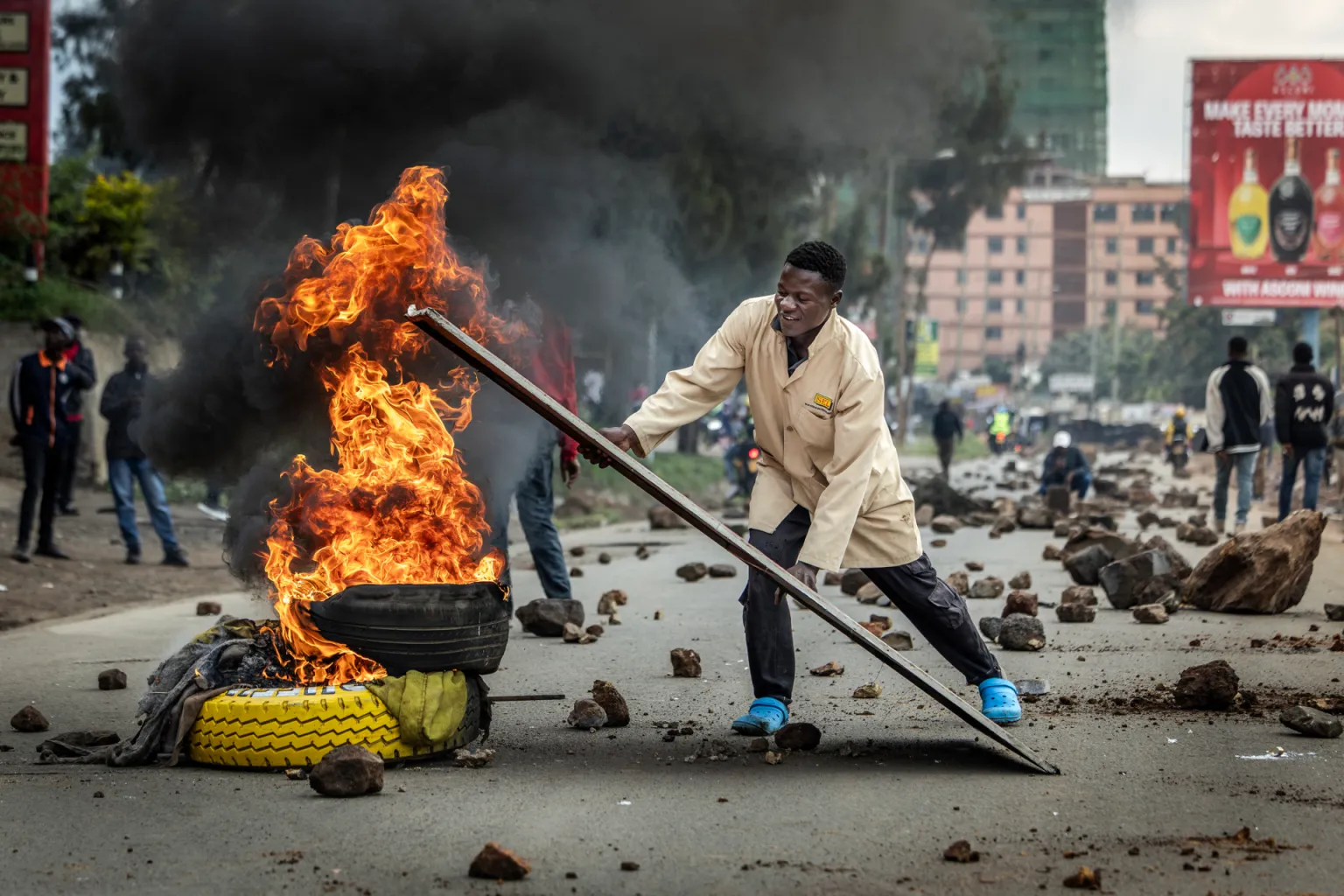
An open question is whether economic pressures will lead to widespread popular protests on a continent that has already seen significant mobilization in recent years, primarily over economic issues. Thus far, some limited but escalating protests have emerged, particularly by people whose livelihoods depend directly on fuel prices. In Somalia, reports indicated rickshaw drivers have staged demonstrations and blocked roads this year to demand government relief from the rising costs. In Nigeria, Guinea-Bissau, and Mozambique, small protests and strikes led by commercial drivers have broken out over increasing fuel prices. And in Kenya, youth protests over soaring fuel costs ended with several arrests and nationwide strikes led by public transport drivers resulted in multiple deaths, led to hundreds of arrests, and left thousands stranded. Elsewhere, governments have also grappled with mobilization in response to surging fuel prices. In Mauritania, the government imposed a curfew after protests erupted. Violent protests in Comoros led the government to rescind fuel price hikes.
History suggests that, depending upon the scale and duration of the economic pain, protests may intensify. The continent has a long history of price shocks driving political instability. Notable cases include popular protests in Tunisia, Morocco, and Algeria reacting to food price increases or subsidy cuts in the 1970s and 1980s, and again in response to rising food costs in 2007-2008.
More recently, in the wake of Russia’s 2022 full-scale invasion of Ukraine, when global energy prices rose about 20 percent over five months, protests broke out in many African countries including Egypt, Ghana, Guinea, Nigeria, South Africa, and Uganda. Several of these protests triggered intensified repression. In Sierra Leone, protests prompted by fuel prices turned particularly violent, resulting in the deaths of four police officers and an untold number of protestors, and leading the government to impose a nationwide curfew. In Mozambique that year, demonstrations over rising energy and food costs were also met with violent repression.
This time around, the likelihood of popular mobilization will depend upon at least two factors. One is whether particular African governments take steps to cushion the blow. During the 2022-23 price pressures, governments launched a variety of policy responses, from interest rates hikes to tax cuts to significant fuel subsidies. Whether governments can or will choose to respond this time around — while they are still recovering from the previous blow — will likely vary considerably. Already, disparate trajectories are beginning to take shape, as some countries allow fuel prices to adjust without controls while others cut prices. Several countries have also implemented measures like cutting different types of fuel taxes to ease the hardship a little. But even as governments respond, some analysts warn that too many are wrongly assuming the crisis will be short-lived. A related variable is how steps to deliver immediate fiscal relief will trade off against governments’ efforts to tighten budgets or reduce debt, possibly disrupting ongoing reforms necessary to enable long-term economic growth and investment.
The second major factor to watch is how these new economic hardships might interact with or further incite pre-existing Gen Z mobilization on the continent. Youth-led movements have sprung up in recent years in places ranging from Kenya and Nigeria to Madagascar, Morocco, and Mozambique — largely decrying economic stagnation, sclerotic politics, and corruption. The new pocketbook pressures from the war in the Middle East could offer new kindling for the fire.
How Will the Pocketbook Affect the Ballot Box?
A related question is how the likely protracted tail of economic pain will affect key upcoming elections, on a continent already steeped in anti-incumbent sentiment.
After Russia’s Ukraine invasion, downstream economic and agricultural effects of the conflict shaped multiple elections on the continent. In Kenya, fuel prices and fertilizer access contributed to widespread economic dissatisfaction during a hotly contested election period in 2022, which challenger William Ruto capitalized on in his ultimately successful campaign, narrowly defeating opponent Raila Odinga. In Liberia, anti-incumbent sentiment was driven in part by what analyst Alex Vines described as a “cost-of-living crisis spurred by the Russia-Ukraine war,” and contributed to Joseph Boakai’s victory over incumbent President George Weah in 2023.
This time around, the economic blow will likely loom large in several key votes. While the war’s fallout is unlikely to upend outcomes in countries where votes were not likely to be competitive, such as Ethiopia, it may prove impactful elsewhere. In Zambia, for example, incumbent Hakainde Hichilema, who came to power on promises to “fix” Zambia’s economy through reforms including energy subsidy removals and debt restructuring — and who has notched some success — faces an election in August that will be shaped by how voters assess the country’s economic performance. A good corn harvest and broader macroeconomic gains have bolstered assessments of Zambia’s economy this year, but the threat of external shocks from the war still looms large. Already, rising costs have driven Hichilema to pause fuel taxes. Energy and fertilizer price increases, even as the country is engaged in talks for a successor loan program from the International Monetary Fund (IMF), will likely impact his chances.
The long tail of the economic crisis will also cast a shadow over next year’s important election in Nigeria. President Bola Tinubu faces re-election there as government coffers are being boosted by the oil crisis, but the population faces an affordability crunch — all coming on the heels of previous steps meant to curb inflation. Nigeria’s government ruled out price controls early on after the outbreak of the Iran war and has continued to emphasize the economy’s resilience, and pledged to maintain reform pathways as the crisis unfolds. But as inflation levels have risen, analysts point out that much depends upon what other policy steps or social welfare programs Tinubu’s government enacts to cushion the economic impact on the most vulnerable ahead of the elections, as well as on how effectively the recently split opposition will be able to navigate the upcoming campaign period.
Kenya’s re-election contest next year, in which Ruto will now be in the position of incumbent, is also already being impacted. Kenya is particularly vulnerable to rising oil prices and fuel shortages, relying on Gulf countries for more than 80 percent of its refined petroleum. It is also highly exposed to Gulf fertilizer disruption and remittance losses. Already, the country has requested support from the World Bank and reduced some fuel taxes to ease the pain as inflation continues to rise. These fiscal pressures are already roiling national politics. After hiking fuel prices twice, the government was forced to cut prices amid mass protests. At the same time, there has been growing public pushback against Ruto’s government, and opposition candidates are publicly linking higher costs to shortcomings in Ruto’s leadership. Observers argue that the issue may be a defining challenge for Ruto in the 2027 elections. Whether an opposition ticket can cohere enough to convert the economic toll into a general election victory — in a context where Ruto reportedly has been successful in co-opting key players into his coalition — remains to be seen.
Can Democracies Respond Effectively?
Finally, the war-generated economic crisis will produce a new chapter in a longstanding debate: whether authoritarian or democratic governments are better at “delivering” for their populations, in this case by demonstrating more adaptability and innovation in the face of an externally driven shock. In recent years, democracy supporters worldwide have increasingly underscored that democratic governments must improve their performance in concrete, material terms for ordinary people. In Africa, that imperative is all the more urgent: per Afrobarometer, in 2024, 66 percent of citizens prefer democracy to any other form of government, yet only 37 percent are satisfied with the way it works in their country.
Recent history of economic shocks only provides limited evidence here, as there is no analysis that shows a clear pattern of the impact of regime type on different African countries’ success in responding to the COVID-generated economic crisis. However, researchers did find positive correlations between traits like “control of corruption, government effectiveness, regulatory quality, and the rule of law” and economic recovery in African countries.
The war’s economic crisis will thus present a crucial next test for the question of whether democracies or autocracies more effectively respond to a major shock, such as by diversifying supply chains, providing for the vulnerable, encouraging public solidarity, or enacting effective measures to weather economic hurdles. On the democracy side of the ledger, a key noteworthy group will be one that garners relatively little attention: the small island nations that are among Africa’s highest democratic performers, such as Cabo Verde, Mauritius, and Sao Tome and Principe. As low-population archipelagic states, they may be particularly susceptible to the vagaries of supply chain disruptions. In Cabo Verde’s recent elections, the opposition was victorious during a campaign cycle marked by economic issues, and Sao Tome and Principe will hold elections later this year, which are shaping up to offer an important indicator of popular sentiment toward government management of economic crisis. Cabo Verde, which has enjoyed recent strong economic growth and aims to establish itself as a technology and logistics hub, takes well-earned pride in its robust democracy. It has already implemented a tax reduction in response to rising fuel prices, even as its authorities have tried to assure residents that the supply does not come from the Middle East. For its part, Sao Tome weathered a seemingly aberrant coup attempt in 2022 and the most severe period of its energy crisis in 2023. While the country has proven resilient to the ongoing global crisis so far, the IMF warns that inflation “could rise again if external conditions worsen.” Given their standout democratic performance, the ability of these countries to navigate the current challenging waters may have an outsized impact on the reputation of democracy’s effectiveness on the continent.
Of particular importance on the autocratic side of the ledger will be the authoritarian, landlocked nations of the new Alliance of Sahelian States (AES in the French acronym) that split off from the well-established Economic Community of West African States (ECOWAS). The military leaders of Burkina Faso, Mali, and Niger all seized power in coups in recent years, justifying their power grabs with disinformation that portrayed the democratically elected governments as not delivering on security or economic grounds, despite recent modest improvements in these domains. Yet contrary to the promises of the coup leaders, several years in, citizens’ economic and security conditions had in many ways deteriorated, even before the current energy shock. Mali’s capital, Bamako, for instance, was already experiencing the effects of the fuel blockade that began late last year, forcing it to ration fuel this year. And after a long deterioration of security in Mali, major coordinated attacks late last month have left Malian civilians in an even more precarious position. The leaders of the coup governments have doubled down on an anti-democratic stance over the past year, with Burkina Faso’s leader Ibrahim Traore declaring last month that the country’s citizens needed to “forget” about democracy. How he and his fellow AES leaders manage the complex — and likely protracted — challenges of the economic shock of the U.S.-Israel war with Iran will test the value proposition of authoritarian regimes on the continent.
Looking Ahead
The insight that economic hardship plays a crucial role in politics is no revelation to any leader, on the African continent or anywhere else. In one recent example of this gravitational fact, as John Mahama was campaigning to retake the Ghanaian presidency in 2024, he invoked U.S. President Bill Clinton’s famous campaign motto from the 1990s: “It’s the economy, stupid.” Since winning the election, Mahama has faced the task of making good on his economic promises. Those challenges, already daunting, stand to become even greater with the second-order effects of the Middle East war. Many other political leaders across the continent are facing their own versions of this test.
The economic fallout across Africa from the Iran war will have major impact not only on the day-to-day well-being of African citizens, but complex implications for the prospects of democracy in many African countries. From the effects on popular mobilization, to the fallout at the ballot box, to democratic governments’ success at responding, the coming months will be consequential for the pathway of democracy on the continent.