
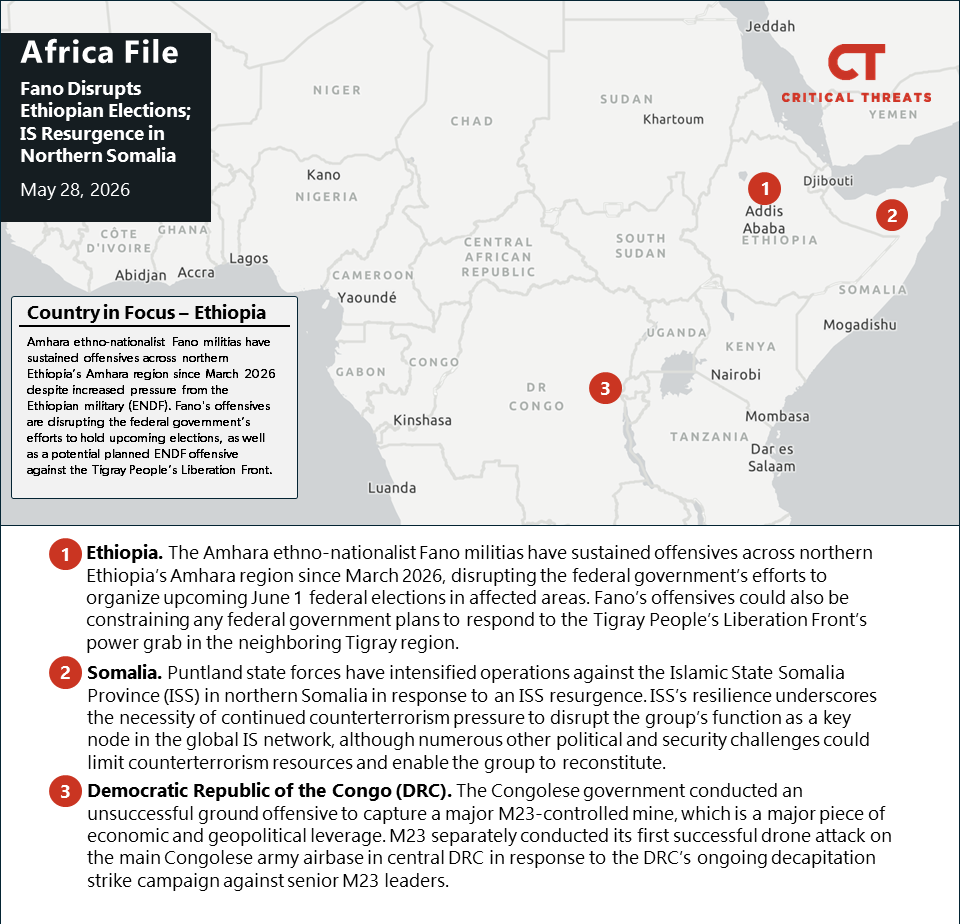
Key Takeaways:
Ethiopia. Amhara ethno-nationalist Fano militias have sustained offensives across northern Ethiopia’s Amhara region since March 2026, disrupting the federal government’s efforts to organize upcoming June 1 federal elections in affected areas. Fano’s offensives could also be constraining any federal government plans to respond to the Tigray People’s Liberation Front’s power grab in the neighboring Tigray region.
Somalia. Puntland state forces have intensified operations against the Islamic State Somalia Province (ISS) in northern Somalia in response to an ISS resurgence. ISS’s resilience underscores the necessity of continued counterterrorism pressure to disrupt the group’s function as a key node in the global IS network, although numerous other political and security challenges could limit counterterrorism resources and enable the group to reconstitute.
Democratic Republic of the Congo (DRC). The Congolese government conducted an unsuccessful ground offensive to capture a major M23-controlled mine, which is a major piece of economic and geopolitical leverage. M23 separately conducted its first successful drone attack on the main Congolese army airbase in central DRC in response to the DRC’s ongoing decapitation strike campaign against senior M23 leaders.
Figure 1. Africa File, May 28, 2026
Ethiopia
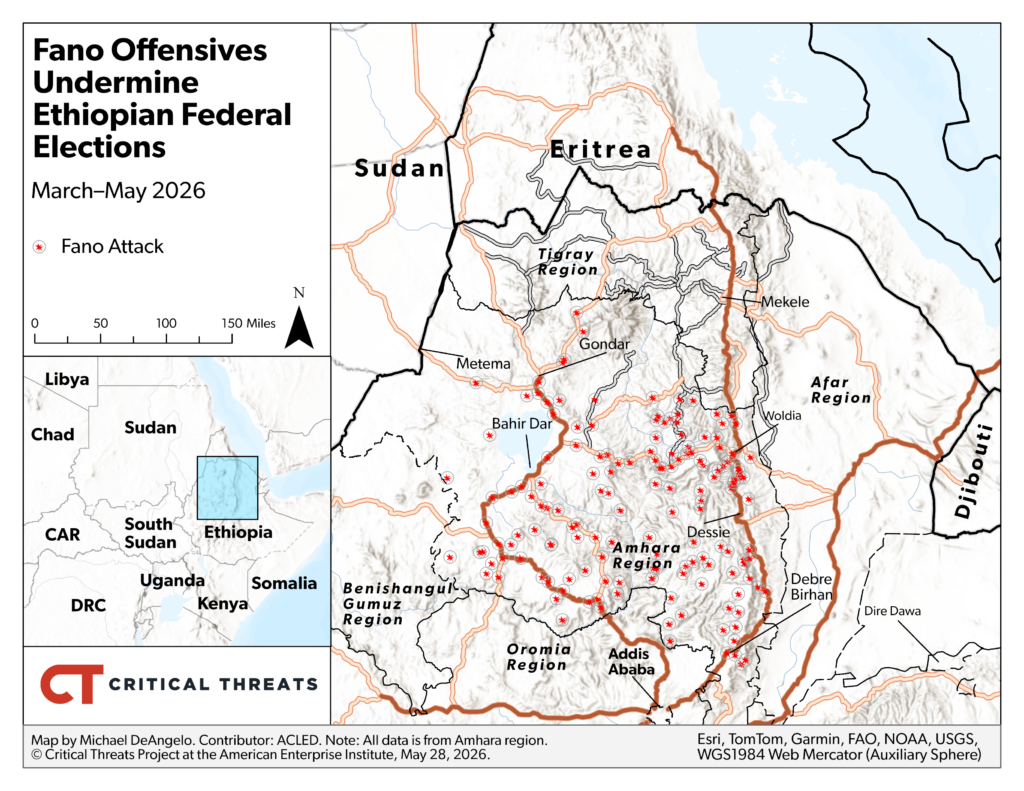
Amhara ethno-nationalist Fano militias have sustained offensives across northern Ethiopia’s Amhara region since March 2026, hampering the Ethiopian federal government’s efforts to organize upcoming federal elections on June 1. Fano has increased its average monthly rate of attacks by over 50 percent in the March to May period compared to December 2025 to February 2026.[1] Fano has been active across central and southern Amhara, threatening population centers on key roads.[2] Fano has notably contested towns on the B22 and B31 roads leading to Bahir Dar, the Amhara regional capital.[3]
Figure 2. Fano Offensive Undermines Ethiopian Federal Elections
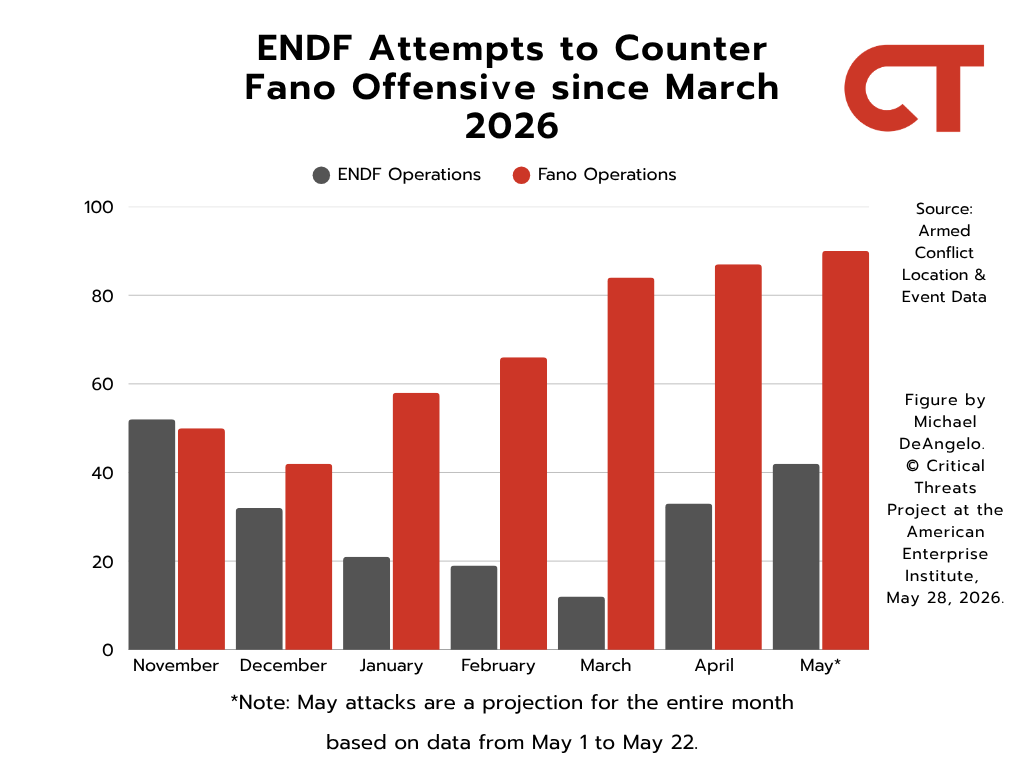
The Ethiopian National Defense Force (ENDF) has reinforced its presence in Amhara since late March and launched a counteroffensive, but Fano has maintained an elevated rate of activity. The pro-Fano news outlet Amhara War Updates reported that the ENDF launched a counteroffensive on March 30 with 20,000 troops to reassert control over the South Gondar zone, which surrounds Bahir Dar, although the number of troops involved is unverified.[4] The ENDF nearly tripled attacks against Fano in Amhara from March to April and has further increased operations targeting Fano from April to May.[5] The ENDF has claimed multiple times that it had neutralized Fano in specific areas, but May is on track to be Fano’s most active single month in 2026.[6]
Figure 3. Ethiopian National Defense Force (ENDF) Attempts to Counter Fano Offensive
The offensives have explicitly targeted election infrastructure to prevent elections from being held and undermine the legitimacy of the elections and the federal government. The strongest Fano faction, the Amhara Fano National Movement, stated in March 2026 that the elections would be illegitimate and warned people against taking part in them.[7] Fano has since targeted election facilities and personnel as part of its current offensives.[8] Widespread protests against the upcoming election occurred in Amhara in early April, repeating Fano narratives about the election being illegitimate amid a perceived ENDF war against Amhara.[9] Ethiopia’s election board already announced on May 26 that the federal government will not hold elections in at least eight of Amhara’s 138 constituencies due to insecurity.[10] Fano itself has established limited local governance structures throughout rural Amhara to supplant federal and regional authorities.[11]
Fano’s offensives could be constraining any federal government plans to respond to the Tigray People’s Liberation Front (TPLF). The federal government and TPLF have been engaged in a military standoff since February 2026.[12] CTP assessed in late February that the ENDF would likely launch an offensive to neutralize the TPLF, although the Iran war has since caused fuel shortages that may have disrupted any plans for an offensive in the short-term.[13] The TPLF has exploited the situation and the federal government’s preoccupation with organizing elections to further press for more autonomy. The TPLF reinstated its pre-Tigray war regional government led by TPLF head Debretsion Gebremichael in early May, which fully sidelines the federal-backed Tigray Interim Administration.[14] The move effectively killed the already moribund Pretoria peace deal that ended the Tigray war in 2022, as Tigray is now outside of any federal control, including in upcoming elections.
Figure 4. Military Buildup in Northern Ethiopia
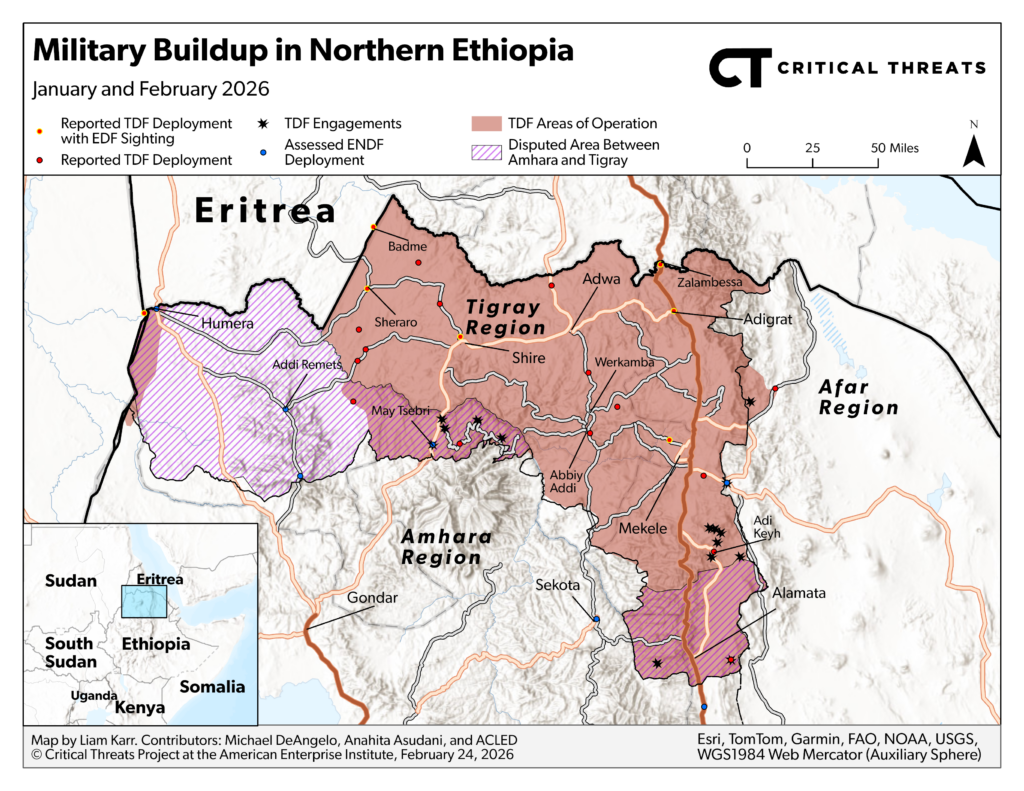
Note: TDF stands for Tigray Defense Forces, EDF stands for Eritrean Defense Forces, and ENDF stands for Ethiopian National Defense Force.
Fano’s activity could be a further bandwidth drain on the ENDF, as it has likely forced the ENDF to redeploy resources focused on Tigray to Amhara. The ENDF sent forces stationed in Amhara to the Tigray regional border in February as part of its buildup against the TPLF.[15] Fano immediately exploited the security vacuum to capture multiple towns on key roads.[16] CTP cannot verify the origin of the reinforcements sent to Amhara since March, but they likely came from the Tigray regional border given the massive scale of the military buildup in February and the involvement of previously Amhara-based units in that buildup.[17]
Somalia
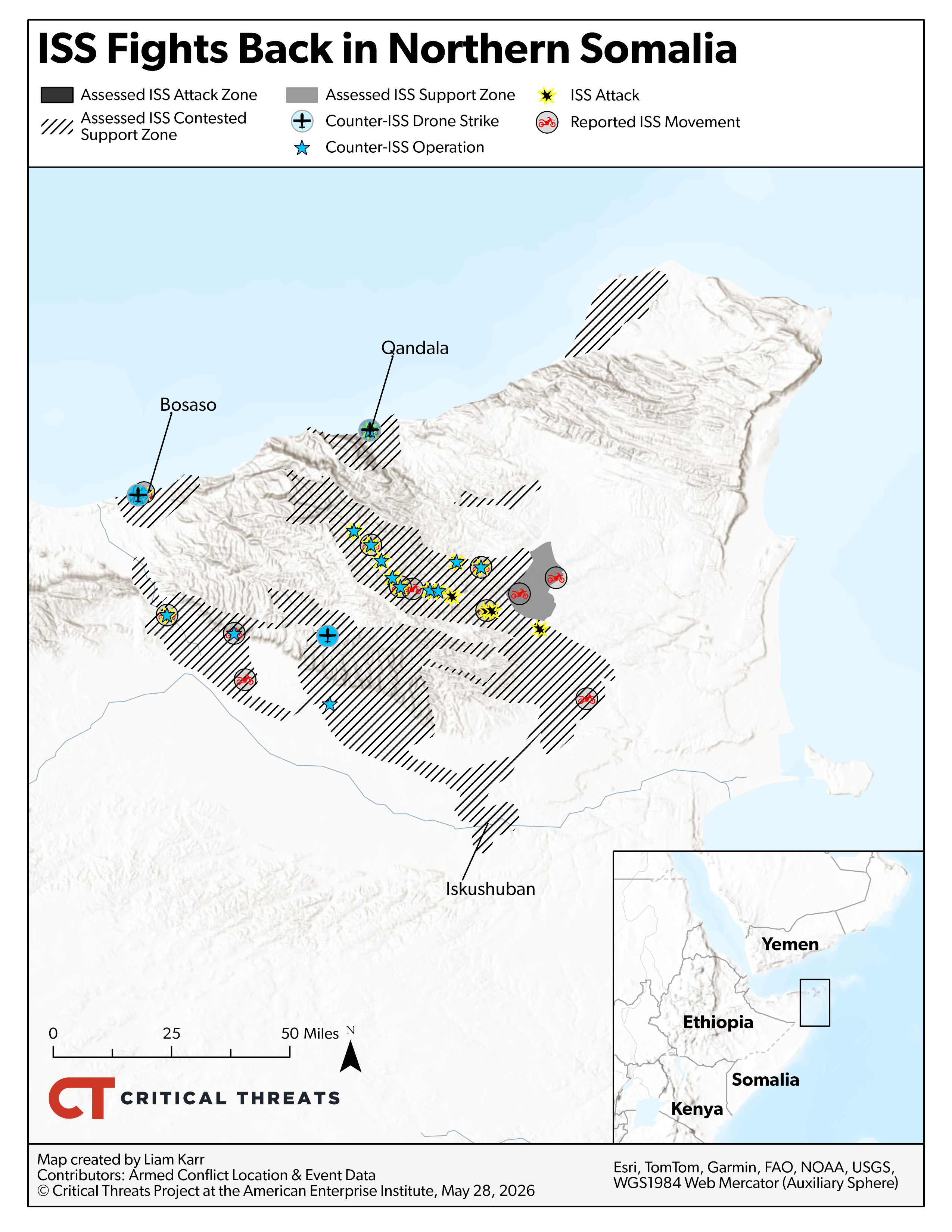
Puntland state forces have intensified operations against the Islamic State Somalia Province (ISS) in northern Somalia in response to an ISS resurgence. Puntland forces have increased counter-ISS operations since mid-April and are on track to conduct the most operations in May 2026 since November 2025.[18] The activity is part of Operation Hilaac, a counter-ISS campaign that Puntland forces began in late 2024. Puntland forces significantly degraded ISS in the first year of the campaign, killing or capturing a large majority of ISS militants and containing the remainder mostly within several mountain valleys in rural Puntland.[19] The United Arab Emirates (UAE) and the United States have provided air support to Puntland forces, conducting supply airdrops and several dozen airstrikes against ISS positions in difficult terrain.[20]
Figure 5. Puntland Intensifies Operations Against ISS Since Mid-April 2026
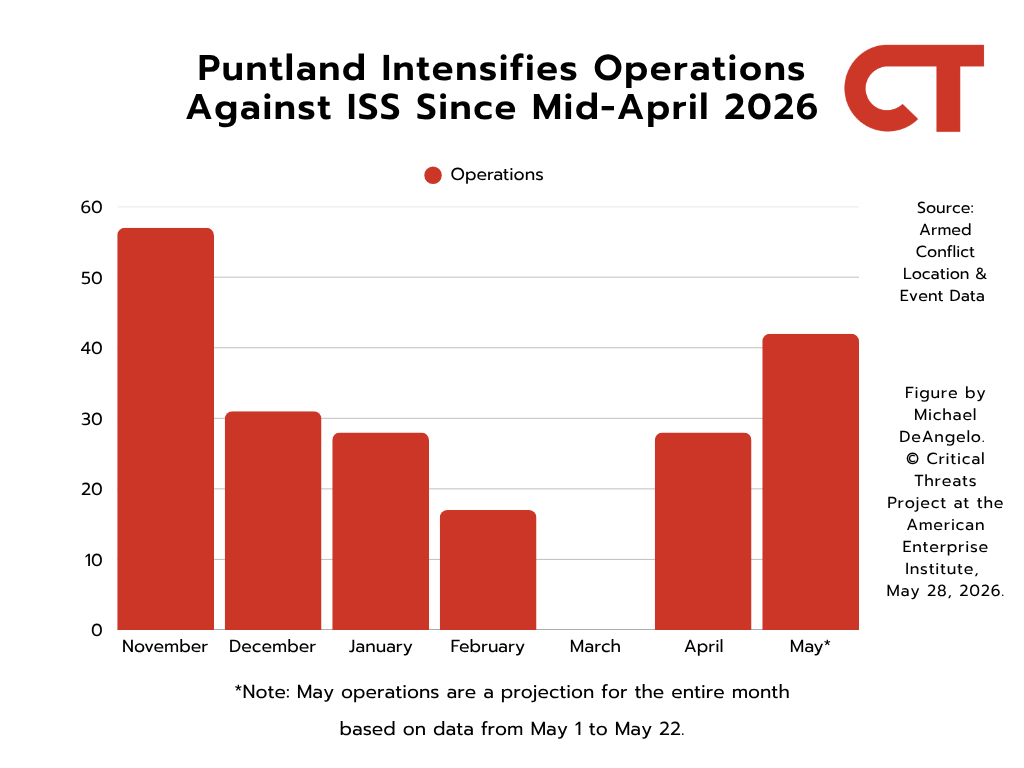
Note: ISS stands for Islamic State Somalia Province.
The campaign slowed down through late 2025 and into 2026, which ISS may have exploited to reconstitute. The Puntland state government announced its intention to wind down Operation Hilaac in late 2025 and significantly reduced its operations against ISS.[21] Puntland forces have not neutralized senior ISS leaders aside from the finance head, however, and ISS had already reemerged to conduct attacks in previously cleared areas in late 2025.[22] ISS increased attacks significantly in March 2026 and has maintained an elevated rate of activity in May compared to late 2025 after a brief lull in April.[23] ISS attacked Bosaso—Puntland’s commercial capital and largest port city—in late March for the first time since September 2025.[24] Puntland forces have also been as active against ISS in the port town Qandala in May as they were during the peak of Operation Hilaac in 2025, indicating that ISS has reconstituted its presence in the area.[25]
Figure 6. ISS Fights Back in Northern Somalia
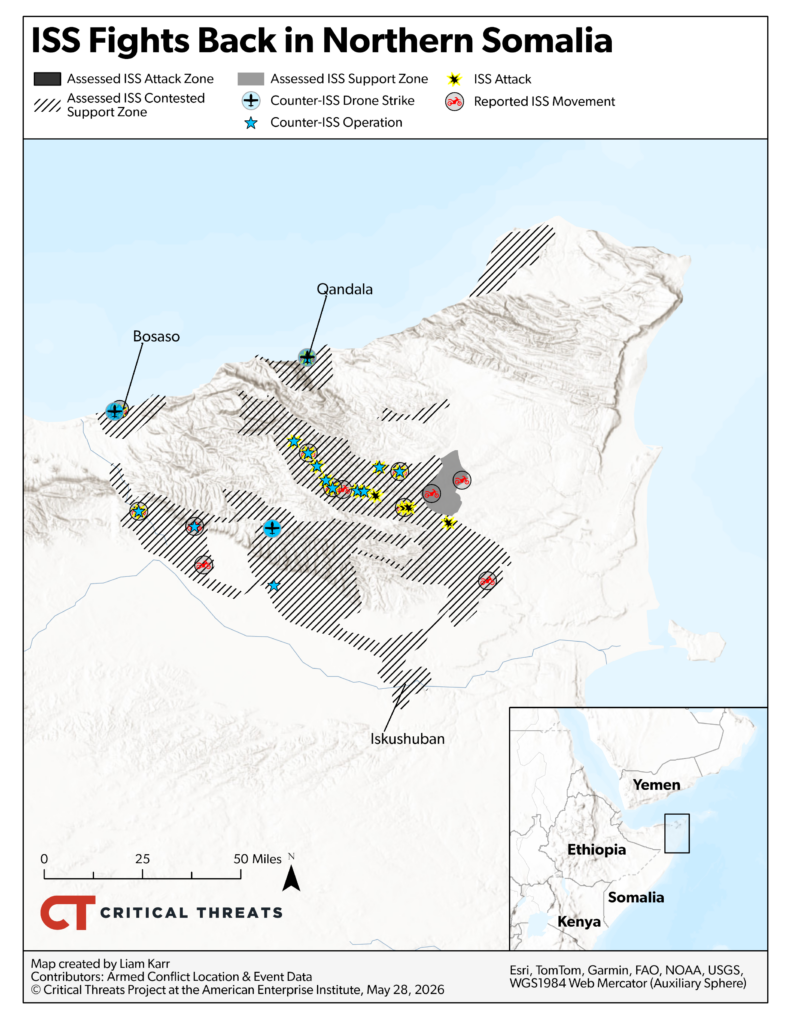
Note: ISS stands for Islamic State Somalia Province.
ISS’s resilience underscores the necessity of continued counterterrorism pressure to disrupt the group’s function as a key node in the global IS network, although other security challenges could limit counterterrorism resources. ISS’s relationship with local populations in Puntland and its mobile basing in mountainous terrain have made it difficult to fully defeat without security sector reforms that would enable a more persistent state security presence in these rural populated areas.[26] Puntland forces have struggled to fully secure transit routes, with the United Nations (UN) and security researcher Matthew Bryden indicating that ISS militants may have recently returned to Puntland from Yemen, where they had fled due to Operation Hilaac.[27] CTP previously assessed in December 2025 that Puntland forces would need to sustain pressure to prevent ISS from reconstituting.[28]
The Iran war and its side effects could limit the resources that Puntland, the UAE, and the United States are able to devote to the counter-ISS campaign, however. The Iran war has preoccupied Puntland allies the UAE and the United States. The United States has led the war effort against Iran, although it has maintained a similar rate of airstrikes targeting ISS since the war broke out, according to Armed Conflict Location & Event Data (ACLED).[29] ACLED has not recorded any Emirati airstrikes in Puntland since November 2025, although the UAE had substantially reduced its rate of activity after April 2025, nearly a year before the beginning of the Iran war.[30]
The Iran war has also contributed to the return of Somali piracy, which is now taking up more of Puntland’s attention. Puntland is the piracy hub of Somalia, and Somali pirates have been more active since late April 2026 than at any point in more than a decade as they exploit security gaps left by the United States and regional partners shifting focus to the Strait of Hormuz.[31] The Puntland state government has responded by targeting piracy networks and deploying forces to disrupt the ongoing hijackings.[32] The Puntland Maritime Police Force is Puntland’s primary counter-piracy entity, but the state government had repurposed the unit to lead counterterrorism operations amid the decline in piracy over the last decade, and the unit has played a leading role in Operation Hilaac.[33]
Other regional political tensions involving the UAE could also distract from counterterrorism operations. The UAE has been a leading defense partner for Puntland in addition to its past drone strikes, as it has provided training and salaries for the Puntland Maritime Police Force.[34] The Federal Government of Somalia (FGS) annulled all agreements with the UAE in January 2026, however.[35] Saudi Arabia pressured the FGS to do so after the UAE evacuated the leader of its Yemeni proxy force, who was wanted by Saudi Arabia, to the UAE via Somali territory.[36] Somali officials described the move as “undermining its national sovereignty” and the “last straw,” which referred to other tensions over the UAE’s close bilateral relationships with the breakaway Somaliland region and Jubbaland and Puntland states.[37] The Puntland state government released a statement at the time invalidating the cancellation, and the Puntland president traveled to the UAE shortly afterward and in late May.[38]
Internal Somali political tensions and infighting could also undermine counterterrorism cooperation. Puntland cut ties with the FGS in March 2024 over constitutional and electoral disputes, which have only increased ahead of the 2026 elections that are now in limbo.[39] Puntland is part of the Somali Future Council opposition coalition, which has refused to accept Somali President Hassan Sheikh Mohamud’s constitutional revisions that extended Mohamud’s term by one year, delayed federal elections until 2027, and instituted direct federal parliamentary elections.[40] The opposition has framed the revisions as a unilateral power grab that centralizes power at the expense of Somalia’s federal system, which is premised on power-sharing through clan-based quotas and indirect voting.[41] Mohamud has since attempted to undermine and sideline uncooperative Federal Member States and reportedly sought to exploit tensions among rival clan and security force networks in Puntland as part of this effort.[42] These tensions had already caused multiple political crises in recent years, turning violent on some occasions and generally distracting from counterterrorism priorities.[43]
ISS’s reconstitution would have global implications, as the group hosts key IS leaders and is a facilitator for other IS affiliates. Some UN member states believe that ISS founder Abdul Qadir Mumin is the overall IS caliph, although CTP and many other analysts have assessed that he is more likely to be the head of the General Directorate of the Provinces (GDP), which is the IS body that oversees all regional affiliates and coordinates external attacks.[44] Mumin also leads IS’s Somalia-based East Africa office, al Karrar, which manages the flow of money, trainers, foreign fighters, and other logistics among the IS global network and IS affiliates across Africa, particularly in Mozambique and the Democratic Republic of the Congo.[45] Al Karrar has financially supported Afghanistan-based IS Khorasan Province, IS’s most transnationally minded global affiliate, and was linked to a thwarted IS cell operating in Spain and Morocco in early 2026.[46] UN reports from late 2025 and early 2026 assessed that IS may have relocated al Karrar and GDP functions to Mozambique and Nigeria, respectively, in response to Operation Hilaac, which degraded ISS and left Mumin “isolated.”[47]
Democratic Republic of the Congo
The Congolese army (FARDC) and Congolese-backed Wazalendo militia fighters conducted an unsuccessful offensive in the eastern Democratic Republic of the Congo (DRC) in late May that likely aimed to capture Rubaya, a major M23-controlled coltan mine. The FARDC and Wazalendo fighters launched the offensive on May 18 and dislodged M23 from at least six villages, including the Katoyi sector capital in southern Masisi district, which is roughly 17 miles southwest of the Rubaya mine in southern North Kivu province.[48] Fighting also took place south of Rubaya and in as many as nine villages within 15 miles west and northwest of the town between May 20 and 25.[49] A combat drone presumably operated by the FARDC or DRC-employed private military contractors (PMCs) reportedly conducted as many as four drone strikes on M23 positions about seven miles from Rubaya on May 24.[50] The government offensive reportedly displaced several thousand people.[51]
add note
tweet
M23 reportedly began consolidating forces for several days before launching a major counteroffensive and recovering most of the positions that it had lost. Pro-Congolese government media outlets claimed that M23 began reinforcing troops and military equipment in Rubaya as early as May 21.[52] The group launched a coordinated counteroffensive on May 26 and began pushing Wazalendo fighters back from Rubaya, recapturing at least a dozen villages.[53] Pro-Congolese government media sources claimed on social media that M23 deployed special force units, heavy artillery, and attack drones in the counteroffensive.[54] Senior M23 officials held a public rally in Rubaya and assured locals that the town would not fall to enemy forces on May 26.[55]
This is the second failed government offensive on Rubaya since February. Pro-Congolese government forces conducted a coordinated offensive against M23 on Rubaya that also resulted in the death of Willy Ngoma, a senior M23 officer and the group’s military spokesman, in a drone strike in late February.[56] The offensive quickly collapsed after M23 launched a successful counteroffensive, however.
Figure 7. M23 Repels Government Offensive in North Kivu
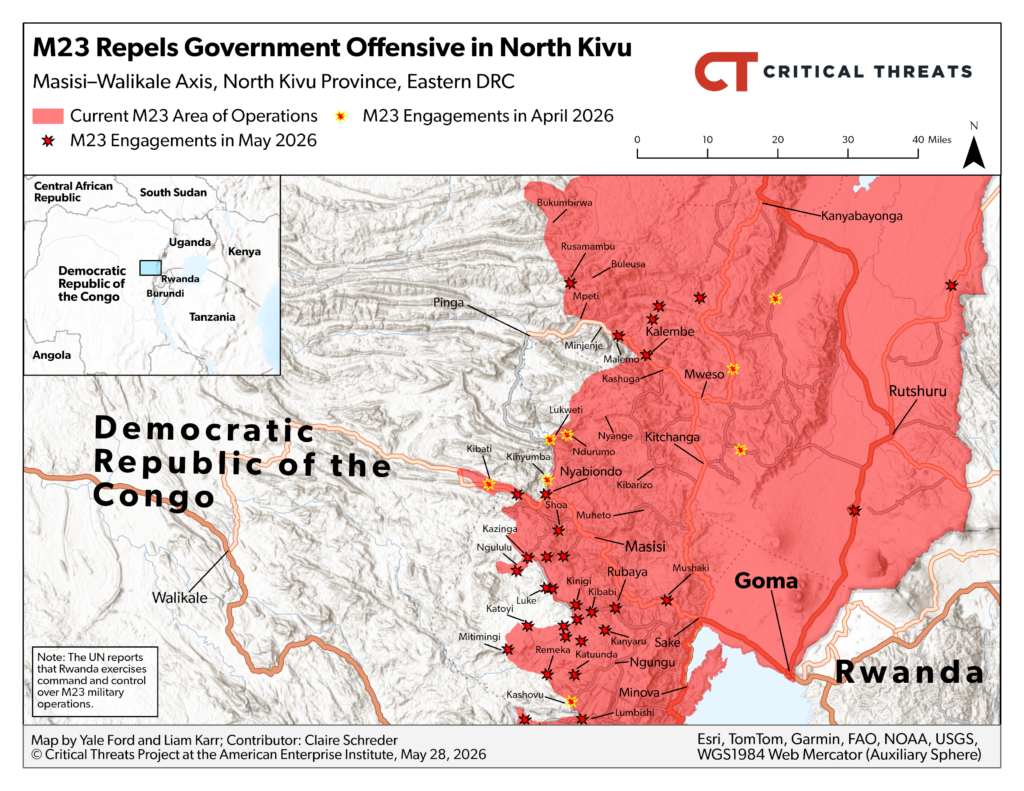
The Congolese government likely views the capture of Rubaya as a major economic and political objective aimed at cutting of a vital source of revenue for M23 and enticing greater US involvement and investment in the DRC’s mining sector under the “minerals-for-security” arrangement. Tax revenue from Rubaya is likely a key source of income for M23 as the group struggles to stimulate the local economy. Rubaya is estimated to produce 15 to 30 percent of the global coltan supply, which is key to manufacturing electronic circuits and capacitors used for defense and commercial purposes.[57] M23 had captured the site in April 2024, and the UN claimed later that year that M23 was earning more than $800,000 monthly from levies collected from the mine.[58] M23 reportedly tightened control over mineral networks by consolidating control over the cross-border Rubaya–Goma–Rwanda transit corridor in 2025, which increased the security and efficiency of mining operations.[59] The Congolese government has tried to limit M23’s revenue streams and weaken its legitimacy by imposing a de facto financial embargo on areas under the group’s control, increasing Rubaya’s importance as a key source of income.
Figure 8. Mining Zones in Southern North Kivu
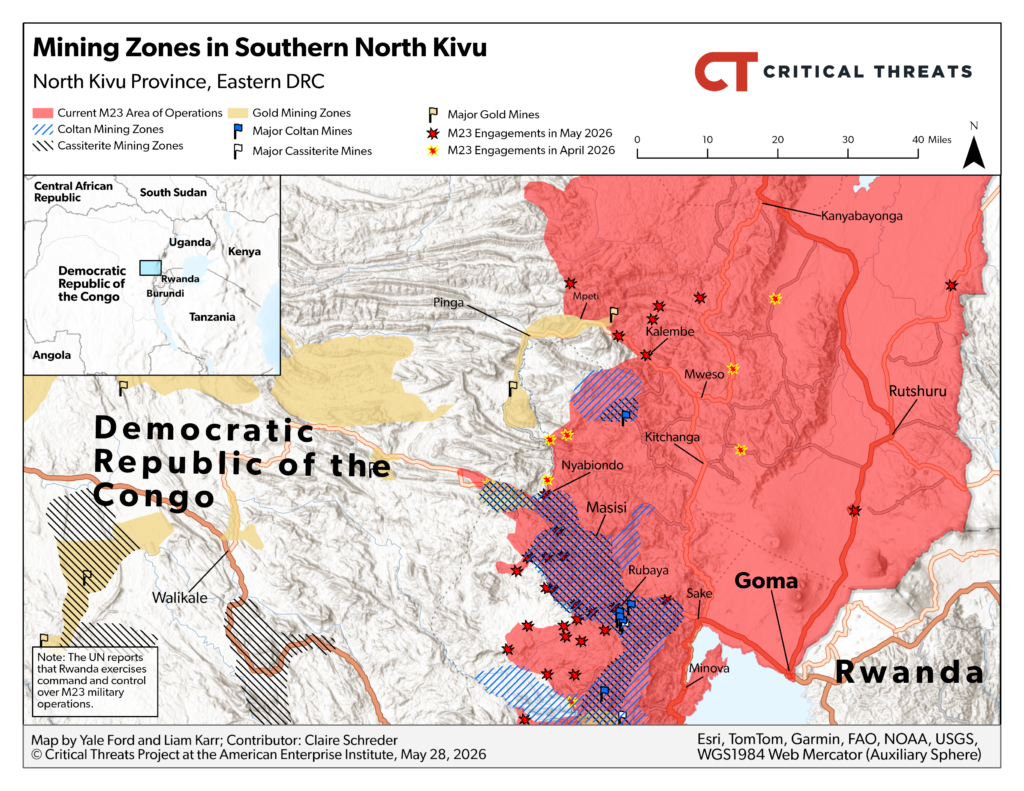
The Congolese government is likely trying to leverage the prospect of its control over Rubaya to sway peace mediators in putting pressure on M23. DRC President Félix Tshisekedi had offered the mine as one of the assets in his initial minerals-for-security proposal to the United States in February 2025, and a consortium that includes a Trump-linked global investment firm has been in talks with the Congolese government to acquire a majority stake in Rubaya since at least June 2025.[60] The Switzerland-based commodity trader Mercuria and US-backed TechMet investment firm reportedly expressed interest in modernizing mining and processing at Rubaya in late 2025.[61] Tshisekedi then signed the landmark Strategic Partnership Agreement with the United States, and the DRC added Rubaya to a list of potential mining projects that could benefit from US investment in the inaugural US-DRC Joint Steering Committee meeting in early February 2026.[62] Rubaya was reportedly at the “heart” of discussions between US and Swiss mediators and M23 during meetings in Rwanda on May 26 and 27.[63] M23 has tried to counter the DRC’s mineral diplomacy, reportedly offering to negotiate directly with the United States on potential investment opportunities.[64]
M23 separately carried out its first successful drone attack on the main FARDC airbase in Kisangani, which is hundreds of miles away from the eastern DRC front lines, in response to the DRC’s ongoing decapitation strike campaign in the eastern DRC. CTP assessed in March 2026 that the FARDC has widened the scope of its air attacks in 2026 and is targeting senior M23 officials in rebel strongholds as part of a decapitation campaign.[65] The FARDC or DRC-employed PMCs presumably conducted two drone strikes, including one that targeted a local motel in Rubaya center and caused significant damage and several injuries, on May 24.[66] Reporting from pro-M23 and pro-Congolese government sources indicate that the FARDC may have acted on bad intelligence that M23’s North Kivu governor was staying at the motel.[67] M23 political officials denounced the strikes and claimed that the DRC used a Chinese-made CH-4 medium-altitude long-endurance (MALE) combat drone in the attack.[68]
The Congolese government likely also tried to kill M23’s military commander, Sultani Makenga, again. The FARDC or DRC-employed PMCs reportedly conducted drone attacks using either a MALE or a one-way attack (OWA) drone on a nature conservation facility near M23’s main military base in Rutshuru district—about 25 miles north of the North Kivu provincial capital Goma—on May 24.[69] An unverified report from a pro-M23 journalist claimed that the FARDC believed that Makenga was in the area, reportedly to supervise the end of training for new M23 parallel administration cadres, which has been underway since late April.[70] M23 political officials denounced the strikes.[71] The FARDC had previously tried to kill Makenga in the drone strike that killed Willy Ngoma, a senior rebel leader, near Rubaya during its late February offensive.[72]
M23 launched its fourth drone barrage on Kisangani since the beginning of 2026 on May 23 and 24.[73] Kisangani is the headquarters of the FARDC’s third defense zone and houses many of the MALE drones that have been integral to the FARDC’s air campaign.[74] Congolese-contracted PMCs in Kisangani have reportedly used Turkish-made and Indian-made D4 anti-drone defense systems acquired in 2025 to defend against M23’s drone campaign on Kisangani.[75] M23 was partially successful in targeting these drone defense systems in the latest attack and used up to eight separate projectiles or drones on various sites used by the FARDC drone command at the base, although CTP is unable to assess the full extent of the damage.[76] The attack reportedly damaged a mobile drone command center, air defense systems, and possibly other facilities, although the DRC claimed that it intercepted the projectiles before reaching their targets.[77]
Congolese government attempts to capture major territory and kill senior rebel leaders in military operations further undermines trust and the already-struggling peace process with M23. The Doha process has not resulted in a ceasefire or made minimal progress since late 2025, after M23 captured a major town in South Kivu province. The Congolese government and M23 reconvened for the ninth round of talks in mid-April but failed to solidify a halt to the fighting, swap prisoners, or advance the broader peace deal that they signed in November 2025. Mutual distrust continues to undermine the peace process, as the two sides accuse each other of negotiating in bad faith, violating the ceasefire, and poorly managing the recent Ebola outbreak in the territory that they control. The Congolese government’s offensive on Rubaya and use of air assets to conduct regular drone strikes across the front lines violates its commitments to halt hostilities and secure a permanent ceasefire, while undermining efforts to negotiate a political resolution to the conflict in peace talks.