
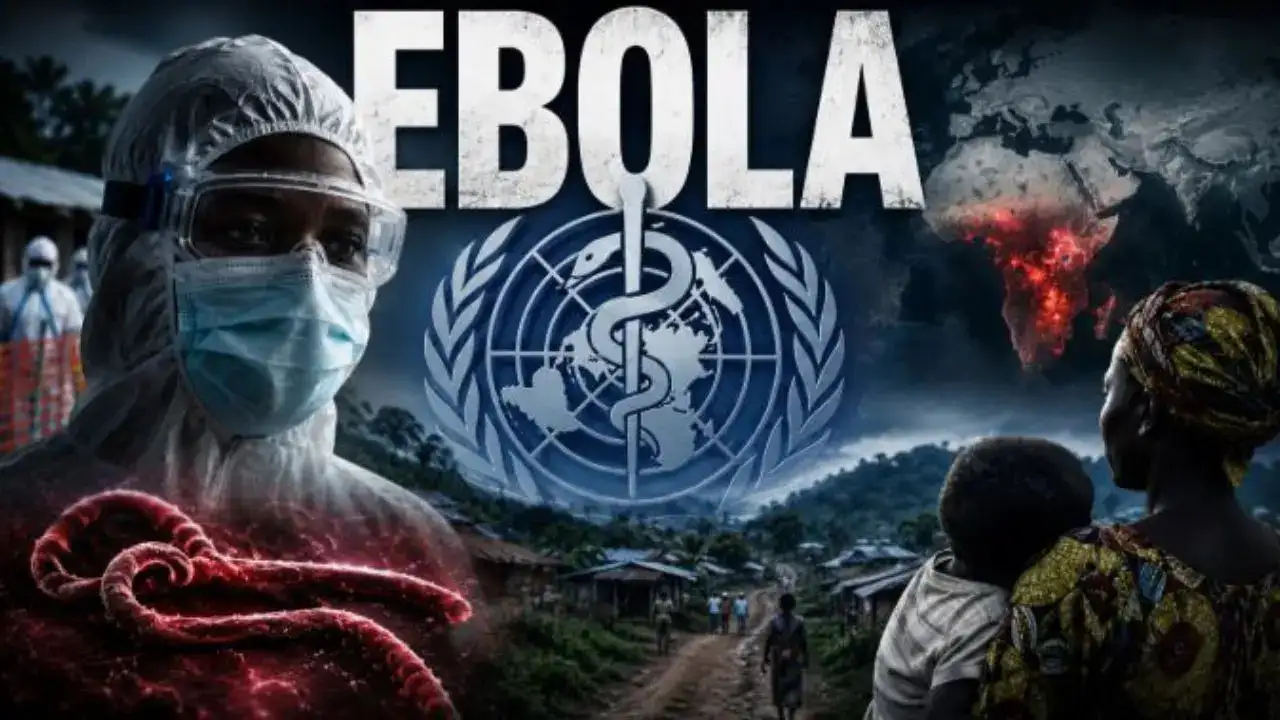
WHO has raised alarm over Congo’s Ebola outbreak, urging vigilance as experts stress prevention, surveillance, vaccination, and rapid containment efforts.
The World Health Organization (WHO) has declared an Ebola outbreak in the Democratic Republic of Congo’s eastern Ituri province a public health emergency of international concern. The agency added that the outbreak, with around 246 suspected cases and 80 deaths reported, does not meet the criteria of a pandemic emergency.
WHO director general Dr Tedros Adhanom Ghebreyesus warned there are currently “significant uncertainties to the true number of infected persons and geographic spread” of the outbreak. The current strain of Ebola is caused by the Bundibugyo virus, the health agency said, for which there are no approved drugs or vaccines.
The WHO said there are now eight laboratory-confirmed cases of the virus, with other suspected cases and deaths across three health zones, including Bunia, the capital of Ituri province, and the gold-mining towns of Mongwalu and Rwampara. The global health agency added that the virus has spread beyond DR Congo, with two confirmed cases reported in neighbouring Uganda.
What is Ebola?
Ebola Virus Disease is a severe and often fatal illness caused by the Ebola virus. It spreads through direct contact with the blood, body fluids, or tissues of infected people or animals. The disease is known for causing sudden fever, weakness, muscle pain, vomiting, diarrhea, and in severe cases, internal and external bleeding.
According to health experts, Ebola has a high fatality rate, with some outbreaks killing up to 90% of infected patients. However, advances in vaccines, rapid testing, and emergency response systems have significantly improved survival rates in recent years.
WHO said the virus has spread beyond DR Congo, with two confirmed cases reported in neighbouring Uganda
Why has WHO raised the alarm?
The recent outbreak in DR Congo has triggered concern because of its potential to spread quickly in densely populated and resource-limited regions. WHO officials say factors such as cross-border movement, weak healthcare infrastructure, delayed diagnosis, and community mistrust can make outbreak control challenging.
Declaring a global health emergency helps mobilize international funding, medical support, surveillance systems, and vaccination campaigns. It also alerts countries worldwide to strengthen preparedness measures, especially at airports, border crossings, and healthcare facilities. Health authorities are closely monitoring suspected cases and tracing contacts to stop transmission chains before the outbreak expands further.
Should the world be worried?
Experts say the situation deserves attention but not panic. Ebola is not as easily transmissible as viruses like COVID-19 or influenza. It does not spread through the air. Instead, transmission usually requires close physical contact with infected bodily fluids.
The overall risk to the general public outside affected regions remains low. However, healthcare workers, caregivers, and people living in outbreak zones face a much higher risk of infection. Public health specialists emphasize that today’s response systems are far more prepared than during the devastating West African Ebola epidemic between 2014 and 2016. Vaccines, faster diagnostics, isolation protocols, and global coordination have strengthened outbreak control efforts.
Symptoms of Ebola to Watch For
Early Ebola symptoms can resemble common viral illnesses, making diagnosis difficult in the initial stages. Warning signs include:
Sudden high fever
Severe fatigue
Muscle pain
Headache
Sore throat
Vomiting and diarrhoea
Skin rash
Unexplained bleeding or bruising
How can you protect yourself?
Doctors recommend following travel advisories and practicing basic infection prevention measures, including:
Frequent handwashing
Avoiding contact with the bodily fluids of sick individuals
Seeking medical care early if symptoms appear
Following public health guidance during outbreaks
Experts also stress the importance of combating misinformation, which can fuel fear and delay treatment efforts.