
Key Takeaways:
Washington Peace Accords. The United States hosted officials from the Democratic Republic of the Congo (DRC) and Rwanda to revive the Washington Peace Accords, after a late 2025 Rwandan and M23 offensive and other setbacks derailed implementation. The DRC and Rwanda will almost certainly continue signaling their commitment to the peace process to benefit from long-term US economic engagement, although the DRC and Rwanda will likely continue to support proxy forces.
Doha Process. The long-term viability of the Washington Peace Accords depends on separate Qatari-mediated talks between the DRC and M23, but the two sides will likely continue to favor a military solution to the standoff and remain unwilling to make political compromises so long as they do not face existential military pressure.
Military Escalation. The DRC and M23 continue to pursue a military-first approach to the standoff. Both sides are seeking to expand and enhance their operational capabilities and manpower and are escalating air attacks deep into each other’s territory.
US-DRC Partnership and Regime Security. The US military and US-linked entities have increased security cooperation with the DRC in recent months. DRC President Félix Tshisekedi will likely not fully respect a ceasefire as he moves closer to the United States without greater US diplomatic pressure, because a ceasefire would undermine his domestic legitimacy and remove his ability to use the war as a pretext to consolidate power, and US ties make pursuing the war more viable.
Assessment:
Washington Peace Accords
The United States hosted senior representatives from the Democratic Republic of the Congo (DRC) and Rwanda for the first meetings in the Washington process since late 2025. Envoys for DRC President Félix Tshisekedi and Rwandan President Paul Kagame participated in bilateral meetings with US officials on March 17 and a trilateral meeting in Washington, DC, on March 18.[1] The United States, the DRC, and Rwanda released a joint statement that said that the DRC and Rwanda agreed to a “series of coordinated steps to de-escalate tensions and advance progress on the ground.”[2] The last technical meeting related to the US-mediated peace process took place in Washington in November 2025.[3]
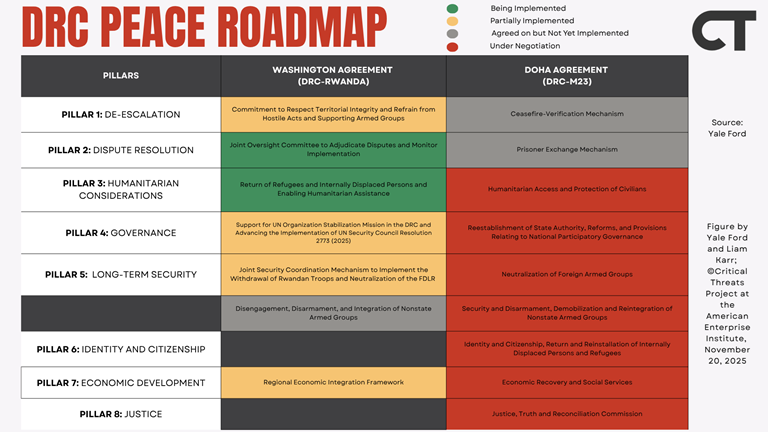
Technical disagreements, continued mutual distrust, and a major M23 and Rwandan offensive in late 2025 have derailed the implementation of the Washington Peace Accords. Implementation of key aspects of the peace framework has been piecemeal since the United States brokered an initial peace agreement between the DRC and Rwanda in June 2025.[4] The security aspects of the agreement center on a military plan for the DRC to degrade the Hutu extremist Forces démocratiques de libération du Rwanda (FDLR) in military operations and Rwanda to fully withdraw its troops and military equipment from the eastern DRC.[5] The DRC and Rwanda participated in eight technical meetings as part of the peace agreement to implement the military plan and resolve disputes between July and November.[6] Issues such as the sequencing of anti-FDLR operations and Rwanda’s withdrawal, the FDLR’s presence in M23-controlled areas, the Congolese army’s continued collaboration with the FDLR, and defining valid FDLR targets have hindered implementation, however.[7] Continued distrust between the DRC and Rwanda and mutual political attacks, including in international forums, have additionally complicated the implementation of the agreement.
Figure 1. DRC Peace Roadmap
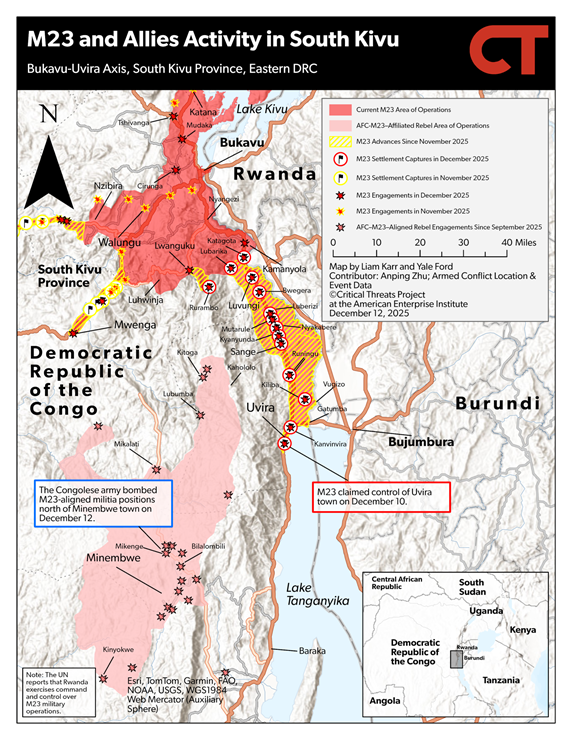
Rwanda backed a major M23 offensive on Uvira town in South Kivu province in early December 2025 that placed additional strain on the peace process. M23 and the Rwandan army (RDF) launched the offensive around December 1—four days before Kagame and Tshisekedi signed the accords with US President Donald Trump in a formal signing ceremony in Washington—and advanced about 50 miles south to capture Uvira around December 10.[8] Uvira is a major economic and commercial hub for the area, the interior DRC, and Rwanda, Burundi, Tanzania, and Zambia, with a port, access to several roads, and a customs post with Burundi. The RDF reportedly deployed thousands of troops, including special forces, and advanced military equipment to support the offensive.[9] Rwanda violated its commitment to respect the DRC’s territorial integrity and to not “engage in, support, or condone any military incursions or other acts” in the DRC under the peace accords.[10]
Figure 2. M23 and Allies Activity in South Kivu (December 2025)
The United States imposed tough sanctions on Rwanda for the Uvira offensive and its continued support for M23. Senior US officials, including US Secretary of State Marco Rubio, openly criticized Rwanda and warned of consequences to high-ranking Rwandan officials for violating the peace accords. The US Treasury Department sanctioned the RDF and four senior RDF officials—the RDF’s chief of staff, the commander of the Fifth Infantry Division, the chief of defense staff, and the special operations force commander—on March 2.[11] The US State Department then announced on March 6 that it would impose visa restrictions on “several senior Rwandan officials.”[12] The State and Treasury Departments both cited continued Rwandan support for M23 in violation of the Washington Peace Accords in their announcements. Rwanda called the sanctions “one-sided” in a statement on March 2.[13] The Congolese communications minister, Patrick Muyaya, has called on the European Union to match the US sanctions.[14]
The sanctions are the most severe actions the United States has taken against Rwanda for its involvement in the eastern DRC in over a decade. The United States cut foreign military financing and aid in 2012–13 and added Rwanda to the Child Soldiers Prevention Act (CSPA) for the first time in 2013, which alongside EU sanctions contributed to Rwanda ending its support for M23 and allowing the group to collapse under Congolese and UN military pressure.[15] The United States designated Rwanda under the CSPA again in 2014, 2016, and 2023–24, but successive US presidents waived most of the restrictions for US arms sales and military assistance.[16] The United States sanctioned a senior Kagame adviser in February 2025, but the latest sanctions are more wide-reaching.[17] The 2026 sanctions freeze all assets and financial interests of the RDF and designated officials under US jurisdiction, and threatens to penalize any US civilians or entities that conduct business transactions with the RDF or designated officials.
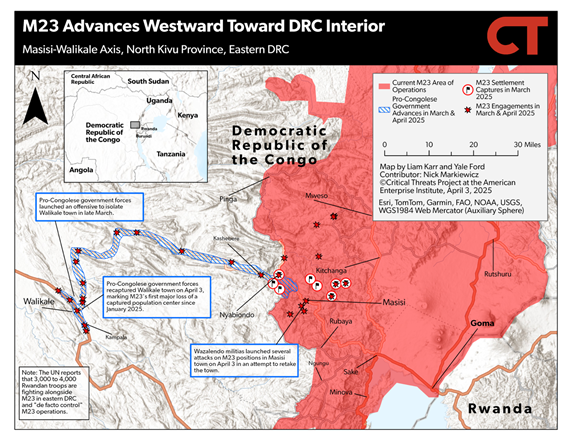
Both the DRC and Rwanda will almost certainly continue signaling their commitment to the peace accords to benefit from US economic engagement, despite setbacks in the peace process. The United States has been the only external actor able to use political pressure to influence battlefield dynamics, as US diplomatic pressure rolled back significant M23-Rwandan territorial gains on two notable occasions in 2025. M23 conducted an offensive deep into North Kivu province in March 2025, holding the Walikale district capital for 16 days before the United States and Qatar brokered their withdrawal and a Congolese army (FARDC) airstrike moratorium. The United States brokered another short-lived FARDC airstrike moratorium in Washington in November.[18] M23 and the RDF then captured Uvira, but strong US political pressure on Rwanda and M23 led to the group’s complete withdrawal from the town without receiving concessions from the Congolese government in mid-January.[19] The group did not return to its original, pre-offensive positions in South Kivu, however. The Treasury Department called on the RDF’s “immediate withdrawal” from the eastern DRC when it sanctioned Rwanda and said that M23’s continued presence near the border with Burundi risks widening the conflict into a larger regional war.[20]
Figure 3. M23 Advances Westward Toward DRC Interior (April 2025)
The DRC and Rwanda stand to benefit from the long-term economic dividends of US engagement. The two sides signed the US-brokered Regional Economic Framework (REIF) in early November 2025, which ties US investment to security and incentivizes the DRC and Rwanda to align their national interests and pursue peace and long-term stability.[21] The flagship project is the Ruzizi hydropower plant, which will benefit about 30 million people across Burundi, the DRC, and Rwanda.[22] The REIF aims to dismantle the drivers of the conflict economy by encouraging transparency and raising the opportunity cost of “wartime” profiteering as billions of dollars of investment materialize over the next few years. The REIF focuses on US investment in the upstream and midstream aspects of each country’s critical mineral supply chains.[23] Rwanda’s leading tungsten producer signed an agreement with a US refining company in May 2025 and began sending shipments of tungsten to the United States in August 2025.[24] The DRC and Rwanda have explored joint investments by the US government and US companies in the energy, infrastructure, transportation, trade, mining, national park management and tourism, and public health sectors, among others, in the past year.[25] The US State Department also signed five-year bilateral health agreements with Rwanda and the DRC worth hundreds of millions of dollars in December 2025 and February 2026, respectively.[26]
The United States and the DRC are deepening economic ties through an extensive critical minerals partnership. The United States and the DRC signed a landmark framework agreement for an economic and minerals partnership in early December 2025.[27] The partnership agreement stipulates that US companies will receive the right to invest first in promising mineral reserves and other investments that the Congolese government identifies and adds to an evolving list reviewed by the Joint Steering Committee, which held its first meeting in early February 2026.[28] China dominates the DRC’s mining sector, particularly in the former Katanga region in the southern DRC, but this framework commits the DRC to rebalance its commercial relationships and redirect mineral exports west toward the Atlantic Ocean via the US-funded Lobito railway corridor. The DRC has already sent several copper shipments to the United States since early January 2026.[29] Reuters reported in early March 2026 that continued fighting, permitting disputes, and bureaucratic delays have slowed cooperation, however.[30]
The partnership has led to growing deals between the DRC and US companies. The Congolese government and US firm Kobold Metals signed an agreement in July 2025 that permitted the company to undertake a large-scale mineral exploration program across the DRC for copper, cobalt, nickel and lithium deposits using artificial intelligence.[31] The Congolese government and US companies have signed several more major mining deals, which have backing from the US government and the International Development Finance Corporation, since the signing of the partnership agreement in December.[32] Senior Trump aides have been personally involved in encouraging deals with US companies.[33] Tshisekedi sacked the chief executive officer and the chairman of the DRC’s state mining company in late February 2026, reportedly in part for their opposition to approve the sale of major copper and cobalt producer to a US-backed firm.[34]
Rwanda will likely decrease direct military support for M23 in the short term to manage international pressure, but past actions and statements from Rwandan officials signal that Rwanda will continue propping up M23 to protect its strategic economic, security, and geopolitical interests in the region. Rwanda will likely decrease its military support for M23 to manage US backlash in the short term. Rwanda scaled back its force deployment in the eastern DRC the last time it faced major international pressure, when Rwanda supported the offensive to capture Goma and Bukavu, the North and South Kivu provincial capitals, in early 2025. The United States and EU sanctioned a gold refinery in Rwanda and senior M23 and Rwandan officials in February and March 2025, respectively.[35] The RDF responded by reducing its deployment from at least 6,000 troops to an estimated 1,000 to 1,500 by April 2025, according to the UN.[36] The UN reported in late 2025 that RDF numbers increased again to between 6,000 and 7,000, however, and that its support remained “critical” to M23 military operations.[37] Unconfirmed reports from journalists on social media indicate that the RDF may have pulled back some troops from the front line since mid-February 2026.[38] The United States is reportedly considering levying additional sanctions on Rwanda in the near term if remains in violation of the peace accords.[39]
The sanctions could tighten Rwanda’s access to external financing and investment and increase its perceived risk among lenders and investors, which would raise borrowing costs at a time when Rwanda already faces debt pressures. The sanctions significantly restrict US-linked financial dealings, block transactions with any entity that the RDF owns directly or indirectly by 50 percent or more, and give those doing business with these entities until April 1, 2026, to end their transactions.[40] The RDF is intertwined with Rwanda’s national economy through a network of holding companies, investments, and business ventures.[41]
The US sanctions have already proven costly for Rwanda. A professional basketball team owned by the Rwandan ministry of defense withdrew from the upcoming season of the US National Basketball Association’s Basketball Africa League in mid-March.[42] Media reports from mid-March indicated that the EU does not plan to renew a funding package for the RDF’s deployment in northern Mozambique’s Cabo Delgado province in May 2026, although it is unclear if this reassessment is a direct result of US sanctions.[43] Rwanda then threatened that it would withdraw its several thousand troops if it does not receive funding guarantees.[44] The United States could exempt the RDF deployment in Mozambique from sanctions, however, given the mission is key to US- and Western-backed natural gas projects.
Rwandan officials say that Rwanda is willing to accept the financial and reputational costs for its presence in the DRC, however, which they claim is existential. Rwanda publicly frames its security policy as “defensive” in nature to counter the FDLR, which Rwanda’s Tutsi-dominated government views as a threat due to the DRC’s use of the FDLR as an anti-Rwandan proxy, the FDLR’s ties to the 1994 Rwandan genocide, and the group’s xenophobic, anti-Tutsi ideology. The Rwandan foreign minister has characterized sanctions against Rwanda as “counterproductive” to resolving the conflict and the first M23 rebellion in 2012–13.[45] Kagame said in a speech in late January 2026 that that others have pressured him to “leave” the eastern DRC without addressing Rwanda’s security concerns.[46] Kagame denounced what he called “selective pressure” on Rwanda after the US sanctions and said that Rwanda faces a hard choice to either “tolerate” the FDLR and associated groups backed by the Congolese government or “defend ourselves and be condemned for it” in a speech in early March 2026.[47]
Rwanda likely views a foothold in the Kivus as necessary to protect its economic and security interests in the eastern DRC and the broader Great Lakes region. Battle-hardened Congolese Tutsi officers with long-standing ties to Rwanda command M23’s military wing. M23’s control over the eastern DRC aligns with Rwanda’s long-term strategy to protect and strengthen its political and economic influence and establish a buffer zone on the border with Rwanda.[48] Rwanda aligns with the group’s local political agenda, which touts an anti-corruption platform and security and human rights issues. Rwanda has also intervened in the region to access the eastern DRC’s abundant natural sources, including critical minerals, and benefit from influence over long-standing cross-border trade networks.[49]
Regional competition likely also drives Rwanda’s intervention. Burundi and Uganda, the other state actors in the eastern DRC, also have thousands of troops deployed in the eastern DRC—with the Congolese government’s consent—and see quelling threats from anti-government rebel groups and maintaining formal and informal economic access to the DRC as vital to their national interests. Rwanda and Uganda have developed a “frenemy” relationship since the First Congo War in the 1990s, as the ruling elites consolidated power domestically and became competitors for regional influence.[50] Regional experts have assessed that Rwanda’s decision to reactivate M23 in 2021 was motivated primarily by its need to hedge against Uganda at a time when diplomatic relations were strained.[51] Burundi and Rwanda view their competition in the DRC as potentially existential. Burundi collaborates with the FDLR and has allowed the Congolese government to use Burundian territory as a rear base for military operations against Rwandan-backed groups in South Kivu.[52] The Burundian government has accused Rwanda of planning attacks on Burundi, backing coup plots, and supporting anti-Burundian government rebel groups based in the DRC. CTP assessed in December 2025 that M23 and Rwanda launched the Uvira offensive at least in part to knock the Burundian military out of the war.[53]
Doha Process
The long-term sustainability of the Washington Peace Accords remains contingent on separate, strained peace talks between the Congolese government and M23. The Doha process is a Qatari-mediated internal political dialogue between the DRC and M23 that is separate but closely coordinated with the US-mediated process. The resolution of the M23 conflict is central to significant investment from US companies in the Kivu provinces under the REIF.[54] The REIF itself is contingent on the security aspects of the June 2025 peace agreement, which CTP assessed in 2025 would likely face numerous challenges to implement, particularly with the issue of M23’s territorial control.[55] Massad Boulos, Trump’s Africa adviser, has said previously that a sustainable deal between the DRC and M23 is the “last piece of the puzzle.”[56]
Figure 4. Peace Processes Multiply in the African Great Lakes Region
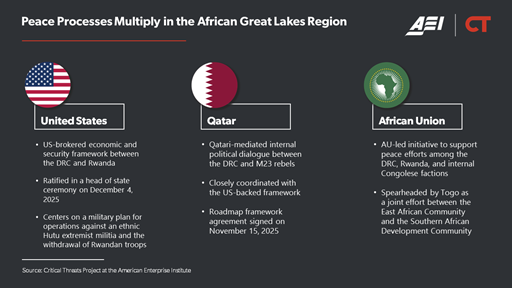
The Doha process has gradually progressed on paper. The DRC and M23 signed their first joint statement in April 2025, committing to dialogue and working toward a ceasefire, a few weeks after Qatar brokered a ceasefire between the DRC and Rwanda.[57] Qatar assumed mediation, and the two sides then signed a declaration of principles agreement under US pressure in July that had a formal ceasefire provision and two key confidence-building measures, prisoner exchange and a ceasefire mechanism, that would facilitate talks on deeper issues when resolved.[58] They signed a prisoner exchange agreement under the auspices of the International Committee of the Red Cross in September and a ceasefire-verification mechanism and monitoring agreement in October.[59] Senior representatives from the two sides signed a peace framework agreement on November 15, which charted a path toward reaching a comprehensive, long-term deal.[60]
No ceasefire has taken root, however, and the security situation on the ground continues to deteriorate. DRC-backed Wazalendo militia fighters launched coordinated attacks in an attempt to retake Goma in early April 2025, shortly after the Doha talks began.[61] CTP assessed after the first joint statement that a détente between the DRC and Rwanda would likely limit the scale of direct violence in the eastern DRC, but proxy fighting between the various pro-Congolese government militia groups and M23 would almost certainly continue in the absence of a broader agreement with M23.[62] M23 and Rwanda pushed further south of Bukavu into several districts of South Kivu throughout 2025 with a series of smaller offensives that began in late April and culminated with the offensive to take Uvira in December.[63] M23 and Rwanda also conducted unilateral counterinsurgency campaigns against FDLR in late April and mid-July, which CTP assessed violated multiple elements of the US-backed peace framework despite combating legitimate military targets and may have violated international law and involved war crimes. [64] The FARDC reinforced its positions across the front lines in July, began escalating air attacks in violation of the ceasefire in September, and DRC-backed Wazalendo fighters deliberately fomented ethnic tensions in South Kivu also in September.[65]
Figure 5. M23 Advances Southward in South Kivu Province (December 2025)
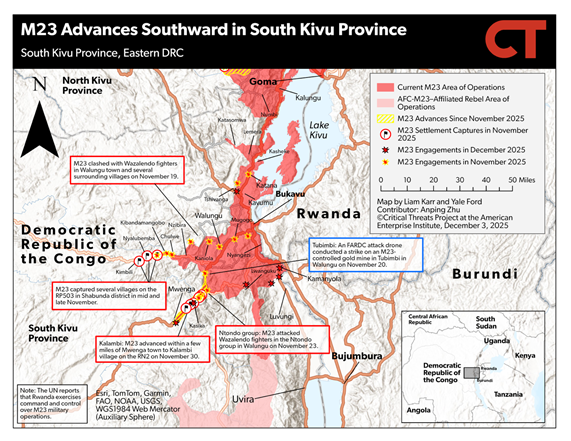
The peace process has made minimal progress due to procedural disputes and deep distrust. Trust between the two sides has eroded as they continue to amplify war rhetoric and accuse each other of ceasefire violations, human rights abuses, planning imminent offensives, and negotiating in bad faith. It took three months of successive rounds of talks to negotiate and finalize the prisoner exchange and ceasefire-verification mechanism agreements, both of which remain stalled over technical disputes. The November framework agreement was nonbinding, and CTP assessed that it left key areas unaddressed and did not go much further than what had already been achieved.[66] Qatar reportedly failed to broker a “compromise text” only on points they could agree on or even include unresolved disputes in the final version of the text.[67]
The DRC and M23 have signed agreements to allow the UN and the International Conference on the Great Lakes Region to support the implementation of a ceasefire in recent weeks, but continued fighting, logistic and financial constraints, and M23’s refusal to grant humanitarian access to areas under its control have delayed operationalization. Tshisekedi had agreed in principle to an Angolan-proposed ceasefire that would have taken effect in mid-February 2026, but Angola did not formally consult all parties before announcing the ceasefire, and M23 has said on multiple occasions that it did not recognize the initiative and remained solely committed to the Doha process.[68]
Neither side has made compromises on their maximalist negotiating positions, as M23 is likely content continuing to entrench its de facto control over the Kivus, while the Congolese government refuses to make political concessions to a group that it views as illegitimate. M23 has not made significant concessions, clearly has no intention to disarm voluntarily, and rejects any suggestion that it will vacate territory under its control. M23 originally demanded that the Congolese government implement an informal peace deal from 2013, which concerned a set of issues specific to M23 and the Kivus. The group’s bolstered military strength and ambition to influence Congolese politics more broadly have now led it to raise its demands to include dismantling and replacing the FARDC with a new army, legal recognition of its autonomy over the Kivus for at least eight years, and national power-sharing agreements and political reforms to cede significant governing authority to provincial governments.[69] Aspects of a Qatari draft proposal from August and the November framework agreement factored in M23’s position but left out power structure reforms and envisioned a gradual “return of state authority” to the Kivus over the next five years.[70] None of these demands are tenable for the Congolese government, however, as they would force the government to relinquish power across the country at worst and at the very least fuel resentment among government elites and the Congolese public.[71]
The DRC’s history of unreliable deal making has likely hardened M23’s stance. Previous peace deals with M23 collapsed when the Congolese government abandoned its commitments. Former DRC President Joseph Kabila breached the March 23 Agreement of 2009 when he tried to purge rebel networks in the army in the Kivus in 2012.[72] Kabila agreed to the 2013 deal but never implemented it once M23 was no longer a threat.[73] Negotiations stalled in November 2021 after the government refused to implement the 2013 deal.[74] This saga shows that Congolese politicians will negotiate with the group and even nominally agree to resolve long-standing issues and share power but are ultimately unwilling to follow through on their commitments.
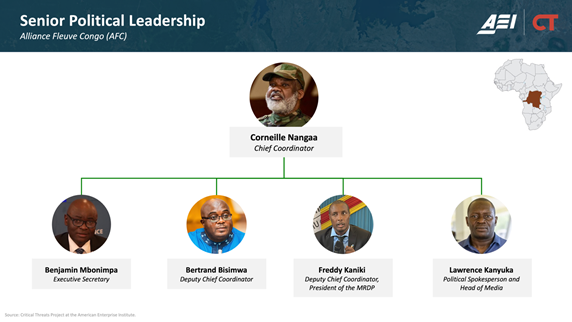
M23 is building a proto-state, and its strengthening control over land and resources gives it leverage for any future peace deal. CTP reported in September 2025 that the group has launched a systematic state-building project to translate its military gains into an autonomous region on the border with Rwanda.[75] M23’s primary focus has been expanding its parallel government to newly captured areas to facilitate its state-building efforts since its early 2025 offensive. The group has appointed hundreds of technocrats and civilian leaders and established centralized governing structures to position itself as the de facto state authority in the eastern DRC. M23 has launched various economic initiatives to formalize its control over the local economy—including critical minerals—boost local economic activity, and eliminate the Kivu provinces’ reliance on the DRC’s national financial system, although this has proven difficult to achieve. M23’s ability to strengthen its territorial control is key to its stated cause to stabilize the Kivus, protect marginalized groups, and govern more competently than the Congolese government that it deems illegitimate and predatory. An entrenched M23 administration would be even more intractable and able to push for a greater role in any future deal that cedes a degree of autonomy to the group or gradually incorporates into a Congolese government administration.
Figure 6. Senior Political Leadership
The Congolese government has also negotiated in bad faith in the Doha talks. The DRC has pushed nonstarter conditions, namely the group’s “nonnegotiable” withdrawal, disarmament, and cantonment without reintegration in the FARDC.[76] Muyaya rehashed the government’s position in mid-March 2026, explaining that the function of the Doha process is to “end the existence of M23 in its current form.”[77] This stance is unacceptable for M23, however, as it de facto controls significant portions of the Kivu provinces and would dismantle the group without granting economic, security, or political benefits of the current impasse, limited autonomy, reintegration. An M23 source close to the talks had told Reuters in June that an earlier draft agreement “had nothing to do with what we proposed and takes more into account” the DRC’s demands than its own.[78] The Congolese government has also held up the prisoner swaps and delayed signing an agreement that would operationalize the ceasefire mechanism. The Congolese government views the prisoner issue as a “subject of negotiations rather than a condition to continue talks” and has said that amnesty for M23 combatants will be treated on a “case-by-case basis,” rather than a blanket release, as part of any final deal.[79]
The Congolese government views M23 as an illegitimate Rwandan proxy, which undermines its buy-in to the Doha talks. The DRC views the conflict principally as a state-to-state issue with Rwanda—a matter of foreign aggression, enabled by the international community—rather than an organic insurgency fueled by internal grievances and with Rwandan backing. The government uses this framing to dismiss M23’s political claims and avoid concessions, arguing that peace efforts should aim to force Rwanda to end its military support for the group and curtail Rwandan expansionism on its soil. International peace efforts do not support this viewpoint, however, as the Doha process does not obligate M23 to disarm, and the Washington process has not compelled Rwanda to demobilize the group. CTP assessed after the two sides released the April 2025 joint statement that it represented a diplomatic victory for M23 and Rwanda, because it placed M23 on equal footing with the Congolese government as a negotiating partner and obliged the government to address M23’s demands as a Congolese entity.[80] Congolese officials continue to label M23 as “terrorists” and “puppets” and “sons to the father” of Rwanda, however, accusing Rwanda of using the group as a front to impose a sham peace process upon the DRC and mask its aggression, despite signing internationally-brokered agreements with both of them.
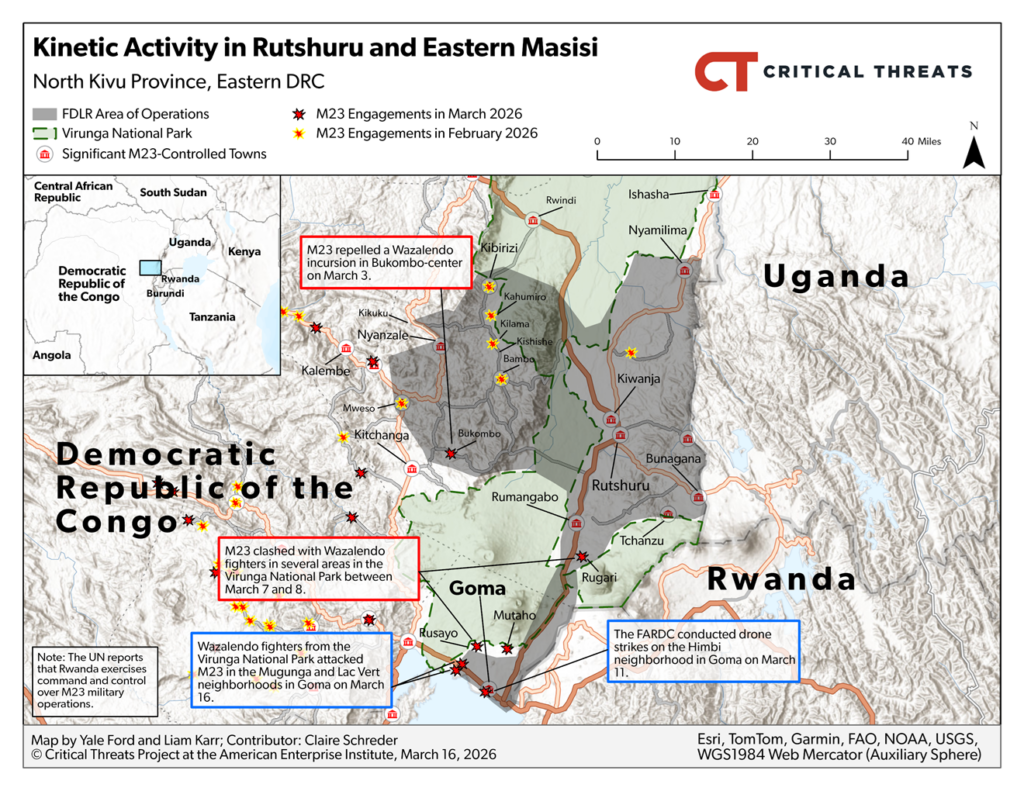
The Congolese government and M23 have little incentive to respect a ceasefire or negotiate in good faith, because neither poses an existential military threat to the other. M23 does not face a major threat to its control of the Kivus as long as it retains Rwandan support. Rwanda has deployed short-range air defense systems, jamming and spoofing equipment, and surface-to-air missiles since 2024, giving M23 a “significant tactical advantage” over the FARDC and allied groups, according to the UN.[81] M23 formed patrol units, trained and redeployed police officers, and conducted arrest campaigns and seized weapon caches in urban areas to crack down on the wave of crime insecurity that emerged after the group captured Goma and other urban areas in early 2025.[82] RDF units spearheaded anti-FDLR operations in North Kivu and embedded into M23 police units in 2025, according to the UN.[83] M23 continues to conduct intermittent anti-FDLR and search-and-clear operations to eliminate armed resistance in areas under its control, though the intensity of counterinsurgency operations has declined since a partial redeployment of RDF troops from Rutshuru to other areas in September.[84] Wazalendo units regularly attack M23 in contested areas and conduct incursions in population centers, but these attacks mainly serve to harass and maintain pressure on the group’s supply lines, rather than reclaim major territory.
Figure 7. Kinetic Activity in Rutshuru and Eastern Masisi
M23 is too far away to pose a direct military threat to the Congolese government. North and South Kivu accounted for only 4 percent of the federal government’s tax revenue in 2025, and a senior Congolese government source had told Reuters a few weeks after the Doha talks commenced that negotiations were slow because M23 was “asking too much,” given that “they don’t even control two of the 26 provinces.”[85] Presidential patronage networks have traditionally drawn their strength from the country’s main political and economic centers—Kinshasa, the Congolese capital; lucrative import-export corridors; and the government’s economic engine in the copper belt in former Katanga.[86] Natural resource extraction generates about one-third of the government’s revenue and more than 90 percent of its export earnings, largely from copper and cobalt production, and Tshisekedi and his inner circle control the industrial mining sector in former Katanga.[87] M23 would have to advance roughly 750 miles south to reach these mineral-rich areas and nearly 1,000 miles west across tough terrain and poor roads to march on Kinshasa. This distance has been a factor that has historically influenced Congolese policymakers to favor ad hoc solutions over a coherent, long-term strategy toward conflict in the east.[88]
Military Escalation
The DRC and M23 continue to pursue a military-first approach to the standoff. Both sides are seeking to expand and enhance their operational capabilities and manpower and have escalated air attacks deep into each other’s territory. M23 has prioritized force-generation efforts and is strengthening its aerial warfare capabilities with long-range attack drones with possible foreign support. The FARDC is rearming and using newly acquired air assets to escalate air attacks on M23 and M23-aligned militia groups and target senior M23 leadership as part of a possible decapitation strategy. The FARDC has also continued to outsource its defense strategy to external partners. Both sides have remained open to short-term ceasefires to manage external pressure, as they set conditions for and undertake new offensives to capture or recapture territory.
Force Generation and Operational Capabilities
M23 has prioritized force-generation efforts, undermining the spirit of the peace process. The group has monopolized the use of force in areas under its control by systematically incorporating recruits, forcible conscripts, and seized equipment into its military forces.[89] M23 has commissioned at least four large-scale recruitment cycles in July 2025, September 2025, October 2025, and February 2026, with as many as 27,000 active combatants, according to the International Crisis Group in December 2025—a more than fivefold increase since early 2025.[90] New recruits periodically defect, although it is unclear on what scale. The group said that it commissioned what it claimed was over 1,500 “mobile special forces” in early March.[91]
The group has deployed many of these new fighters to the front lines. M23 deployed a newly formed brigade to North Kivu in place of RDF units in September, composed largely of recent recruits and led by a former Wazalendo commander who had defected to M23 in March 2025.[92] M23 deployed new police units to urban areas in August 2025, allowing the group’s conventional military forces to focus on the frontlines.[93] New recruits reportedly participated in the Uvira offensive.[94] M23 established a third component of its military—the “local defense” forces—in September 2025, which played a role in maintaining control of Uvira following M23’s initial withdrawal from the town in mid‑December.[95] M23 claims that these individuals are civilians who have undergone ideological training and that some of them are armed.[96]
Figure 8. Rwandan-Backed Rebellion Force Deployments in the Eastern DRC
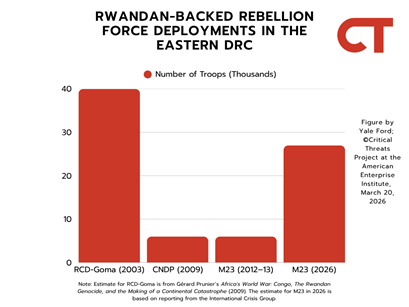
Note: The estimate for RCD-Goma is from Gérard Prunier, Africa’s World War: Congo, the Rwandan Genocide, and the Making of a Continental Catastrophe (Oxford University Press, 2009). The estimate for M23 in 2026 is based on reporting from the International Crisis Group.
Source: Yale Ford.
M23 has also expanded its aerial warfare capabilities. M23 and Rwanda used one-way attack (OWA) drones in the Uvira offensive.[97] M23 has reportedly used commercial drones modified for combat and Estonian-made long-range reconnaissance and target acquisition drones since at least February 2026.[98] The French outlet Le Monde cited a “well-informed observer” in early February who said that “foreign trainers” had been present in Goma and at M23’s main military base, likely to help with drone operations.[99] Lawrence Kanyuka, M23’s political spokesperson, implied that M23 is using drones and mercenaries in early February.[100]
The FARDC has been replenishing its arsenal through multiple suppliers. The FARDC received initial shipments of a total of 160 Emirati-made Kaser II Mine-Resistant Ambush-Protected vehicles for use against M23 in January and early May 2025.[101] The FARDC reportedly acquired additional Chinese-made Wing Loong II, Turkish-made TB2, and Turkish-made TAI Anka medium-altitude long-endurance (MALE) drones in 2025.[102] The FARDC has held negotiations with Egyptian, Indian, and Israeli militaries and defense firms for significant weapons and military equipment procurement contracts since June 2025.[103] The pro-M23 investigative outlet Great Lakes Eye claimed that two cargo flights from Turkey delivered an attack helicopter, tanks, drones, a mobile air defense system, and electronic jamming equipment to Kisangani in late July.[104] The Congolese and Burundian governments reportedly began using the airport in Bujumbura—about 16 miles east of Uvira in Burundi—to receive shipments of military equipment flown in from Azerbaijan, Libya, Sudan, and Saudi Arabia around August.[105] The DRC signed a bilateral defense agreement with Serbia that paved the way for large-scale arms transfers in late November.[106]
The FARDC has continued to outsource its defense strategy to private military contractors (PMCs), allied militaries, and militia groups. The UN reported that the FARDC expanded its collaboration and military and political support for Wazalendo and FDLR groups in 2025.[107] The Congolese government has employed PMCs from Algeria, El Salvador, and South America at the FARDC’s base in Kisangani since mid-2025, according to the UN.[108] The Burundian army (FDNB), the FARDC’s most important ally in South Kivu, reportedly began redeploying heavy and light weaponry and thousands of additional troops—18,000 in total by December 2025, according to a security source cited by Le Monde—to South Kivu around August 2025.[109] M23 and pro-M23 sources have claimed that Tanzanian troops have joined the DRC coalition since Tshisekedi’s national security adviser allegedly traveled to Tanzania in January 2026 to discuss the possible deployment of Tanzanian troops to South Kivu.[110] The FDNB began a partial redeployment of troops to South Kivu via Lake Tanganyika in late December 2025 and early January 2026 after the fall of Uvira, numbering at least 5,000 troops by late February.[111] Contractors linked to Erik Prince, a US PMC and informal adviser of President Trump, have been supporting FARDC forces in South Kivu since at least January 2026.[112] M23-aligned sources have claimed that Angola has deployed air assets and troops dressed as FARDC soldiers to the eastern DRC to support pro-Congolese government forces since mid-February 2026.[113]
Air Campaigns
The FARDC has increased air attacks as part of an air interdiction campaign against M23 since late September 2025. The DRC has used MALE drones across the front lines to deny M23 lines of advance to the DRC interior, disrupt supply lines and troop mobility, and sabotage and destroy critical infrastructure and mining sites that the group uses for logistics and revenue-generation. These strikes sometimes support asymmetric Wazalendo incursions and attacks on M23.[114] Pro-Congolese government forces are also using OWA drones, fighter jets, and attack helicopters to fight M23 and M23-aligned militia fighters in North and South Kivu.[115] Armed Conflict Location & Event Data (ACLED) recorded the highest monthly number of air and drone strikes ever documented in the DRC in February 2026, 95 percent of which were carried out by the DRC coalition.[116] M23 and Rwanda regularly accuse the Congolese government and Congolese-employed PMCs of indiscriminately bombing civilians and conducting air attacks in violation of previous airstrike moratorium agreements and US- and Qatari-brokered ceasefires.[117] The FARDC or DRC-linked PMCs almost certainly conducted drone attacks on a residential neighborhood in Goma that killed a French national working for the UN and two other individuals on March 11.[118]
Figure 9. DRC Air Attacks on M23 and M23-Aligned Militias, September 2025–March 2026
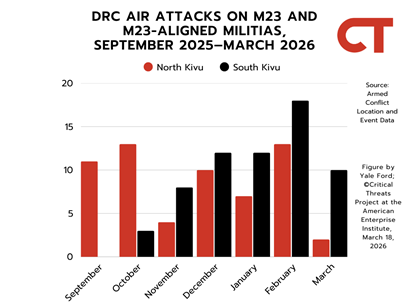
The FARDC has widened the scope of its air attacks in 2026, targeting senior M23 officials in rebel strongholds as part of a possible decapitation strategy. The Congolese government has increased its intelligence capabilities over the course of the conflict and reportedly has technology to track and conduct wiretaps on mobile phones used by Corneille Nangaa, the head of M23’s political wing, and other senior M23 officials.[119] The FARDC reportedly targeted M23 officials in an OWA drone attack that killed several civilians in a hotel in Uvira town on January 14.[120] A FARDC or PMC-operated CH-4 MALE drone struck and killed Willy Ngoma, a veteran M23 member and the group’s military spokesperson, and at least one other M23 officer in an attack near the Rubaya mine in North Kivu on February 24.[121] Sultani Makenga, M23’s operational commander, had been in the area shortly before the strike.[122] Ngoma was the most senior M23 figure to be killed in an air attack since the FARDC eliminated M23’s military intelligence chief in January 2024.[123] An unidentified security source told Le Monde in early March 2026 that Rwandan air defenses contain “gaps” and that equipment installed in Rwanda was supposed to cover Rubaya.[124] An FARDC drone reportedly struck two M23 positions where M23 combatants were gathered a few miles west of Sake town in Masisi district in North Kivu on March 7.[125] The DRC coalition likely conducted the March 11 drone attacks in Goma using OWA drones according to ACLED analyst Ladd Serwat, allegedly to target Makenga and Nangaa.[126]
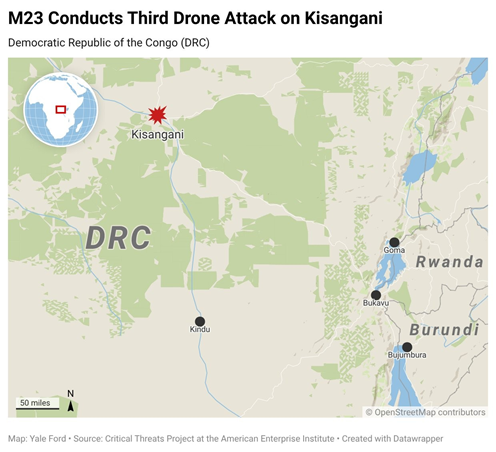
M23 has launched a drone attack campaign targeting Kisangani in the central DRC, likely to degrade FARDC air capabilities. The group has conducted three separate attacks using OWA drones on the FARDC airbase in Kisangani in the central DRC since late January 2026.[127] Kisangani houses many of the MALE drones that have been integral to the FARDC’s air interdiction campaign, and Nangaa had said that M23 would begin preemptively targeting FARDC air bases and other military installations from which Congolese forces launch attacks against M23 after the first two Kisangani attacks.[128] The attacks are M23’s westernmost engagements since the group reemerged in late 2021, nearly 350 miles from the front lines in the eastern DRC. PMCs contracted by the government in Kisangani have reportedly used Turkish and Indian-made D4 anti-drone defense systems acquired in 2025 to defend against M23’s OWA drone campaign on Kisangani.[129] M23 reportedly used Turkish-made OWA Yiha III drones in at least the first two attacks on Kisangani, and the FARDC claimed that it shot down three enemy Yiha III drones in the South Kivu highlands in mid-March 2026.[130] Kisangani is outside of the range of Yiha III drones based in the Kivus, and locals and M23 officials have claimed that the group launched the drones from areas near the city.[131] Other local sources claimed after the first two attacks that the drones were launched from the Central African Republic, where Rwandan troops are deployed.[132]
Figure 10. M23 Conducts Third Drone Attack on Kisangani
New Offensives
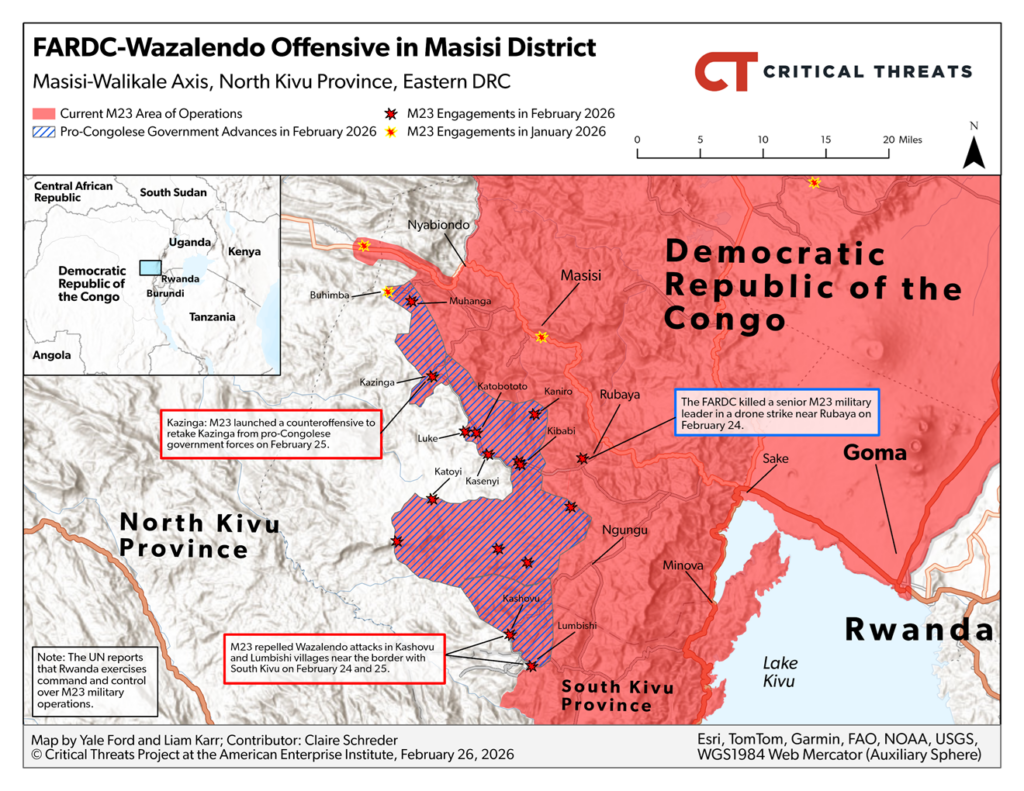
The FARDC and DRC-backed Wazalendo fighters have conducted several significant attacks on M23 in recent weeks. Wazalendo fighters conducted a coordinated offensive with FARDC air support on multiple lines of advance in North Kivu in late February 2026.[133] CTP assessed that the DRC coalition may have aimed to capture a major mining site and cut off a vital source of revenue for M23 in the offensive.[134] FDNB, FARDC, and Wazalendo fighters reportedly cut off civilian traffic to M23-held areas on the RN5 in the Ruzizi Plain in South Kivu and clashed with M23 in mid-March, breaking a de facto truce in the Ruzizi Plain since M23’s withdrawal from Uvira town.[135] An M23-aligned journalist claimed on March 17 that PMCs from Prince’s team are fighting in the Ruzizi Plain.[136] Wazalendo fighters reportedly conducted incursions and attacked M23 in the northern and western parts of Goma on two occasions in early and mid-March.[137] Sweden-based intelligence outlet African Security Analysis (ASA) reported on March 17 that FDLR elements and allied Wazalendo groups are “regrouping” in the Virunga National Park north of Goma and are preparing to attack and try to destabilize the city in the near term.[138] ASA reported that pro-Congolese government militia groups may also conduct attacks on Bukavu and its outskirts using attack drones from their positions in a national park north of the city in the near term.[139]
Figure 11. FARDC-Wazalendo Masisi Offensive
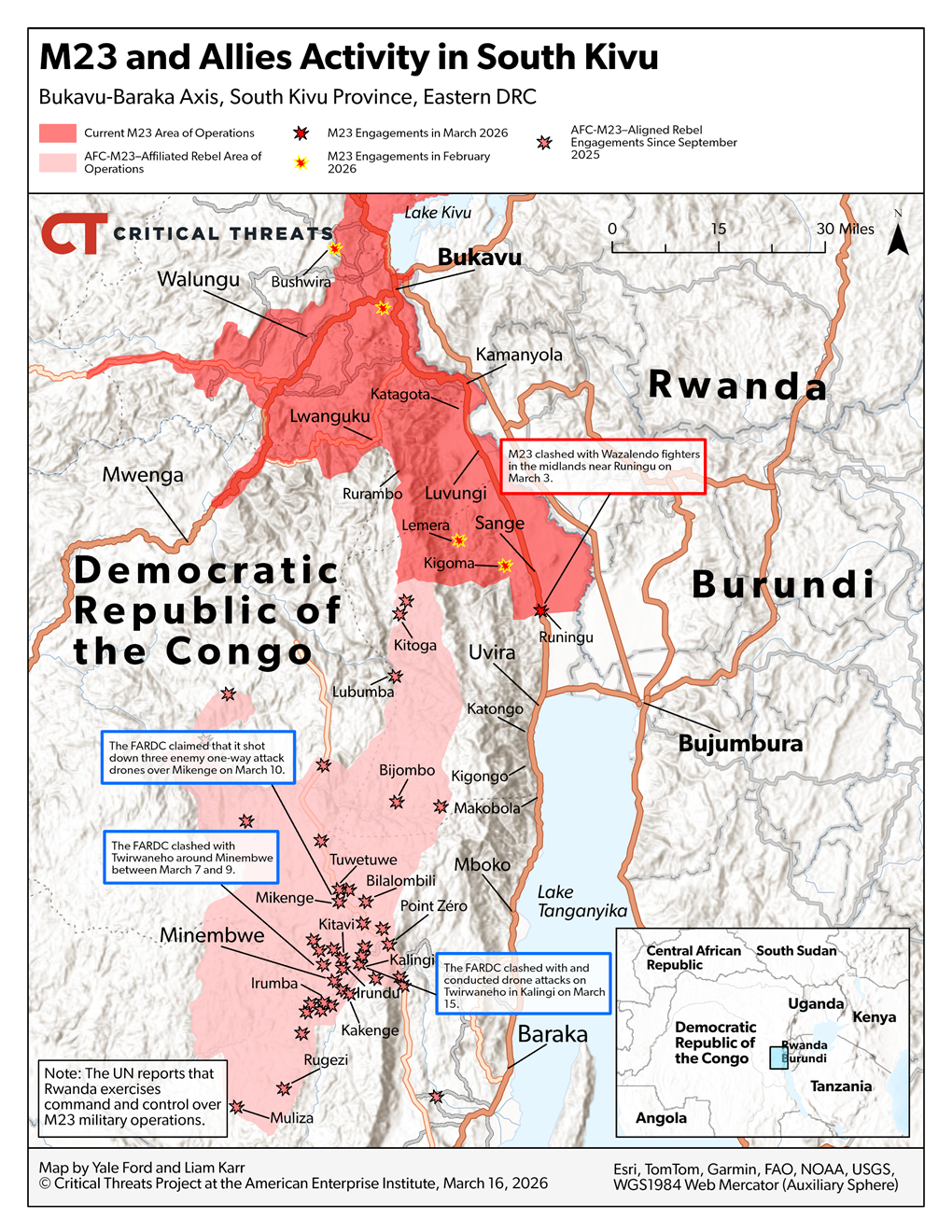
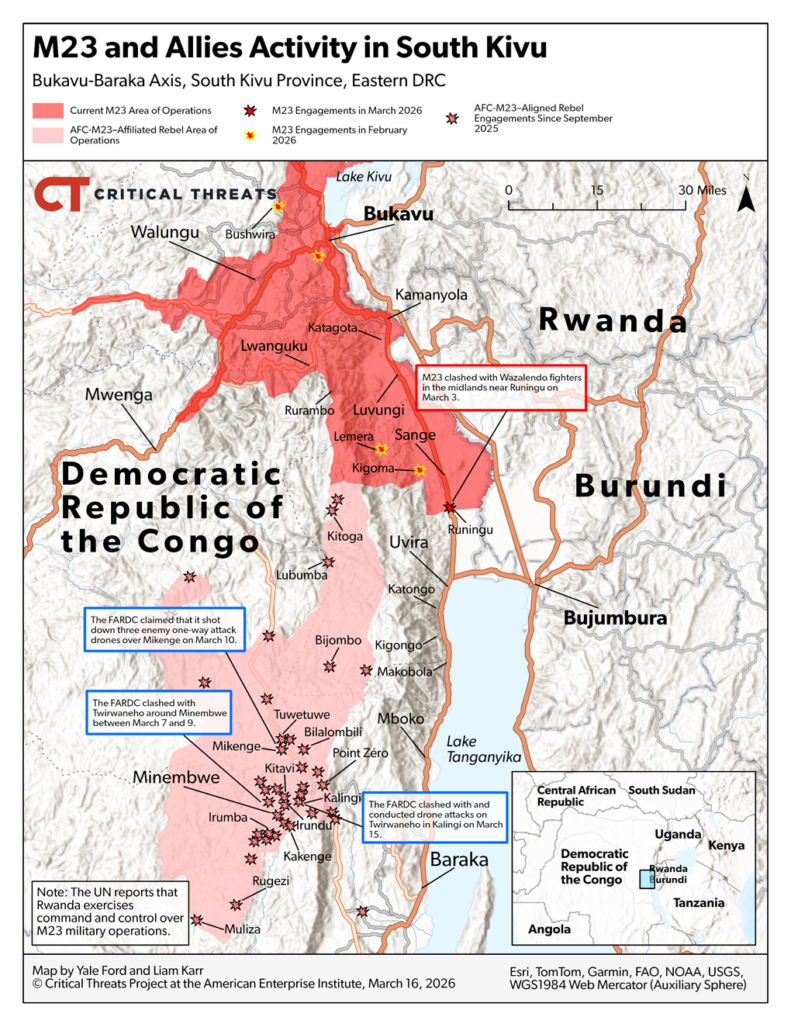
The FARDC and allied forces have been waging a separate offensive against M23 and an M23-aligned militia in South Kivu for control of key terrain in the Fizi highlands since late January 2026. The FARDC launched an offensive in the highlands around Minembwe town in Fizi in late January and have intensified ground and air attacks to recapture several areas around the town, which is a stronghold for Twirwaneho, an M23-aligned militia group that claims to protect ethnic Banyamulenge civilians.[140] The highlands around Minembwe control access on several axes to key towns in the lowlands along Lake Tanganyika and potential lines of advance toward the former Katanga region. The fighting has caused at least 200,000 civilians to flee the Minembwe area since early February.[141]
Figure 12. M23 and Allies Activity in South Kivu
M23 is setting conditions to capture and control additional territory in the eastern DRC. Senior M23 political and military officials said openly in 2025 that the group aims to march on Lubero town in North Kivu, and Butembo, and Beni towns in Ituri province to the north.[142] The group has reportedly reinforced its positions with troops and heavy weaponry in Lubero district, including to some areas on the front line, on several occasions since late September 2025.[143] M23 had conducted a northern campaign toward Lubero town in late 2024 and early 2025, before the Ugandan army deployed thousands of troops to block the advance and establish a buffer zone.[144] M23 continues to maintain pressure on Pinga town in Walikale district in North Kivu, which is key due to its vital infrastructure and location as a potential launching pad for future M23 offensives into the DRC interior. CTP assessed in early February 2026 that M23 is already setting conditions to justify future offensive military maneuvers in South Kivu, although international pressure has limited the likelihood of a new campaign in the short term.[145]
US-DRC Partnership and Regime Security
The US military and US-linked entities have increased security cooperation with the DRC in recent months. The US military and the FARDC held limited technical exchanges in July 2025, a few weeks after the United States brokered the initial DRC-Rwanda peace agreement, and reportedly began negotiating the details of a security partnership around September.[146] These negotiations culminated in the signing a memorandum of understanding (MOU) for an expanded security partnership under the Washington Peace Accords in early December 2025.[147]
The US-DRC security MOU has already led to greater defense cooperation and could materialize into a formalized defense agreement, which would reportedly entail US training support, arms transfers, and intelligence sharing.[148] A United States Africa Command (AFRICOM) team traveled to the DRC to meet with FARDC leaders in late January 2026 and lay the groundwork for a future meeting between Tshisekedi and General Dagvin Anderson, the AFRICOM commander.[149] General Anderson met with the Congolese foreign minister on the sidelines of the Munich Security Conference in Germany in mid-February 2026.[150] The US chargé d’affaires and defense attaché met with the Congolese defense minister in Kinshasa in late February 2026 and agreed to boost intelligence sharing, implement training programs, and conduct joint military exercises in the coming months.[151] A lobbying firm with access to the Trump administration said in mid-March 2026 that the United States lifted certain restrictions on military assistance and training to the DRC.[152]
A US-linked PMC has expanded its cooperation with the FARDC and is supporting pro-Congolese government forces on the front line. The Congolese government had signed an agreement with American citizen and Trump associate Erik Prince’s firm, Vectus Global, to help crack down on tax evasion in the DRC’s mining sector and provide discreet security services in late 2024.[153] Vectus Global forces deployed to South Kivu at the Congolese government’s request to assist the FARDC in securing Uvira town after M23 forces withdrew, however.[154] Prince’s team and Israeli advisers are reportedly supporting FARDC special forces that are fighting M23-aligned rebel militia groups in the South Kivu highlands as part of new offensives in violation of any ceasefire since the FARDC retook Uvira.[155] Vectus Global-backed FARDC special forces are using attack drones, and locals have found damaged high-tech mortar shell drop systems amid the fighting.[156] Reuters reported in February 2026 that Prince’s team could remain closely involved in the conflict, and a Congolese security official said that the presence of contractors linked to the United States via Prince aims to serve as a “deterrent” to M23 troops, who may be reluctant to risk a direct confrontation with American personnel.[157]
Tshisekedi likely aims to trade minerals for security and US diplomatic backing to ensure his regime’s survival. M23’s advances and the coalescing of the armed and political opposition in 2025 weakened Tshisekedi politically and exposed the deep flaws in the DRC government’s military strategy. Tshisekedi turned to the United States and pitched a $3 trillion “minerals-for-security” deal with the Trump administration in exchange for diplomatic backing and a defense pact to help fight Rwanda and M23 in early 2025.[158] Tshisekedi’s administration has repeatedly pushed back on public criticism that the partnership lacks transparency and is a “sell-off” of sovereign mineral assets to preserve the regime.[159] The French magazine Jeune Afrique had quoted an insider source in late June 2025 amid the reemergence of former DRC President Joseph Kabila who said that a finalized US-DRC partnership would further isolate Tshisekedi’s political opponents and strengthen his position by allowing the United States to “sanction anyone who undermines the contract that binds them with the DRC,” however.[160] Reuters cited an unspecified US diplomat in early March 2026 who said that the DRC is “deliberately slowing” some mining deals to prompt the United States to step up pressure on M23.[161]
Congolese officials have framed greater US security assistance as crucial to protect US investments in the DRC. Congolese officials reportedly wanted to see an expanded bilateral partnership “go beyond the purely commercial framework” and urged the United States to provide security assistance to protect US economic interests in the country during negotiations in 2025.[162] A member of the Congolese delegation who visited Washington DC in September told French state media that DRC wanted to model US-DRC cooperation after the United States’ defense partnerships with Saudi Arabia and Kuwait.[163] Congolese and US officials told Reuters that the DRC added the coltan-producing Rubaya mine, which M23 currently controls and produces 15–30 percent of global coltan supply, to a list of potential mining projects that could benefit from US investment in the inaugural US-DRC Joint Steering Committee meeting in Washington in early February 2026.[164] Tshisekedi had offered the mine as one of the assets in his initial minerals-for-security proposal in February 2025, and a consortium that includes a Trump-linked global investment firm has been in talks with the Congolese government to acquire a majority stake in Rubaya since at least June 2025.[165]
Tshisekedi will likely not respect a ceasefire as he moves closer to the United States without greater US diplomatic pressure, because a ceasefire would undermine his domestic legitimacy, and US ties make pursuing the war more viable. Repeated battlefield losses have put significant political pressure on Tshisekedi and gradually opened him to negotiations. Tshisekedi had labeled M23 “terrorists” and repeatedly ruled out direct talks with M23 as a red line for years. M23’s and Rwanda’s capture of Goma and Bukavu led Tshisekedi to agree to Qatari-mediated talks and prompted a coalition of religious leaders, the political opposition, and African Union mediators to pressure him to convene a Congolese national dialogue in response to the security crisis in the east and wider social and political turmoil in the country. A national dialogue in the Congolese political tradition is a state-convened forum that brings together political actors, civil society members, and religious officials to restructure power and negotiate solutions to various crises. Tshisekedi slow-walked the effort for months, attempting to placate the opposition without agreeing to the dialogue, sidelining opponents he could not co-opt, and arguing that his administration does not suffer from a lack of legitimacy and criticizing the dialogue effort as M23-backed “subversion” to displace him from power.[166] The fall of Uvira in December 2025 pushed Tshisekedi to shift his stance, accept the dialogue in principle, and ask his ally Angolan President João Lourenço to explore the prospects of a dialogue.[167] Lourenço had reportedly denied Tshisekedi’s formal request for military assistance after the fall of Uvira and also pressed him to finally agree to a dialogue.[168]
Tshisekedi has limited options to deviate from a hardline, military-first stance without undermining support among his power base, however. Prominent political and religious leaders criticized Tshisekedi for cooperating with Rwanda against armed groups early in his first term.[169] Tshisekedi’s political allies have been vocal in the need to forcefully deal with the resurgent threat of M23 and Rwanda. Tshisekedi responded in subsequent years by promising to deliver a security dividend in the east, declaring martial law in the eastern DRC, and leaning into anti-Rwandan rhetoric, especially during his successful campaign to be re-elected in January 2024. Tshisekedi likened Kagame to Adolf Hitler and threatened multiple times to go to war with Rwanda.[170] Tshisekedi faced criticism from opposition figures and some among his base who pointed to M23’s expanding territorial control as evidence of his weak leadership and inability to contain Rwanda’s expansion in early 2025. Tshisekedi had to justify to a diaspora audience that seeking peace with Rwanda was not a “weakness” during an event in October 2025.[171] Observing a permanent ceasefire with M23 is politically untenable for Tshisekedi, because it would also cede de facto control of the east to M23 for an indeterminate amount of time, as peace talks show no sign of a sustainable solution. The Congolese government repeatedly rejected the establishment of a buffer zone on the front line with M23 in 2025.
The Congolese government is interpreting its growing partnership with the United States—and the diplomatic victory of the latest US sanctions on Rwanda—as an endorsement of its position. The Congolese trade minister said on social media that the US sanctions on Rwanda “strengthens Kinshasa’s diplomatic position, as its accusations of [Rwandan] aggression are now officially validated” in mid-March 2026.[172] Tshisekedi traveled to Washington to participate in a critical minerals summit, and Trump presented him as a key ally at an annual event for Members of Congress in early February 2026.[173]
US support also makes prosecuting the war more viable and allows Tshisekedi to avoid making concessions for recent battlefield losses. Strong US political pressure led directly to M23’s unilateral withdrawal from Uvira, and Prince’s team deployed to South Kivu “in line with the minerals-for-security deal,” according to a Congolese security official quoted by Reuters.[174] Tshisekedi then set maximalist conditions for any dialogue to take place in a speech to the Congolese diplomatic corps in late January 2026, as the United States heightened diplomatic pressure on Rwanda and the contours of a US-DRC defense partnership began taking shape.[175] CTP assessed that some of these conditions that Tshisekedi formalized in the speech could impede a dialogue or prevent it from occurring altogether.[176]
A ceasefire would also remove Tshisekedi’s ability to use the war as a pretext to extend his tenure in power and target his political opponents. Tshisekedi’s administration is setting conditions to use the war to extend his tenure in power, either by delaying elections or changing the Congolese constitution to extend his term. Tshisekedi announced in October 2024 that he would seek to change the Congolese constitution and appoint a commission in 2025 tasked with drafting the text of a new one.[177] Tshisekedi has not explicitly stated that he aims to serve another term or made any major announcements on the project in 2025 due to the security situation in the eastern DRC, but it remains a priority in his inner circle.[178] The head of Tshisekedi’s political party then solidified the party line in early March 2026 and said publicly that that the Congolese public should be “calm and clear, we are going to amend this constitution.”[179] The pro-Tshisekedi national electoral commission (CENI) is poorly funded and already behind schedule in preparing for the 2028 election.[180] Kabila had delayed national elections in 2016, for similar justifications related to CENI, and opposition groups accused him of delaying elections long enough to remain in office without technically violating the constitution.[181]
Tshisekedi-aligned officials have begun setting conditions to use the war in the eastern DRC as a pretext to cancel or delay elections. Majority officials began saying in September and early October 2026 that the government may not legally be allowed to hold elections in 2028 due to the war in the eastern DRC.[182] These officials have portrayed the war and the elections as competing priorities for the country’s focus and limited state resources. Majority officials told Jeune Afrique in early March 2026 that the money required for the elections could be better spent on the war and that “between meeting the deadlines for organizing elections and driving the enemy out, the choice is clear.”[183]
Tshisekedi’s allies have also ousted officials whom they view as obstacles to their efforts. CTP assessed in October 2025 that Tshisekedi and officials in the majority likely removed the president of the National Assembly and a stalwart Tshisekedi ally, at least partially to bolster these long-term efforts to keep Tshisekedi in power.[184] Another Tshisekedi ally and the vice president of the Senate resigned abruptly in mid-March 2026 after ruling coalition officials initiated the process to oust him when he publicly opposed the idea of changing the constitution to extend Tshisekedi’s mandate.[185]
Tshisekedi has also used the wartime atmosphere as a pretext to target his political opponents. M23’s early 2025 offensives on Goma and Bukavu sparked continual rumors of a possible military-led coup in Kinshasa.[186] The Congolese government initiated an aggressive legal campaign against Kabila and his associates, as Kabila was signaling his intent to return to Congolese politics after a multiyear hiatus. CTP assessed that he likely aims to capitalize on M23’s advantageous position to strengthen his own political influence and lead a unified opposition bloc—which includes M23—as a vehicle to regain power.[187] The Congolese government began purging dozens of senior military and intelligence officers and their associates, including in Tshisekedi’s office, some of whom were reportedly suspected of plotting a coup, between March and August 2025.[188] The DRC arrested former heads of Tshisekedi’s security unit and architect of the eastern DRC defense strategy, the FARDC chief of staff and military adviser to Tshisekedi, and the chief of staff of army and the former head of intelligence, among others.[189] CTP assessed previously that these arrests could have the added effect of improving the FARDC’s combat effectiveness, which would stem discontent over the security crisis in the eastern DRC.[190]
The Congolese government expanded this opposition purge campaign in late 2025, as the political opposition coalesced and M23 and Rwanda made gains in the eastern DRC. Various Congolese opposition leaders and M23 participated in a high-profile regional peace conference in South Africa in September, and Kabila launched a new political platform in mid-October, two weeks after the DRC handed down a death penalty conviction on him.[191] The DRC then began targeting and arresting some opposition figures, banned a dozen opposition political parties, and conducted another wave of arrests of senior military officials between September and November 2025.[192] Multiple international and national media reports indicate that Congolese security services and agents from a surveillance and intelligence unit that reports directly to Tshisekedi—the National Cyber Defense Council (CNC)—are conducting an ongoing arrest, abduction, and intimidation campaign against anyone suspected of disloyalty to the regime or links or sympathy with the opposition, Kabila, and M23.[193] Congolese government cabinet ministers have justified the necessity of the CNC on the basis of “Rwandan aggression.”[194] The Belgium-based Egmont Institute assessed previously that Tshisekedi maintains power through an “apparatus of repression” directed by his inner circle that has “proven to be efficient to block any dissident opinion.”[195]