
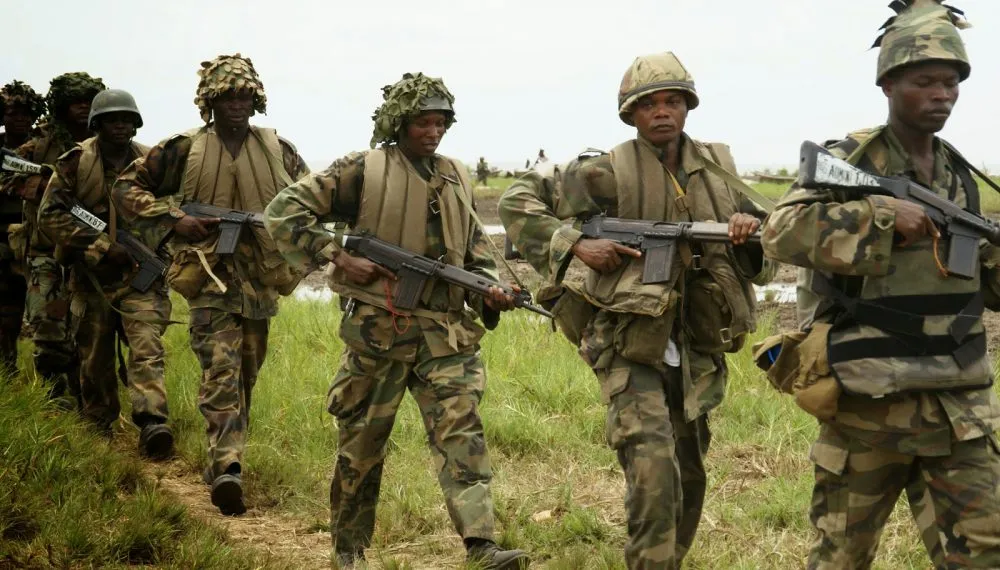
Maybe the question to pose is that after two decades of terrorism, why has Nigeria not publicly posed the question of what the problems of combating terrorism are, so that we can collectively search for an alternative route to peace and security. My wish remains: obliterate the terrorists so that we can move on.I am tired of writing about Boko Haram. It is mentally exhausting to be chronicling death, destruction and despair for over two decades. The Boko Haram narrative started with its founding in 2002 (some say earlier, others say later) in Maiduguri, Nigeria, by a cleric, Mohammed Yusuf. Originally, the group appeared with a noble objective to “purify” Islam and oppose Western culture, education and influence. It started as a non-violent group focused on proselytisation, but then started engaging in violent acts. The government of the day, led by President Umaru Musa Yar’Adua, was not ready to accept violent groups and ordered that they should be obliterated and they were wiped out.
Mohammed Yusuf was martyred by the Nigerian Police, after the military handed him over to them for prosecution, and the story of the insurgency started. A clear objective emerged after the sect regrouped and returned to the terrain – the creation of an Islamic State in Nigeria. Following the assassination of Yusuf in 2009, the group, under Abubakar Shekau, became increasingly violent, and adopted terrorist tactics, including suicide bombings, starting with attacks in 2011, such as the Abuja police headquarters bombing. By 2014, the group had declared an Islamic Caliphate, controlled about 17 local governments in the country, and had a headquarters. It became clear it had to be destroyed, nay, annihilated and obliterated. The exhausting struggle for its annihilation continued under Yar’Adua, Jonathan, Buhari and now Tinubu. There is no light at the end of the tunnel.
Last week, I mentioned in my column that Boko Haram has been attacking military formations and gradually encircling Maiduguri. It responded, yes, and triggered three bomb blasts in the city on 16th March. At least 23 people were killed, with over a hundred wounded. I guess it had become such a routine type of mass killing that the President did not even flinch and travelled on to London for his programmed State Visit to the United Kingdom, where he received a 42, rather than the normal, 21 gun salute. Sigh.
As a country, we have not really been able to directly pose the existential question of why our armed forces have been unable to smash and obliterate terrorism. The Nigerian army, it appears to me, has not changed substantially from the one bequeathed by British colonialism. It has clearly shown its limits in combating terrorists, who are mobile and manoeuvrable like the Boko Haram and bandit terrorists.Meanwhile for Maiduguri, which had suffered the repeated tragedies of bomb blasts over the past decade, fear was back in the streets and on people’s faces. The tragedy continues. The Maiduguri explosions came barely 24 hours after terrorists attacked a military base in Kofa, a community close to Ajilari on the outskirts of Maiduguri. Before then, there had been attacks by terror groups across Borno State, including assaults on rural military bases and resettled communities like Ngoshe and Dalwa, as reported by HumAngle. The depressing stories are endless.
There is a standard response to such tragedies by the Nigerian government. Enroute to the United Kingdom, the President ordered the Service Chiefs to relocate to Maiduguri and resolve the security crisis. In the past, they had been so ordered numerous times, and they had moved to the epicentre of the security crisis, but nothing had been solved. I have never understood the significance of the movement. For months, the terrorists have been attacking military bases in Borno and Yobe states and my civilian thinking was that the military would be so angry that they would hunt down all the terrorists and obliterate them for daring to confront one of Africa’s greatest military forces. This did not happen.
Way back in 2014, the Nigerian government recruited foreign mercenaries to combat and obliterate Boko Haram. I was very uneasy about the significance of that policy shift. It meant that the government itself no longer believed our armed forces were up to the task. I wondered then whether terrorism will end in my lifetime. Eventually, the contract with the foreign military contractor was cancelled and full confidence was reported in the armed forces. They improved their work and all the local government areas taken over by the terrorists were recaptured, and it appeared light could be seen at the end of the tunnel. Since then, Boko Haram fighters have spent a lot of energy fighting and killing themselves. I thought that was a great opportunity to move in for the kill. That did not happen. Boko Haram, now split into different organisations, has been recovering and it has fully returned to its battle against the Nigerian people and the Nigerian State. Terrorism never really subsided, it simply stopped capturing and keeping territory. It raided, looted, raped, killed, taxed and moved on.
Our intelligence services have grown and multiplied since the creation of the Nigerian Security Organisation (NSO) by General Obasanjo in 1976. It was replaced by a multiplicity of organisations such as the State Security Service (SSS), National Intelligence Agency (NIA) and the Directorate of Military Intelligence (DMI). We are, however, yet to see the type of efficiency displayed by the Special Branch of the police in ancient times. But then, what do I know, they may be doing excellent work but the intelligence they gather may be set aside somewhere along the chain of command.As a country, we have not really been able to directly pose the existential question of why our armed forces have been unable to smash and obliterate terrorism. The Nigerian army, it appears to me, has not changed substantially from the one bequeathed by British colonialism. It has clearly shown its limits in combating terrorists, who are mobile and manoeuvrable like the Boko Haram and bandit terrorists. Our intelligence services have grown and multiplied since the creation of the Nigerian Security Organisation (NSO) by General Obasanjo in 1976. It was replaced by a multiplicity of organisations such as the State Security Service (SSS), National Intelligence Agency (NIA) and the Directorate of Military Intelligence (DMI). We are, however, yet to see the type of efficiency displayed by the Special Branch of the police in ancient times. But then, what do I know, they may be doing excellent work but the intelligence they gather may be set aside somewhere along the chain of command. As a citizen, I would really like to know what the problem is.
Maybe the question to pose is that after two decades of terrorism, why has Nigeria not publicly posed the question of what the problems of combating terrorism are, so that we can collectively search for an alternative route to peace and security. My wish remains: obliterate the terrorists so that we can move on.