
Clashes along Sudan’s Blue Nile frontier have pointed fingers at Addis Ababa amid accusations it is enabling the Rapid Support Forces and risking wider regional fallout.
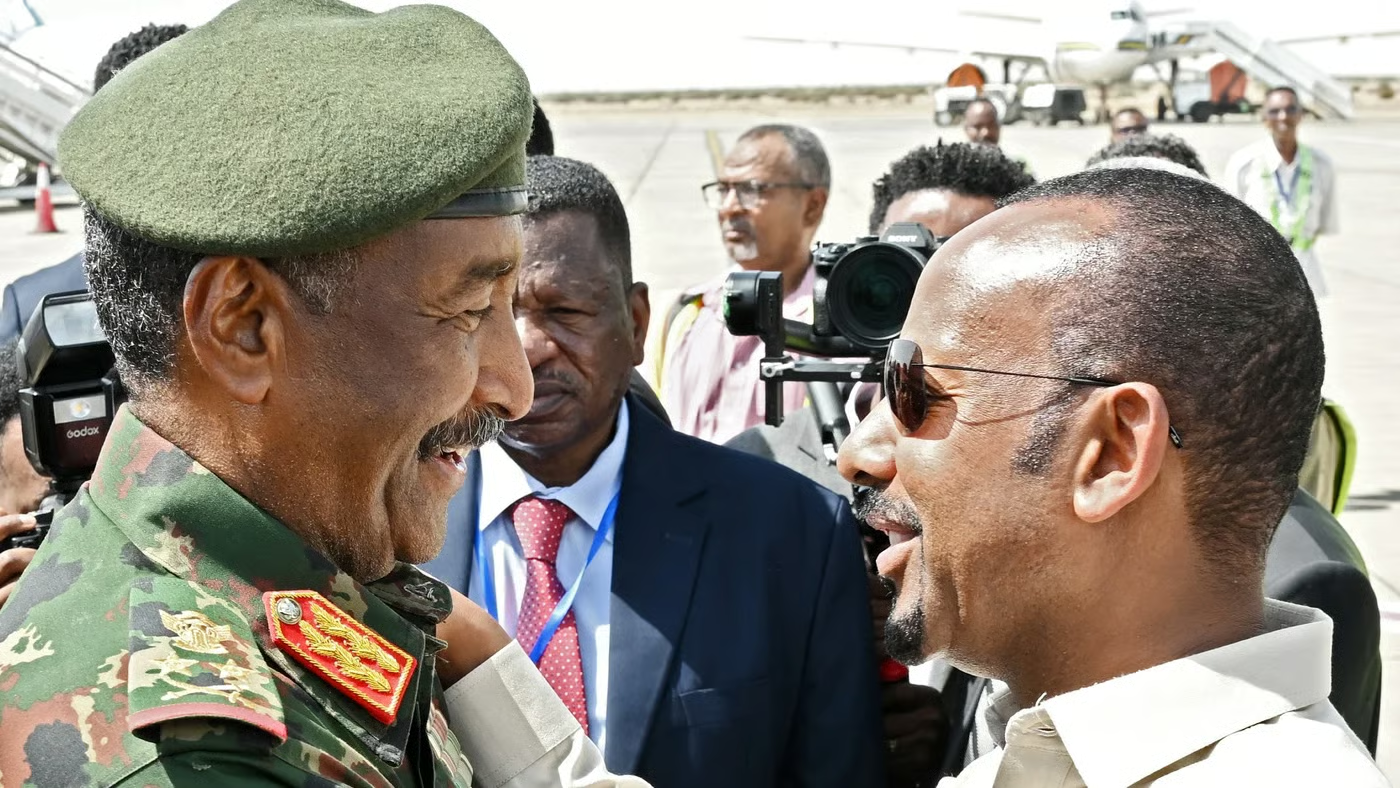
Fighting in Sudan’s southeastern Blue Nile region has once again put Ethiopia in the frame, reviving uncomfortable questions about whether Prime Minister Abiy Ahmed’s government is quietly helping Sudan’s paramilitary Rapid Support Forces (RSF), led by Mohamed Hamdan Hemeti Dagalo, in their war with the Sudanese Armed Forces (SAF), led by Abdel Fattah al-Burhan.
The latest flare-up came this week, when the RSF, fighting alongside the Sudan People’s Liberation Movement-North (SPLM-N), launched coordinated attacks on three strategic locations and overran the town of Deim Mansour.
The offensive came on the heels of rapid battlefield reversals. On 26 January, SAF units had retaken positions in Bau County. Within 24 hours, RSF and SPLM-N forces struck back, pushing in from border areas near Ethiopia and South Sudan.
A senior Sudanese official accused Ethiopia of directly facilitating the attack, claiming that RSF and SPLM-N fighters crossed into Sudan from Ethiopian territory near Yabus, along the Blue Nile frontier. He added that armed drones used in the fighting were launched from Ethiopia’s Benishangul-Gumuz region, from bases linked to the United Arab Emirates (UAE). Khartoum, the official said, was facing a “foreign-backed invasion”, though the army insisted it could hold the line.
How much evidence is there?
The Africa Report has not independently verified the allegations reported by Sudan Tribune. But this report has reopened a question that has lingered since Sudan’s war began in April 2023: is Ethiopia trying to shield itself from the fallout of its neighbour’s collapse, or has it become, by design or by default, a transit route for the RSF and its external backers?
It’s possible that SAF’s statements are partly about messagingThe latest accusations did not come out of nowhere. For months, Sudanese officials and regional observers have quietly warned that the Blue Nile border was becoming a pressure point.
Connor Trumpold, East and Horn of Africa analyst at Control Risks, says the picture on the ground is murky. “We haven’t been able to confirm the presence of an RSF or SPLM-N camp in Ethiopia conclusively,” he says.
A local source in Asosa, western Ethiopia, told Control Risks that there was a military camp in Undulu, Menge woreda, set up in 2019 after inter-ethnic violence. “They were not aware of it being used to train the RSF or other foreign groups,” Trumpold tells The Africa Report.
However, the story doesn’t fully collapse under scrutiny either. “A source linked to Ethiopian intelligence said the reports were accurate,” he notes, a reminder of how little visibility outsiders have into Ethiopia’s western border regions.
Trumpold says the accusations may also be political. “It’s possible that SAF’s statements are partly about messaging,” he argues, aimed at deterring any deeper Ethiopian involvement.
A history that fuels suspicion
Even without hard proof, Sudan’s allegations land on fertile ground. Ethiopia’s relationship with Sudan’s war is tangled, and mistrust has been building for years. In December 2025, a senior Sudanese official called out Ethiopia for allegedly opening its territory to train RSF fighters and allied forces in four border areas within the Benishangul-Gumuz region, which borders the Blue Nile region, as reported by Sudan Tribune.
The official alleged that training camps – housing the RSF, the SPLM-N (Joseph Touka faction), forces loyal to Obaid Abu Shotal, and mercenaries from Ethiopia and South Sudan – have been stocked with military equipment in preparation for the assault.
Allegations of Ethiopian cooperation with the RSF are not new. In December 2023, Sudanese army officials said they intercepted two arms shipments near the Ethiopian border in Gedaref State, which they claimed were destined for RSF units. Ethiopia denied the accusations, but they added to a growing list of grievances.
Historically, Ethiopia backed the Sudan People’s Liberation Movement/Army (SPLM/A), the predecessor of today’s SPLM‑North. In the 1980s and 1990s, successive Ethiopian governments let the SPLM/A operate from their territory and provided material and logistical support as part of broader regional security calculations.
Relations worsened further when Sudan’s army began cooperating with the Tigray Defense Forces (TDF), the armed wing of the Tigray People’s Liberation Front (TPLF), Ethiopia’s former wartime enemy. That alignment angered Ethiopian leaders and hardened attitudes in Addis Ababa.
Against that backdrop, Sudanese officials are primed to interpret any movement near the border as hostile, especially when RSF fighters appear to be operating with increasing sophistication.
Transit state, not combatant?
Still, analysts stop short of accusing Ethiopia of actively backing the RSF on the battlefield. Trumpold argues Ethiopia is more likely functioning as a corridor than a sponsor. “It’s more plausible that Ethiopia is acting as a transit route for weapons supplied to the RSF by its foreign backers, rather than hosting large numbers of RSF or SPLM-N fighters.”
Ethiopia is less motivated here by incentives … than by pressure from the UAEThat distinction matters, because for many observers monitoring the Sudan conflict, the real driver here is the UAE, not Ethiopia. Cameron Hudson, a senior associate at the Center for Strategic and International Studies (CSIS), says the focus on Ethiopia misses the larger pattern.
“It is by now well-established that Ethiopia has been constructing a new military base in the Benishangul-Gumuz region, near the border with Sudan.” This is partly to protect the Grand Ethiopian Renaissance Dam (GERD).
But Hudson argues that the UAE has repeatedly used partner states to advance its military objectives. “Like we have seen in Chad and Libya, the UAE has a history of coopting its client states to serve its own strategic purposes,” he says.
As more countries restrict Emirati airspace, Hudson believes Ethiopia has become one of the few remaining routes for sustaining RSF supply lines. “Ethiopia has become the last natural place to do that,” he says.
Crucially, Hudson does not think Ethiopia gains much from this arrangement. “Ethiopia is less motivated here by incentives, which seem absent, than by pressure from the UAE,” he says. The risk, he warns, is enormous: “Any direct Ethiopian involvement, even tacit, risks drawing Eritrea into the conflict to aid Sudan’s army or could cause Asmara to pursue its destabilising efforts inside Ethiopia.”
Why Addis Ababa should be worried
Moustafa Ahmad, a Horn of Africa analyst, says Sudan’s latest accusations reflect a worsening regional climate rather than a single turning point. Ethiopia, he notes, has tried to maintain a public posture of neutrality while watching Burhan’s Port Sudan-based government align more closely with Eritrea, Addis Ababa’s regional adversary.
Ethiopia is aware of these vulnerabilitiesReports and satellite imagery alleging an Emirati presence in Benishangul-Gumuz have effectively turned the Sudan-Ethiopia border into another front in a broader Gulf rivalry, Ahmad says. That is a deeply uncomfortable position for Ethiopia.
“Any retaliation by SAF could be damaging to Ethiopia’s already insecure regions of Tigray and Amhara,” he warns. Ethiopia is still recovering from the Tigray war, and parts of Amhara remain unstable. A proxy conflict along the western border would stretch security forces already operating under strain.
“Ethiopia is aware of these vulnerabilities and hence dispatched high-level delegations to Port Sudan in June 2025. Reports indicate Ethiopia requested Port Sudan not to intervene in its domestic conflicts,” says Ahmad. These underlying tensions explain why Ethiopia’s efforts to mediate Sudan’s war have largely failed.
In an analysis published by Horn Review, regional analyst Yonas Yizezew argues that doubts about Ethiopia’s neutrality have fatally undermined its role as a broker. The GERD dispute with Sudan, Ethiopia’s economic ties with the UAE, and the country’s internal conflicts have all chipped away at its credibility.
“Some regional actors preferred to sideline Ethiopia,” Yizezew writes, seeing its involvement less as a solution than as another complication. Eritrea’s role in the Tigray conflict, he adds, further damaged Addis Ababa’s image as an honest intermediary.