
Almost three years into Sudan’s devastating war, estimates put the death count at over 150,000, more than 21 million people are facing acute hunger and in 2025 alone, of the total population of 46.8 million, a staggering 30.4 million people need humanitarian aid.
Amid the unreliability in international aid reaching civilians in Sudan, the heroes for millions of people across the country are homegrown: the volunteers with the Emergency Response Rooms (ERRs). Born from resistance committees during Sudan’s 2019 people’s revolution, the ERRs act as grassroots mutual-aid resources across the country’s 18 states — interconnected but focused mostly on localities to deliver the help where it is required most. Some volunteers have even been killed, including a former prominent female parliamentarian this year.
Through its hyperlocal approach, volunteers work in the very communities in which they belong, serving their family members and neighbors. They are acutely aware of a community’s needs in a way that larger-scale aid work often cannot be attuned to providing. This year, organizations were calling for the ERR network to be awarded a Nobel Peace Prize.
“They’re not working for strangers,” said Haitham Elnour, a spokesperson for the ERRs, told PassBlue. “They’re working with their families and neighbors — it’s about how to mobilize a community.”
With volunteers at the helm at all levels, the ERRs have delivered lifesaving medicine, food and other essential resources while also providing educational and psychological support. Yet, their efforts are also making them targets for the warring factions, including those linked to both the Rapid Support Forces (RSF) and Sudanese Armed Forces (SAF), the key opposing sides in the fighting.
The United Nations Office of the High Commissioner for Human Rights reported in a recent fact-finding mission that amid disregard of international humanitarian law and escalating violence, “humanitarian relief is also being weaponized, with the SAF imposing bureaucratic restrictions, while the RSF has looted convoys and blocked aid entirely.” As aid is blocked, pressure on the ERRs has only built, forcing volunteers to explore alternative and potentially dangerous options to secure necessities.
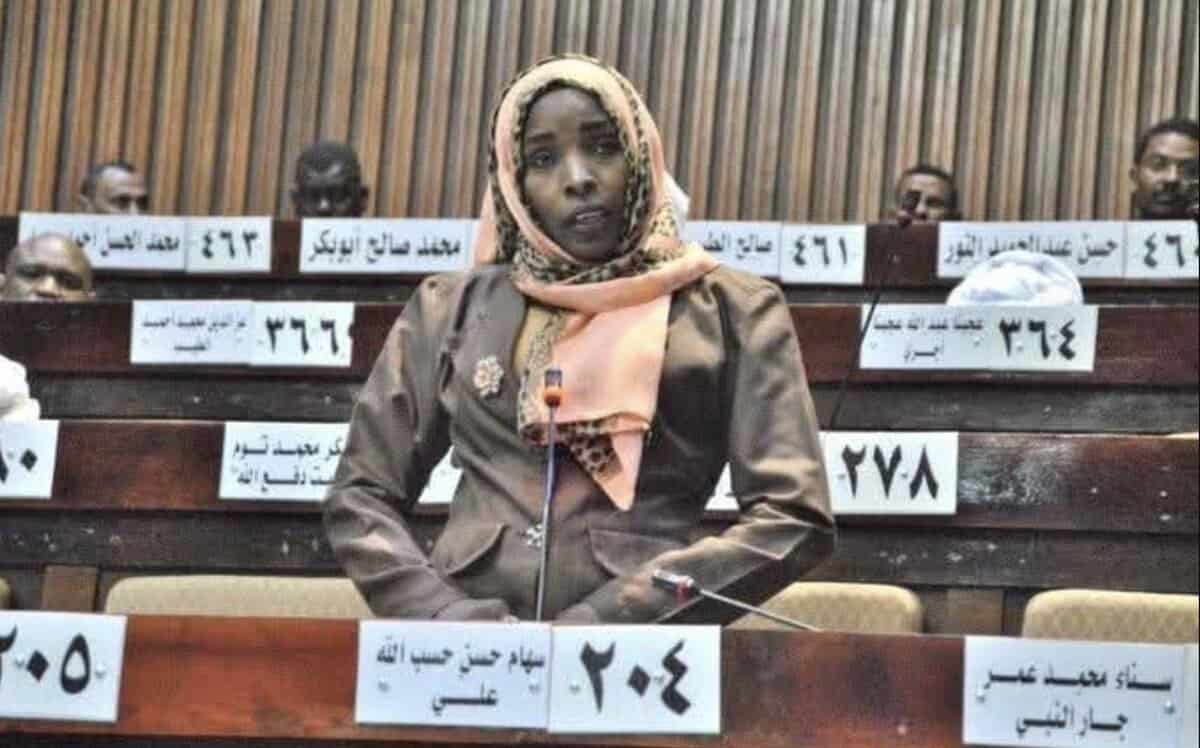
Indeed, volunteers like Siham Hassan Hasaballah, a former parliamentarian, was gunned down with other civilians by the RSF when they seized the capital of North Darfur, El Fasher, in October, carrying out massacres, rapes and other atrocities overnight. As the youngest-ever elected member of Sudan’s National Assembly, in 2016, Hassan’s murder made international news, especially as she had continued her public service after her parliamentary term ended, working as a soup-kitchen volunteer in her hometown.
Hassan, a legislator with the Liberation and Justice Party, turned her attention to wartime aid efforts as part of her public service. Noted for her commitment to uplifting Darfuri and other marginalized voices regionally and nationally, Hassan represented to many a new hope for Sudani leadership, one reflected and amplified during the 2019 revolution.
Hassan’s killing was not random, as Elnour of the ERRs estimates that more than 100 of their volunteers have been slaughtered since the war’s start, which, he said, “speaks to the volume of lives lost” nationally. He noted that Hassan and the ERR volunteers across Sudan, though decentralized, shared “a sense of duty” to their communities and their country.
“These volunteers have run the country for three years–they know absolutely everything,” Elnour added, referencing their deep understanding of their landscape. “These people are doing the jobs that the international community should be doing. They have the blueprint of the Sudan and know how to move forward.”