
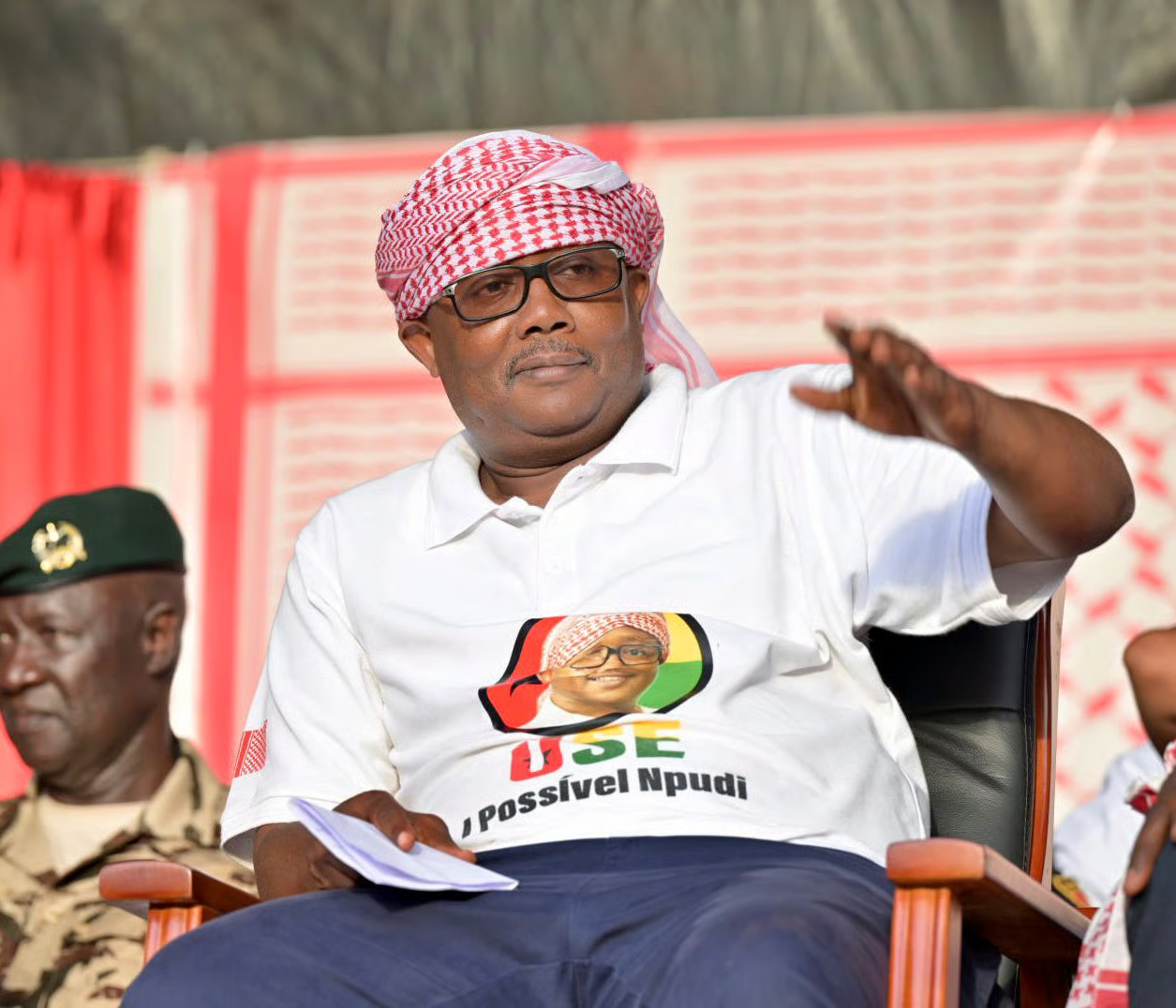
Soldiers say they stepped in to restore order, but the timing, confusion and President Umaro Sissoco Embaló’s own behaviour have raised suspicions of a staged crisis designed to block election results.
Guinea-Bissau Wednesday woke to yet another dramatic chapter in its long, turbulent political history.
Soldiers were on the streets, gunfire was heard around the presidential palace, borders closed and the military command announced it had seized “total control” of the country.
Yet even as international headlines rushed to frame the moment as an unfolding coup, the truth of what happened, and why, is far murkier.
It left the country asking: Was this a coup? A staged show of force? A manufactured crisis by an embattled president? Or was it the military’s pre-emptive move to stop an alleged manipulation of the vote?
A coup that doesn’t fully look like a coup
The confusion began early Wednesday afternoon when gunfire erupted near the presidential palace and soldiers took control of major arteries around the capital, Bissau.
Hours later, military officers at headquarters declared they were assuming “total control” of the state, suspending the electoral process and sealing borders.
The script is identical, but the stakes are now exponentially higherYet the tone of the communique – vague references to a destabilisation plot involving unnamed “national politicians” and a “well-known drug baron” – raised more questions than answers.
Even the military’s framing of its action seemed half-formed.
Was this a response to an attempted destabilisation?
A counter-coup?
A coup?
Authorities avoided the word entirely.
Despite claiming to be acting to prevent election manipulation, the armed forces moved swiftly to install one of President Umaro Sissoco Embaló’s own appointees, Major General Horta Inta-A – whom he elevated to army chief of staff in September 2023 – as the new head of state.
The move, however, has only intensified doubts about the military’s motives.
“If this were truly a coup to stop presidential interference, why elevate a general personally promoted by the very president they claim to be removing?” says a senior government official who served under a former prime minister.
“It does nothing to dispel suspicion that this was coordinated and not resisted. This is the same old wine in a new bottle.”
Interviews post-coup?
But it was the behaviour of Embaló, in office since 2020, that intensified the confusion and suspicion.
Within hours of being “detained”, Embaló was giving interviews to RFI, France 24 and our sister publication Jeune Afrique, announcing to the world that he had been arrested and alleging a coup d’état led by the army chief of staff.
There were no signs of duress and no images of him in military custody.
The senior government official tells The Africa Report that “there hasn’t been any evidence the president was truly arrested or detained”, adding: “We in the country are as in the dark as everyone else about this supposed coup.”
For many in Bissau, the president’s ability to give interviews while supposedly in custody transformed what could have been a straightforward coup attempt into something stranger, perhaps even orchestrated.
Opposition: ‘This is a staged coup’ to block results
The strongest pushback to the official narrative came first from the opposition camp of Fernando Dias da Costa, widely believed to have won the 23 November election.
In a blistering statement, Dias’s campaign condemned what it called “attempts to subvert the constitutional order” and accused segments of the military of disrupting the vote count just hours before provisional results were due.
Another layer of confusion came with the arrest of Domingos Simões Pereira, former prime minister and leader of the country’s main opposition force PAIGC, and one of Dias da Costa’s most influential backers, who was barred from contesting the election but remained central to the opposition’s machinery.
Dias da Costa said he was briefly detained as well, with soldiers making further attempts to arrest him, reinforcing suspicions that the military was targeting those best placed to validate an opposition victory rather than “restoring order”.
“We condemn the arbitrary arrests of Fernando Dias da Costa and Domingos Simões Pereira before a brutal invasion of our headquarters… We urge the CNE [electoral commission] to publish the provisional results scheduled for [Thursday], which gave Dr. Fernando Dias a big victory,” Dias’s national campaign directorate said in a statement.
Top election officials are also reported to have been arrested.
A second, more explosive accusation came from the social movement Frente Popular, which described events as a desperate “criminal staging” by Embaló himself.
According to the group, Embaló, fearing electoral defeat, coordinated with Chief of Defence Staff General Biaguê Na N’tam to create the illusion of a coup.
If this were truly a coup to stop presidential interference, why elevate a general personally promoted by the very president they claim to be removing?Their goal, the group claimed, was to halt the release of results and pave the way for Embaló to appoint a new interim leadership before re-running the election.
“One of the most blatant proofs of this shameful staging is the fact that Umaro Sissoco Embaló, who claims to be detained… had the time and freedom to grant interviews to international media announcing his alleged detention,” the group said.
Alioune Tine, founder of Dakar-based think tank Africajom Centre, described the development as “a shameful cynical staged event to prevent the proclamation of the results and a political alternation that was already announced by the known partial results”.
Guinea-Bissau, he wrote on X, has one of the most transparent electoral models in the world, warning that the army must not “betray” its people.
“Return to your barracks and let the CNE proclaim the results of the presidential and legislative elections and pledge allegiance to the democratically elected president,” Tine wrote.
Senegalese political commentator Babacar Justin Ndiaye described the episode as “a genuine state machination” involving Embaló and one of his closest military allies, Brigadier General Denis N’Canha, who issued the military’s declaration Wednesday.
As head of the Military Bureau of the Presidency, N’Canha oversees the presidential guard, the palace’s military household and the president’s personal security architecture.
This position, local analysts say, is held only by those with the president’s full trust.
Ndiaye argues that the “show of force” was largely choreographed.
“The ultimate goal of this state deception is to block the electoral hurricane that favours Fernando Dias da Costa.”
The Frente Popular called for Embaló and Na N’tam to be held accountable for “all the consequences of their irresponsible acts and attacks on the constitutional order”.
International view: A coup is a coup
While domestic actors debated whether the coup was real or staged, the international diplomatic response was swift and unambiguous.
Ghana’s foreign ministry condemned “the coup d’état carried out by elements of the military” and described it as a “brazen attempt to overturn the will of the people”, insisting on full protection for ECOWAS observers and a rapid return to constitutional order.
For ECOWAS and the African Union, both still shaken by a wave of coups in West Africa, there is little interest in parsing the nuances of Guinea-Bissau’s political theatre.
Soldiers seized state institutions and suspended elections. That is, by their standards, a coup.
But on the ground in Bissau, suspicion that the whole episode was staged is only growing.
This is not Embaló’s first coup-related controversy. In December 2023, he dissolved parliament citing an “attempted coup” after clashes between the National Guard and his presidential guard left two dead.
Many at the time dismissed it as an exaggerated pretext for consolidating power.
The parallels between 2023 and Wednesday’s events were not lost on observers.
“This feels like déjà vu,” says regional analyst Emman Etuk.
“The script is identical, but the stakes are now exponentially higher. Every time Guinea-Bissau reaches a critical democratic moment, the same actors appear, the same narratives unfold and the same shadows move behind the curtain.”